In Every City, There Is a Palestine—With Hatem Bazian
“The insanity of the settler colonial mindset has no limit.”
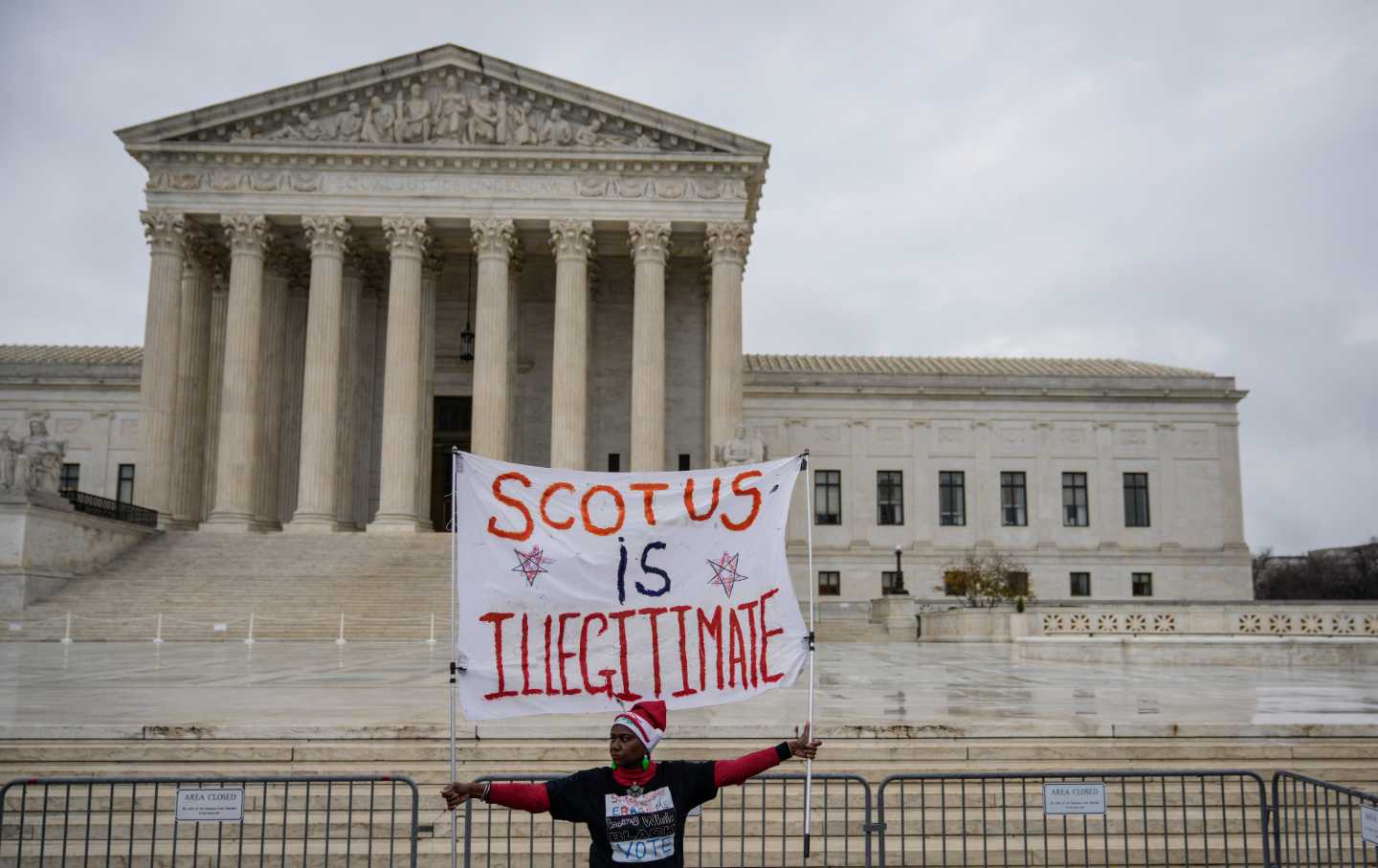
Palestinian boys throw stones at an Israeli tank as it destroys an orange farm May 19, 2003, at Beit Hanoun town in the northern Gaza Strip.
(Abid Katib / Getty Images)Genocide is not only the destruction of human life. It is also the destruction of land, water, food systems, and ecosystems that make life possible.
In Palestine, the devastation of agricultural lands, the poisoning and destruction of water systems, and the uprooting of hundreds of thousands of olive trees are part of a broader campaign to erase Palestinian life, culture, and connection to the land.
This is the environmental Nakba: the ecological destruction woven into more than a century of settler colonialism that continues to unfold today.
On this episode of A People’s Climate, Shilpi Chhotray speaks with Dr. Hatem Bazian, Palestinian-American scholar, organizer, and professor at UC Berkeley. They discuss how environmental destruction functions as a weapon of genocide and colonial control. From the destruction of Gaza’s agricultural infrastructure to attacks on beehives, they examine how the destruction of the natural world makes Palestinian life increasingly unlivable.
They also explore the architecture of occupation: how border walls, checkpoints, settlements, and segregated infrastructure divide land, restrict movement, and engineer two radically unequal worlds for the colonizer and the colonized.
Palestine is not somewhere “over there.” As Bazian puts it, “In every city in America, there’s a Palestine.” He points to collapsing schools, a healthcare system that leaves people to die, and endless wars waged to sell weapons. The same corporate and political systems shaping life in Palestine are also reshaping life in the U.S.
But Bazian argues that colonialism is fundamentally unsustainable and is clear about what that means for Palestine. “Palestine will be free sooner than later.”
Key Topics
- The environmental Nakba: How more than a century of colonization has transformed Palestine’s geography, agriculture, and ecosystems, including non-native tree species that have contributed to devastating fires.
- The destruction of the life-sustaining systems: Including attacks on beehives, farmland, water systems, and agricultural infrastructure, which undermine food production and make Palestinian life increasingly unlivable.
- Water apartheid and environmental genocide: Gaza’s contaminated aquifers, the destruction of its water systems, and the stark inequality in water access between Palestinians and Israeli settlers.
- The weaponization of settlement expansion: How new settlements and outposts bring waves of violence, displacement, and land seizures, pushing Palestinians out of their communities.
- The colonial dividing line: How the border wall’s construction uprooted hundreds of thousands of trees and creates two radically unequal worlds.
- Black-Palestinian solidarity: From the Black Panther Party and Angela Davis to Jesse Jackson’s Rainbow Coalition, how generations of organizers have built connections across movements and struggles for liberation.
- Islamophobia: The demonization of Muslim communities and its role in shaping U.S. policy and public perceptions of Palestine.
- The role of religion in justifying empire: How religious narratives become intertwined with ideas of progress and development to legitimize military power and environmental destruction.
- Colonialism is fundamentally unsustainable: Why the systems built on dispossession and domination cannot last, and why Bazian believes Palestine will be free sooner than later.
Resources:
- Seeds of Resistance with Vivien Sansour – A People’s Climate Season 1, Episode 7
- Palestinian Land, Heritage, and Identity, Shilpi Chhotray in conversation with Rania Batrice for Peace & Riot
- Dr. Hatem Bazian
- Dr. Hatem Bazian’s Substack
- A Dying Colonialism by Frantz Fanon
Credits
Presented by Counterstream Media and The Nation
Powered by Wildseeds Fund
Host: Shilpi Chhotray
Executive Producer: Mindy Ramaker
Engineer: Dennis Maxwell
Project Manager: Asia Simms
Dr. Hatem Bazian
Dr. Hatem Bazian is a teaching professor at UC Berkeley and a leading decolonial scholar whose work centers Islam’s epistemology and Global South analysis. He founded the Islamophobia Studies Center, serves as Editor-in-Chief of the Islamophobia Studies Journal and President of the International Islamophobia Studies and Research Association. He co-founded Zaytuna College and American Muslims for Palestine, and serves as President of the Northern California Islamic Council and Chairman of the Muslim Legal Fund for America.
Subscribe to The Nation to support all of our podcasts: thenation.com/subscribe.

The Nation Podcasts
Here's where to find podcasts from The Nation. Political talk without the boring parts, featuring the writers, activists and artists who shape the news, from a progressive perspective.
Reparations as a Climate Solution w/ Brea Baker / A People’s Climate
“Those who own the land get to be decision makers over what happens to the land. They get to decide whether they're gonna frack and how much they’re going to pollute.”
Corporations have made fortunes by extracting from the land, while Black and Indigenous communities who have long understood land as something to steward have been systematically pushed off of it. But what if reparations could both repair the legacy of land theft and help solve the climate crisis?
In this episode of A People’s Climate, host Shilpi Chhotray speaks with writer and organizer Brea Baker, author of “Rooted: The American Legacy of Land Theft and the Modern Movement for Black Land Ownership.”
They discuss how land theft and slavery are connected to our broken industrial food system and the environmental crisis we’re living with today. But Brea argues that reparations are more than just a moral reckoning with the past — especially when they go beyond financial compensation. What does that look like in practice? Returning property. Reversing eminent domain seizures. Repairing polluted places. Investing in communities with generations of knowledge about the ecosystem. And the payoff reaches far beyond those directly receiving reparations: more sustainable land use, less pollution, lower emissions, and a healthier environment for all.
Key Topics
- Reparations as a climate strategy: How repairing historical harms can also create healthier ecosystems.
- Land theft and the extractive economy: How slavery, Indigenous dispossession, and land theft shaped our extractive economy.
- Black Land Ownership: How heirs’ property, USDA discrimination, predatory debt, and government policy stripped Black families of land and wealth, including Baker’s own family history.
- From plantations to Cancer Alley: How former plantation areas in Louisiana became sites of petrochemical development, linking the history of land ownership to pollution and public health.
- Eminent domain: What it would mean to use the government’s power to seize polluting facilities for the public good, rather than using it to take land from Black communities.
- Redefining reparations: Reparations can mean more than just financial compensation, including returning property, medical care, education, and more.
- Maroonage and mutual aid: How Black communities have built networks of collective care, self-determination, and survival outside systems that failed them.
- Reparations in practice: How cities and states are already implementing reparations, from direct payments to returning property to Black families.
Resources
- Rooted: The American Legacy of Land Theft and the Modern Movement for Black Land Ownership
- Learn more about Brea Baker
- All Revolution Is Based On Land with Leah Penniman – from A People’s Climate Season 1
Credits
Presented by Counterstream Media and The Nation
Powered by Wildseeds Fund
Host: Shilpi Chhotray
Executive Producer: Mindy Ramaker
Engineer: Dennis Maxwell
Project Manager: Asia Simms
Brea Baker
Brea Baker is a writer and activist whose book, ROOTED: The American Legacy of Land Theft & The Modern Movement for Black Land Ownership, details her family’s experiences across the South and makes another case for reparations as a racial, economic, and environmental justice policy. As a sixth generation Black landowner with deep ties to North Carolina, Brea writes about and organizes with Black Southerners whether with Black Farmers’ Market, Cypress Fund, the BLIS Collective, and many other political homes. Her next book, a biography of Jazz Age artist and nightclub owner Ada “Bricktop” Smith, will be published in 2027.
Advertising Inquiries: https://redcircle.com/brands
Privacy & Opt-Out: https://redcircle.com/privacy
Search Results placeholder
Ep. 6 – In Every City, There is a Palestine with Hatem Bazian
CLIP [00:00:07] Gaza now faces severe risks to public health, and environmental threats are increasing. The genocide has also destroyed agricultural lands and vegetation cover, leaving the population in a state of severe food insecurity and famine, with hunger being used as a weapon.
CLIP [00:00:27] Since the outbreak of the Iran war, violence in the West Bank has become more frequent and more brutal.
CLIP [00:00:33] Israeli authorities and settlers have destroyed over 800,000 Palestinian olive trees in the occupied West Bank. A lot of this tree killing is carried out by Israeli settlers, and they frequently attack Palestinians and their property.
CLIP [00:00:47] In the face of this hurt, Palestinians continue to resist. They continue to affirm life. They continue remind the world that even in the shadow of death, there is dignity in the struggle. This is not just about Gaza. It is about the unravelling of empire itself. It’s about all of us, everywhere, that are recognizing what is taking place.
Shilpi Chhotray [00:01:14] Hey everyone, welcome back to the show. Today we’re exploring an often overlooked dimension of the Palestinian story, the environmental consequences of colonialism and genocide, or what some have referred to as environmental Nakba. Joining me is Hatem Bazian, a renowned Palestinian-American scholar, organizer, and professor at UC Berkeley, whose family has deep roots in Nablus. It’s a beautiful city known for its centuries-old olive cultivation. And soap making traditions. I’m honored to share this conversation with you all. Hatem, welcome. It’s so great to do this in person. So you know, much of the media’s attention has understandably been focused on Israel’s relentless bombing and the politics surrounding it. But the climate and environmental consequences have received far less attention. To kick us off, I’d love for you to explain what environmental Nakba means to you.
Dr. Hatem Bazian [00:02:14] Well, if we want to talk about environmental Nakba, we have to put it in the larger context of colonization. Part of colonization that’s often overlooked is the destruction that have been visited on the Earth as a whole. Not only the expulsion of the population and ethnic cleansing, but also the transformation of the topography, the geography. Even the agricultural norms. I think a few years back we had massive fires that took place in Palestine. The direct reason for this is the implanting of redwood trees then planting off trees from Europe, from the United States.
Shilpi Chhotray [00:03:02] They were invasive.
Dr. Hatem Bazian [00:03:03] Invasive, and they’re also not commensurate with the geography of the region. So as the fire hit, literally, it was a complete transformation and the destruction of the region. We’re talking about the Nakba that have completely transformed this region. It’s more akin of thinking of Palestine being changed into a Los Angeles and New York in an area that is not commensurate with the type of geography and environment that would actually lend itself to it.
Shilpi Chhotray [00:03:37] That’s really helpful context. You know, this reminds me of a concept of slow violence, which is harm that unfolds gradually and it’s often invisible. So you’re talking about this long history. It feels like the framework you’re discussing applies here. So how important is to understand Nakba not only through moments of violence, but through the slower transformation of everyday life. And actually this reminds of the example you gave me a few days ago. There were reports of settlers burning beehives in the West Bank.
Dr. Hatem Bazian [00:04:08] Sure. So this in essence, if we think about the Nakba, I don’t did the Nakba in 1948 actually begins much earlier, but it begins with European countries saying that we need to reestablish a Jewish state in Palestine beginning literally with Napoleon, if not before. But it takes shape around the British direct colonization of Palestine in 1917 and with displacement, geographical transformation, environmental destruction, destruction of villages that have existed for millennia, if not more. So that’s the slow Nakba, and it’s evolving even today. So when we talk about the like who in the right mind would burn right a beehive. So the attack on the beehives is directly connected to a slow Nakba. But because if you remove the bees, now you have possibly a collapse of the agricultural production. So you could say, well, we had nothing to do with it. But actually the unseen part is this structural slow violence, which is part and parcel of this Nakba that the Palestinians have been living for over 100 years.
Shilpi Chhotray [00:05:23] This is a systematic erasure that we’re seeing time and time again. And the bees example actually really shook me because we know that beekeepers and beehives are essential to all living organisms on this planet.
Dr. Hatem Bazian [00:05:36] And maybe I could make a direct connection that during the settlers moving west, the United States government paid marksmen to eliminate the buffalo herds for Native Americans.
Shilpi Chhotray [00:05:49] Very similar.
Dr. Hatem Bazian [00:05:50] It was directly connected to removing the stability of life and moving Native Americans into the reservations, which is exactly what has taken place in terms of attacking the beehives and destroying the life system. Then you force people into actually either leaving or being directed to a set of refugee camps that are increasingly being under attack themselves as well. So that’s the comparison that we need to actually immediately make.
Shilpi Chhotray [00:06:20] Excellent comparison. And just to paint a picture on the bees here, and then I promise I’ll move on. But before the genocide, the beekeepers kept around 30,000 hives. I mean, that’s pretty significant. Estimates are around 700 hives only remain. And honey production is estimated to be only 10% of what it once was. So going to your example about the buffalo, there are some real parallels here.
Dr. Hatem Bazian [00:06:45] No, absolutely. And that’s again, also Wolfe, who writes on settler colonialism, say two things are always present, which is genocide and transfer.
Shilpi Chhotray [00:06:55] So transfer in your definition is the forced relocation of the indigenous population.
Dr. Hatem Bazian [00:07:01] Forced relocations off indigenous population to facilitate the takeover of their land for quote the progress and the development of civilization.
Shilpi Chhotray [00:07:12] Right. And there’s an effort to make it uninhabitable, unlivable. When we talk about Gaza, 97% of the tree crops have been destroyed, 82% of annual crops, and 89% of the grassland has been damaged. So again, with this sort of information, real time that we’re getting production of food is just not possible at scale. I would love to hear from you a little bit more about where we are at in Gaza today. I know there are a lot of relief efforts and the farmers that are left are doing everything they can to preserve their soil, the integrity of their farmland, but these numbers are staggering.
Dr. Hatem Bazian [00:07:54] If we think about Gaza, Gaza is experiencing a live stream genocide. When we use the term genocide, they think genocide means the elimination of the population in totality. The Convention on Genocide does not actually say that. Genocide says only part or a segment of the population is committed, but also disrupting their normal cultural patterns. Like, for for example, eliminating a language of a community is a form of genocide. So if we think of Gaza, Gaza is experiencing a genocide on multiple level. Genocide of the population, environmental genocide, genocide of water systems, genocide of the agricultural production. Agriculture has completely been in ruins, subject to bombings time and time again. Also Gaza has been used as a testing ground for all kinds of weapons. The water system, even before this current genocide, the seawater has already seeped into the aquifers in Gaza. UN and research on the quality of water says Gaza’s water is no longer usable. And even before this period, Palestinians use of water is almost one tenth of what an Israeli settler or Israeli uses. So even the water system is actually part and parcel of actually facilitating this slow-moving Nakba from the past till the present.
Shilpi Chhotray [00:09:30] Thank you for breaking that down. You know, much of the world’s attention has understandably focused on Gaza, but settlement expansion, which I know you speak a lot about in the occupied West Bank, is continuing at a rapid pace.
CLIP [00:09:47] The UN says attacks by Israeli settlers have reached unprecedented levels, more than 1,400 incidents in 260 communities just this year, displacing more than 3,800 Palestinians. And killing more than 75.
CLIP [00:10:04] They built more outposts in the West Bank. They attacked Palestinians 24 hours a day.
CLIP [00:10:12] Just think, you have three million Palestinians in West Bank, so you want to push them farther and farther, and to squeeze them, and to squeeze them, and squeeze them. Where there are new settlers, where there are a new outposts, there is a new wave of violence, always.
Shilpi Chhotray [00:10:27] So what’s happening there today, and why should people understand it as part of the same story?
Dr. Hatem Bazian [00:10:32] If we take the West Bank at Israeli government policy is to prevent the emergence of a Palestinian state. And in order to prevent an emergence of Palestinian state, the Israeli government funded these settlements and they’re called facts on the ground. As the Likud government took power in 1977 with Menachem Begin, they began the process of building settlements and expanding settlements to encircle Palestinians and prevent the possibility of an emergence of a Palestinian city. So what is left is all these urban centers, the Palestinians, which will be akin exactly to how apartheid South Africa managed Black population during the height of apartheid South Africa. Is the British model that was used in India in formulating the Bantustan areas. Again, people think, oh, it’s complex in terms of palace. It’s not complex. It’s really actually so normative. Trying to say it’s unique is to prevent you from actually looking at the normative patterns that have been existed whether with Native Americans, Africa, India, or in relations to Palestine.
Shilpi Chhotray [00:11:50] Of course, the India case is personal to me. I’m Indian. And in fact, my state of Odisha, a third of the population was killed because of famine. You know, they took the land, they took our agriculture. It’s a seaside area. So this is very similar playbook I see throughout. Now the one thing I would love to ask you is, is there any hope you see? Because in all of those situations, the colonial infrastructure did eventually collapse. And with the International Court of Justice, we see South Africa, Black South Africans, I will say, are leading the efforts for Palestinians.
Dr. Hatem Bazian [00:12:24] Rightly so, because during the height of the South African apartheid, the Palestinians actually were standing with South Africa. People don’t know that the Palestinians actually trained the South Africa resistance fighters in Mozambique and in Algeria. Also the Nelson Mandela’s own family heavily dependent on both the Palestinians and also on Libya for support and so on. So, as Nelson Mandela came out… I remember that when he visited here, we were part of the anti-apartheid movement. Many were trying to press him to condemn Yasser Arafat, the Palestinians, and he literally turned to Ted Koppel at the time of Nightline trying to remember the show on ABC. He said, you don’t tell us who our friends are.
CLIP [00:13:08] One of the mistakes which some political analysts make is to think that their enemies should be our enemies.
Dr. Hatem Bazian [00:13:25] So I am hopeful and very optimistic. Why? Because Fanon says it’s a dying colonialism. That was in the 1960s. The wretched of the Earth will inherit the Earth, right? Colonialism is unsustainable. And I would say that the Palestine will be free sooner than later. So I don’t have any illusion that this is not going to happen. Why, because the structure that is there is unstable, both epistemologically as well as economically. And I think we’re running into a period right now as we see in terms of the total instability of both the Israeli settler colonial project and also its relationship to the U.S. or into Europe as well is literally unfolding in front of our eyes.
Shilpi Chhotray [00:14:10] That’s right. And I think I saw a poll just yesterday that is close to 80% of Democrats now support a weapons ban to Israel. So the numbers are showing it too in the political sphere. I want to go back to Fanon because you mentioned him just a little bit ago. In your recent writing, you draw on Franz Fanon’s idea of the colonial dividing line. How do walls, checkpoints, settlements, and infrastructure become environmental tools of control? We also hear about it in terms of the geopolitical realities.
Dr. Hatem Bazian [00:14:40] Colonization, settler colonization is an ugly undertaking, even if we think about it from purely architectural viewpoint. If you go to Palestine, the implanting of a European style of architecture, of environment, of trees. So when Fanon was speaking about the dividing line, he was actually speaking that in the colony, there are two different worlds. There’s the world of the colonized and the colonizer. He actually spoke about the world of the colonizer is made of concrete. It’s made of permanency. It’s made of lush green lands. It made of swimming pools. It’s made of all types of aromas. He says, even the garbage of the colonized, it smells of the aromas. In the colonized sector. The colonized sector is sector of poverty is a sector of people not having resources, barefootedness. You’re born anywhere and you die anywhere and nobody actually register who you are. The sector of the colonizers feeds upon the disparity that is actually structurally made.
Shilpi Chhotray [00:15:51] A few days ago, there were reports of another 165 olive trees being uprooted in the West Bank.
CLIP [00:16:00] The olive trees that bore fruit for generations in Gaza now bear witness to war and loss. Thousands of olive trees, the lifeline of Palestinian farmers, now burned, uprooted or buried under piles of rubble.
CLIP [00:16:21] These olives are our lives. My great-grandfather planted them. They were meant to stay and provide for our families.
CLIP [00:16:31] Eighty-five-year-old Sadiqa has nothing but tears left. For three days she has watched Israeli occupation soldiers uprooting olive trees in her village of Qaryut near Nablus.
Shilpi Chhotray [00:16:45] At what point do these repeated acts stop looking like isolated incidents and become part of the broader environmental strategy?
Dr. Hatem Bazian [00:16:53] If we think about, we mentioned earlier about the dividing wall, the apartheid wall in the West Bank.
Shilpi Chhotray [00:17:00] Yes, mm-hmm.
Dr. Hatem Bazian [00:17:00] You know the footprint of that wall is close to running about 400 miles intertwined. The width of the wall in certain areas about a football field It’s a wall that has been built by uprooting close to eight hundred thousand trees. The tree, the olive tree is literally a sacred tree. It appears in all the sacred text. The oldest olive tree in the world is literally in the West Bank It’s close to 6,000 years old. It’s still in production.
Shilpi Chhotray [00:17:33] 6,000!
Dr. Hatem Bazian [00:17:33] 6,000 years old.
Shilpi Chhotray [00:17:35] Oh, I hope they don’t touch that one.
Dr. Hatem Bazian [00:17:36] Well, the insanity of the settler colonial mindset knows no limit. So I can understand somebody what you call arresting an individual, beating an individual. I could rationalize it. But what does a tree do to you, especially an olive tree? This would be a highest level of reaching a level of total inhumanity that you lose a sense of the environment around you. And what does it mean to actually attack a tree? So when we talk about Palestine today, it’s the same type of circumstances, literally destroying the cultural heritage. This is the first area where they have irrigation system. This is first area were terraced the hills.
Shilpi Chhotray [00:18:18] The Battir.
Dr. Hatem Bazian [00:18:19] Yeah. So they would not actually, they would use the land that is highly fertile and they actually managed to terrace the hills in order to plant. And this is, we’re talking about close to 8,000 to 12,000 years in historical continuity.
Shilpi Chhotray [00:18:34] Of Indigenous farming.
Dr. Hatem Bazian [00:18:35] Of indigenous farming.
Shilpi Chhotray [00:18:37] It reminds me a lot of a conversation I had with Vivian Sensor last season. And I asked her quite plainly, I said, what can our listeners do to support Palestine? And she said, ‘get free.’ Right? And it’s like, we need to look at our own situations and our own cities and the way, you know, our infrastructure is set up and the systems that, that we’re up against, it’s not so dissimilar.
Dr. Hatem Bazian [00:19:00] It’s exactly the same. Your schools are literally collapsing. We’re closing schools right and left. Our healthcare is literally cause you to die rather than to actually heal you. We’re fighting wars for non-end to protect. Again, Dr. Roy said we used to fight wars to defend the nations. Now we fight wars in order to sell weapons. Often when we think Palestine is over there, Palestine isn’t here. In every city in America, there’s a Palestine. In every corner, there is a complete debasement of people. In every corners, there’s a process of transforming our society in ways that is unimaginable. We are not a human centric society. We are a corporate centric society. And as such, we have to transform the pillars of where the focus should be. As we are thinking about Palestine of how to think, what are the things that are here? AIPAC spending with the corporate elite, $62 million. It’s not over there, it’s here.
Shilpi Chhotray [00:19:58] That’s right.
Dr. Hatem Bazian [00:19:59] Why? Because it’s connected to a massive military outlay. It’s massive funding, massive war. And in order for you that, you have to capture the decision making. So we have the best political system that money can buy. And that’s where we are. And we need to begin to actually take ourselves seriously what does it mean to be free? And what does that mean to to be democratic? What does it means to have resources for our wellbeing?
Shilpi Chhotray [00:20:32] I want to talk about something that was very powerful, where I attended last October. I attended an event in Oakland that was marking the legacy of Malcolm X and Black and Palestinian solidarity. I had an opportunity to hear you speak, of course, and Dr. Angela Davis. And as you’re talking right now, it makes me think about the long history of solidarity between those movements in particular. Can you talk about some of your takeaways from this type of movement building and the kind of enduring points of connection, which are decades in the making?
Dr. Hatem Bazian [00:21:08] So the 1960s, you had an expression of solidarity and co-production of imagining and thinking of the world differently. So the Black Panther Party was part of this. Interestingly, Angela Davis spoke about this in her talk. She said when she was in jail in the United States, she received a letter of solidarity from Palestinian prisoners recognizing what she is going through. And actually building that solidarity. Jesse Jackson need to be credited. He just passed away recently. He was, he should be credited of creating the Rainbow Coalition, which was early on bringing the Arab Muslim Palestinian population with him in the coalition. So the Rainbow Coalition which was the first multicultural attempt to enter into the political landscape with a challenge and critique of the political order. So you cannot get into Obama’s election without Jesse Jackson’s contribution. You can’t get to Jesse Jackson without thinking of the MLK without MLK and without the Black Panther Party, without Angela Davis, Erica Brown, and so on, without Malcolm X. So we have to see politics as a discursive process that are actually generational. So let me say, we cannot get into this moment of the critique of what is taking place in Palestine without stopping at George Floyd. George Floyd, 9 minutes, 46 seconds, that was an epistemic shift, a tipping point not only in the United States, but globally. That they are actually completely responding to seeing colonization for what it is. So that knee on the neck of George Floyd is the Global North knee on the Global South neck that continues to be there. So one has to think about the violence that has been committed and we have to constantly, constantly make these relationships. I know that people say, we have reached into a colorblind society.
Shilpi Chhotray [00:23:13] No, we need to address it.
Dr. Hatem Bazian [00:23:13] No, we have been blinded of the realities that are existing. So as we see the complete disparities that are existing in the society, those connections on transnationality and domestically have to be constantly stitched together because often today we say, oh, we need to go beyond and forget. Why can’t you leave history behind? Well, history cannot be left behind because history is here. History is living with us because history is the present. It continues to unfold in different ways, right? And we need to constantly both remember where we were, the journey that we took and why we still have a long journey ahead of us.
Shilpi Chhotray [00:23:53] That’s right. So Hatem, you’ve written extensively on Islamophobia. Do you think it plays a role in why some institutions remain silent?
Dr. Hatem Bazian [00:24:01] So Islamophobia functions by distracting us away from analyzing what is taking place and making people go into what you call almost instinctive defensive mode that these people are trying to change my life. The reason that your life is being changed is because corporate interest is changing your life. The 2008, 2009 economic crisis in this country, 13 million Americans lost their homes. It was not Osama bin Laden nor the people who are coming across the rivers and so on from the border are the ones that change your life. It’s 13 million. It’s the debt industry. Students today are graduating with an average of $38,000 in debt. Right? So we have made an economy that literally does not work for people. And the only way for us to shape the discourse is by projecting fear. I hope that people watch the Monster Inc movie.
Shilpi Chhotray [00:24:59] Mm-hmm. I know the one you’re talking about. I got two little kids.
Dr. Hatem Bazian [00:25:03] So, Monster Inc. Today I say our political, cultural, social imagery is functioning on Muslim Inc. You instrumentalize fear of Muslims, so basically you set aside and you accept the unacceptable. You accept to be surveilled.
Shilpi Chhotray [00:25:16] And then it becomes normalized.
Dr. Hatem Bazian [00:25:17] Normalized. You go to 7-11 you accept to be surveilled by 24 cameras in 7-11. You instrumentalize the whole structure of surveillance. You instrumentalize never-ending war because the Monster Inc, Muslim Inc, is there. So you go into bed you check under your bed whether there’s a Muslim in there. And in the meantime, you’re literally – your house is being taken over your economy is literally being reshaped and your taxes are being shifted to the corporate interests and literally you put the Muslim image to say that he is the problem.
Shilpi Chhotray [00:25:47] This is the person to blame.
Dr. Hatem Bazian [00:25:48] This is the problem, this is the person to blame, and it functions, it will, because people actually, fear is much easier to mobilize than hope and understanding. And that’s the challenge for us.
Shilpi Chhotray [00:26:03] Going back to a few questions ago, the United States is one of Israel’s largest military and political backers. Probably the largest, actually. Including through billions of dollars in military assistance. What responsibility does the U.S. have for understanding and addressing the environmental consequences of that support?
Dr. Hatem Bazian [00:26:24] The environmental policy, the United States is engaged still in a corporate type of thinking. Extraction, neoliberal capitalism, privatization. The environment is commodified. The human being is commodified. I am a commodity, you’re a commodity. We’re just a number that could be actually marketed and sold. So that’s where you think about the United States’s thinking as like, I’m hoping that they’re thinking, they’re thinking about corporate interest. They’re thinking about how we could destroy the Earth many times over. You know, people are not believing in the global warming. The whole world is literally burning in front of our eyes and we’re taking public land, we’re taken national parks, land and handing it to corporate interests as we speak today. All right, so that’s, to speak about Palestine, the United States responsibility, I was like, I have to shake my head. It’s like, they’re not actually addressing their own people. So if a country that does not take care of its own people within the environmental areas, what do I expect of them in supporting Israel and thinking of the Palestinians relative to the environment?
Shilpi Chhotray [00:27:36] One last question for you. So throughout this season, we’ve asked how stories – you know, we’ve talked a lot about the narrative war here – justify environmental violence. Whether through development, through jobs, security, or progress, these AI data centers. What story has justified environmental transformation in Palestine, like if there was one in particular?
Dr. Hatem Bazian [00:27:58] Well, I think the narrative again, the utilization of religious narrative that the human being is to overrule the land.
Shilpi Chhotray [00:28:07] Yeah, that’s a good one.
Dr. Hatem Bazian [00:28:09] Right? And one of them is religious imperial religion that is intertwined with the narrative of progress development. So that narrative begins to actually say whatever we do to the environment is done for the higher purpose that is divinely inscribed. So imperial religion that basically makes it possible that the destruction of the environment, is sanctioned by a divine. And that sanction of the divine authorizes everything. So you begin to think of Moses, Muhammad, and Jesus as coming as salesmen for the military industrial complex, riding an F-16 or F-35 in order to bring progress.
Shilpi Chhotray [00:28:50] Quote unquote progress.
Dr. Hatem Bazian [00:28:52] Quote unquote progress. That is the thesis that is most destructive both for the environment and for humanity in general. Imperial religion.
Shilpi Chhotray [00:29:06] Hatem explores a lot of these types of themes in his substack, which I love, so we’ll definitely drop that in his recent writings on colonialism. Hatem, thank you so much for being here today and helping us really understand why the fight for Palestinian sovereignty is also about land, water, memory, and ultimately the conditions that make life possible for all of us.
Dr. Hatem Bazian [00:29:30] Thank you.
Shilpi Chhotray [00:29:34] Thank you to Wildseeds Fund for making this podcast possible. This episode of A People’s Climate is executive produced by Mindy Ramaker with engineering and sound design by Dennis Maxwell, theme music by Khafre Jay, additional research by Asia Simms. Recorded at Studio 132 and Skyline Studios in Oakland, California. From Counterstream Media and The Nation, I’m your host, Shilpi Chhotray. Until next time.