
This story originally appeared at Truthdig. Robert Scheer is the author of The Great American Stickup: How Reagan Republicans and Clinton Democrats Enriched Wall Street While Mugging Main Street (Nation Books).
Keep an American soldier locked up naked in a cage and driven half mad while deprived of all basic rights, and you will be instantly condemned as a barbaric terrorist. Unless the jailer is an authorized agent of the US government, in which case even treatment approaching torture will go largely unnoticed. Certainly if a likable constitutional law professor happens to be president, all such assaults on human dignity will easily pass muster.
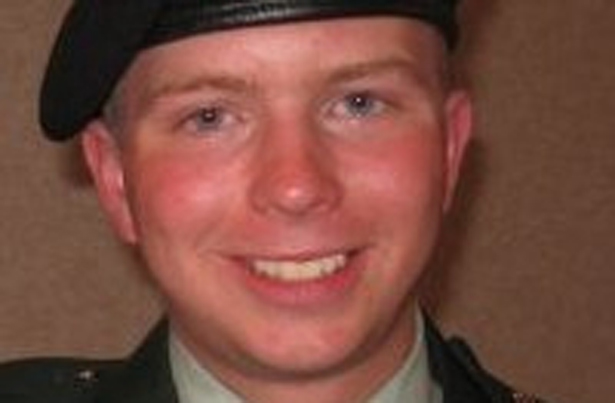
After being interned like some wild animal in that cage in Kuwait, Pfc. Bradley Manning was transferred to the Quantico, Va., Marine base and further subjected to conditions that his lawyer termed “criminal.” Not all that far from the White House, and yet our ever-enlightened president seems not to have noticed that this soldier, whose alleged criminal offense is that he attempted to inform the public of crimes committed in its name, has been held in an environment clearly designed to destroy his very sense of self.
As Manning’s lawyer, David Coombs, a lieutenant colonel in the Army reserves and a veteran of 12 years of active duty, put it: “Brad’s treatment at Quantico will forever be etched into our nation’s history as a disgraceful moment in time.” Coombs warned that the most serious charge facing his client, “aiding the enemy,” is a “scary proposition” designed to “silence a lot of critics of our government.”
Who is that “enemy” other than the public that came to be informed about the true nature of the US wars in Iraq and Afghanistan by news reports based on a trove of documents allegedly made available to the WikiLeaks website by Manning? The documents were labeled secret, but as the many important news reports based on them revealed, they contained information that an enlightened public had a need and right to know.
Yet for too many in the mainstream media, led by the example of the editors of The New York Times, the recent military courtroom proceedings where Manning’s lawyer finally got to document the government’s attempt to destroy his client was largely a nonevent. Conveniently so, given that the Times and other major news outlets that were thrilled to exploit the information that Manning uncovered are deeply afraid of being associated with the brave whistle-blower himself.
Not all, however. The British Guardian—which features Glenn Greenwald, today’s most compelling writer on civil liberties—has taken seriously the plight of the man alleged to be one of the paper’s sources. But why haven’t others? As Margaret Sullivan, the public editor of The New York Times, asked: “Why did readers of The Times have to turn to Ed Pilkington of The Guardian, or to one of the great number of other news organizations that sent reporters, to hear Private Manning tell of the Mordor into which he had been drawn—where he had to stand naked, in chains, in the ‘maximum custody’ brig at Quantico, Va., imploring his prison guards for something as simple as toilet paper, or, earlier, in a ‘cage’ in Kuwait?”
While the Times is to be applauded for running Sullivan’s devastating critique, the replies from individual editors responsible were lame. Asked why the paper didn’t send a reporter to cover this rare opportunity to learn Manning’s side of the story, Times Washington bureau chief David Leonhardt said, “We’ve covered him and will continue to do so. But as with any other legal case, we won’t cover every single proceeding.”
Really? This is hardly just another legal case, for it goes to the heart of the First Amendment freedoms on which the Times has relied so heavily during its storied history.
If the public had a right to know the information that Manning allegedly revealed, as the Times demonstrated by publishing important stories featuring it, then the source should be honored rather than scorned. As Sullivan wrote: “To its credit, The Times published article after article based on the very information that Private Manning provided to WikiLeaks, just as it had published the Pentagon Papers that Mr. [Daniel] Ellsberg leaked during the Vietnam War.”
Manning is in the same position as was Ellsberg, who four decades ago leaked to The New York Times details of government lies and crimes in Vietnam. Both men had access to material classified as secret, but both believed they had an obligation to puncture the veil of government secrecy when it was employed to deceive the public.
What is protected in the First Amendment is not the right of commercial enterprises to exploit the news for profit, but rather of citizens to become informed. That requires the courage of heroic sources, including Bradley Manning.
Three Nobel laureates wrote a salute to Bradley Manning for The Nation. Read it here.

