
September 27
- Depart the US for Seoul.
September 28
D,R
- Arrive at Seoul Incheon International Airport.
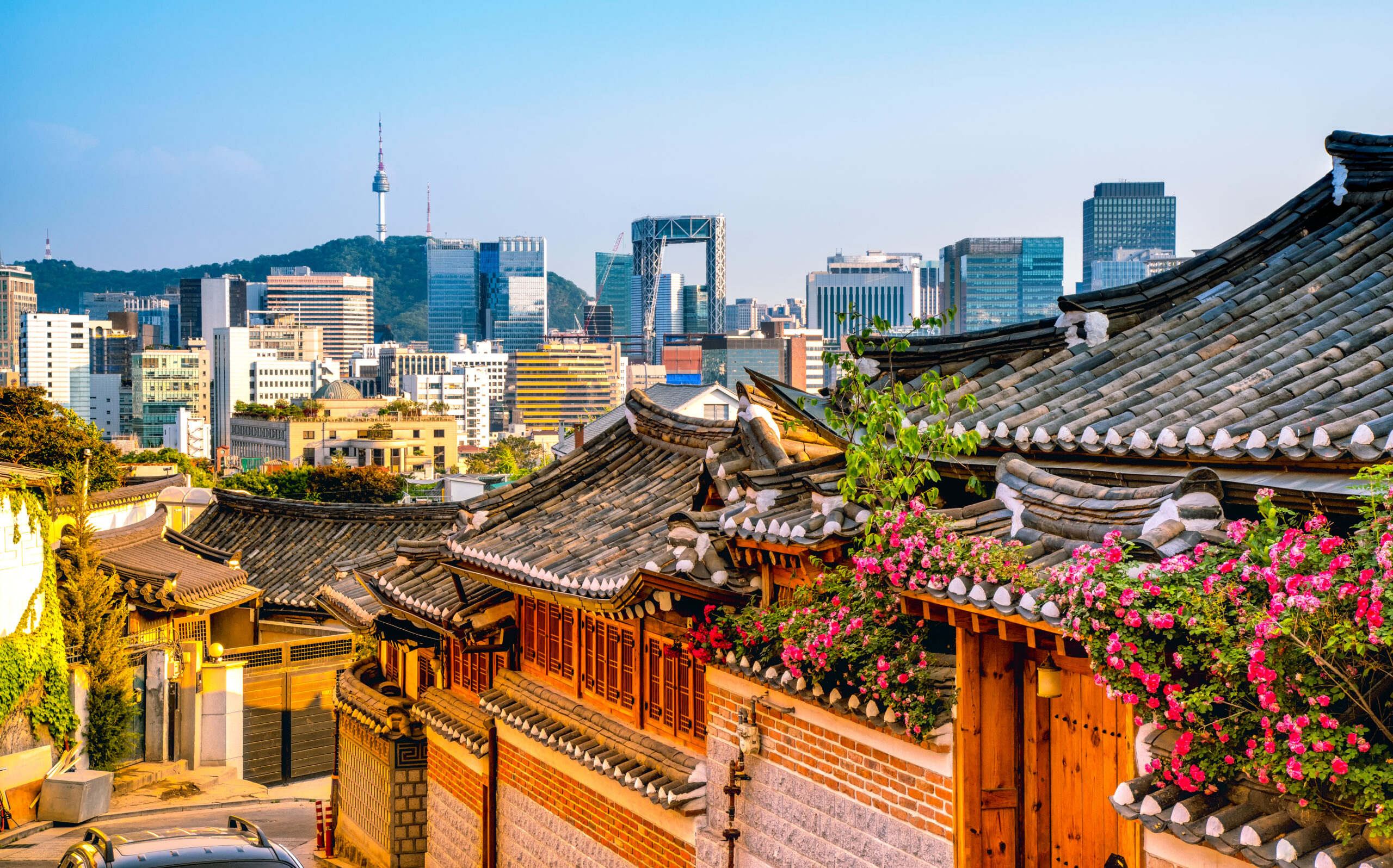
- Transfer independently to the Hotel Gracery Seoul, centrally located in the Myeongdong and City Hall district.
- Welcome reception and dinner this evening.
September 29
B,L,D
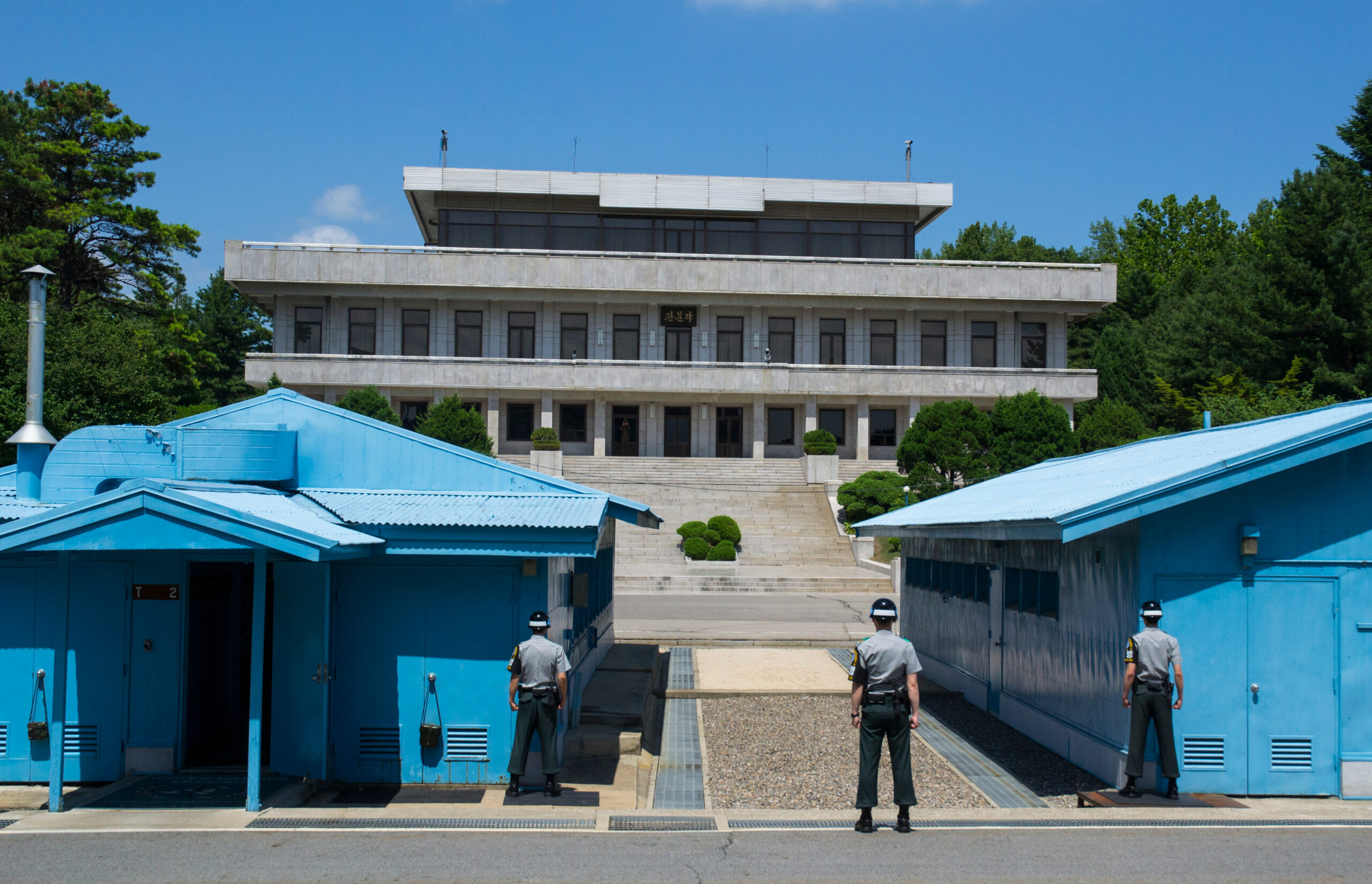
- This morning meet for an overview of Korean history with a local historian.
- After the talk, meet in the hotel lobby to begin examining the cultural and historical background of the Joseon dynasty and their capital, Seoul.
- Our program will include a stop at the grounds of Changdeok-gung, built originally in 1405 as a detached palace, burned in 1592, rebuilt in 1611, and used since then as the official residence of various Joseon kings. Continue on to a secret garden also located within the grounds of the palace. Here, in a wooded and hilly terrain, footpaths meander past ponds and pavilions and over small bridges.
- After lunch at Jaedong Sundubu, a hidden local restaurant, explore some of Seoul’s historic residential areas known as “hanoks.” Preservation efforts and spreading commercialization has caused debates about the impact of preservation on established communities. We will look at the few hanoks that remain close to their original 1930s condition and see how preservation efforts have affected their design.
- Meet with the team at the People's Solidarity for Participatory Democracy, one of South Korea's most respected civic organizations, known for its long-standing commitment to advancing democratic governance, social justice, and human rights.
- Enjoy dinner at Hangaram Hanjeongsik, located near the hotel.
September 30
B,L
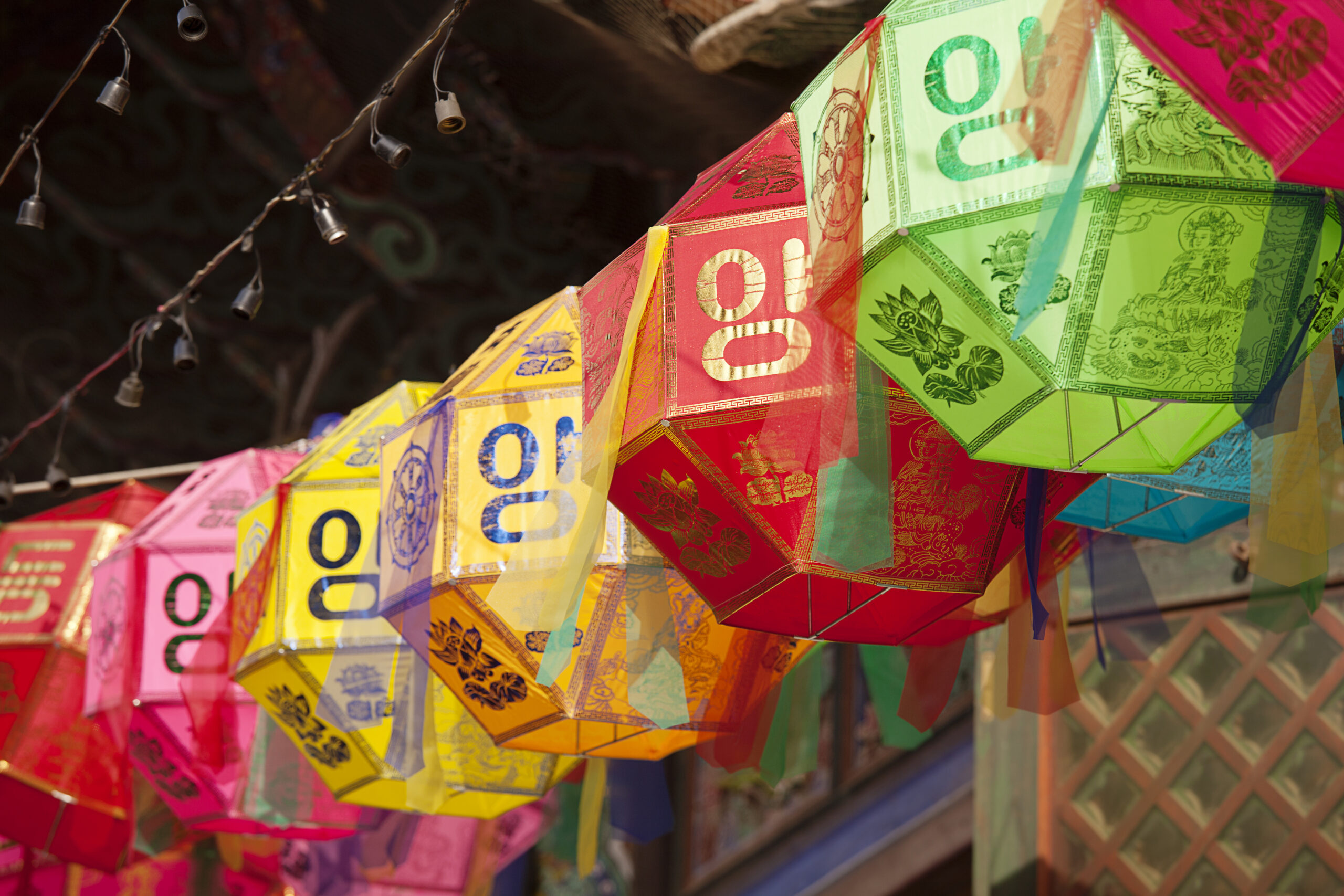
- Drive about 90 minutes to the De-Militarized Zone (DMZ) and the Joint security Area (JSA) to see and learn firsthand of the reality of two countries that have been at odds with each other for so many years. Visit Imjingak Park, the DMZ Museum, the Third Infiltration Tunnel, the Bridge of Freedom, and look across the DMZ into North Korea from the Dora Observatory.
- The DMZ is actually a 155 mile long and 2.5 mile wide strip of land running across the Korean Peninsula crossing the 38th parallel. Over a million soldiers are stationed along the DMZ, one of the most heavily armed borders in the world, and are constantly faced with a high level of tension. Our program will begin at Imjingak Park the location of the Bridge of Freedom which South Koreans and refugees crossed when they left North Korea. The bridge was also the site of the exchange of POWs from the Korean War.
- Visit the DMZ Museum. The museum focuses not only on the war and the restoration of peaece, but on the ecology of the area. Inside the military buffer zone, where civilian entry has been forbidden for more than five decades, there is a vast ecological diversity containing various rare species of animals and plants.
- Afterward visit the 3rd Infiltration Tunnel, discovered in 1978 by a North Korean defector, it is the largest (6.5 feet wide and just over one mile long) and closest tunnel to South Korea of the many tunnels dug by the North Koreans. Over 10,000 armed soldiers could pass through the tunnel and into South Korea within an hour!
- Also visit the Dorasan Observation Platform, where, weather permitting, you can view North Korean military personnel. We will pass by one of two villages located in the area, Unification Village, or Daesong, which is situated in South Korea. The approximately 230 residents of the village receive subsidized housing and high tax-free incomes. Each family has a modern house and farm where they mainly grow rice and ginseng. The residents have a curfew and soldiers stand guard while the villagers work in the fields. North Korea’s counterpart to the village is Gijeongdong where massive well-built apartment structures stand, however all the buildings are empty and have no floors or glass in the windows. The only residents are ultrapowerful loudspeakers as big as a house that broadcast propaganda for 6 to 12 hours per day.
- Before returning to Seoul, visit Paju Book City for a late lunch. Paju is a giant cultural complex that belongs to the Ministry of Culture, Sports and Tourism, and is home to over 250 publishers. The complex also includes Heyri Art Village, a colony inhabited by painters, sculptors, photographers, and other artists.
- Dinner this evening is at your leisure.
October 1
B,L,D
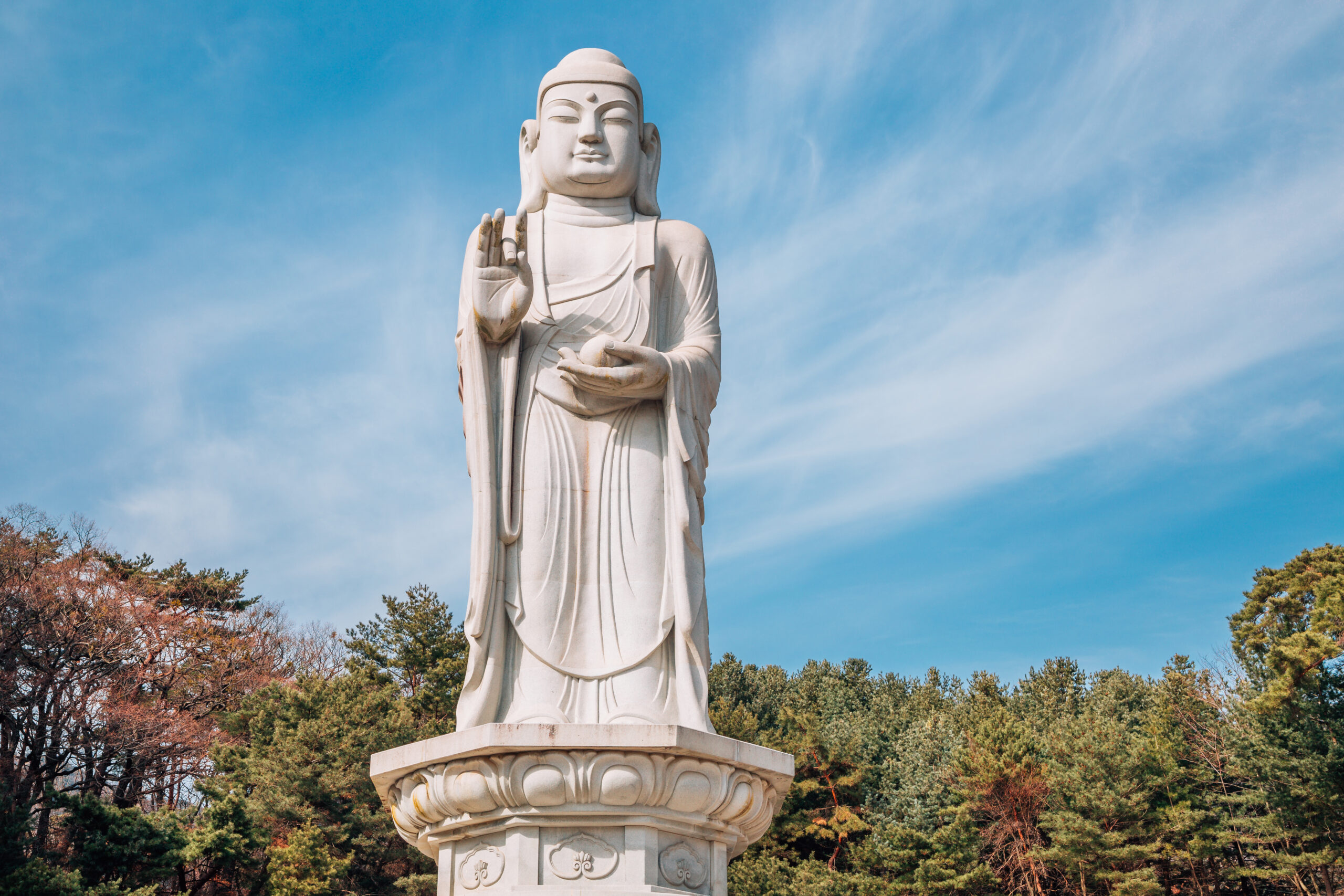
- Drive to Free North Korea Radio. The station is based in Seoul and broadcasts news of the outside world across the border into North Korea. It is illegal for North Koreans to listen to anything other than state-run radio and all legal radios are ixed so they can play only channels approved by the government.
- Continue to Gwangju, stopping for lunch enroute. The South Korean national identity is rooted in the struggle for democracy against military authoritarian government. The dawning of democracy in Korea began, to a large extent, in the southwestern city of Gwangju in 1980. From May 18 to 27, protests against martial law became the pivotal crucible of a grassroots campaign to overturn a despotic regime and assert civilian rule. During those terrible 10 days in May 1980, the discredited official death toll is 170, while unofficial estimates range as high as 2,000. For sure hundreds of civilians were brutally massacred, beaten and tortured by the military, rendering Gwangju into a potent symbol of people power that inspired similar subsequent movements around Asia. The crackdown mobilized ordinary citizens and ignited civil society, a collective recoiling from the savage violence perpetrated by Gen. Chun Doo-hwan that eventually pushed the military back into the barracks and ushered in civilian rule in the 1990s.
- Meet with Mr. Lee Cheol-woo, the Chairman of the May 18 Memorial Foundation, which sponsors commemorative projects surrounding the May 18 Democratization Movement.
- Check-into the Gwangju Holiday Inn.
- Enjoy dinner at Najung Sanghui.
October 2
B,L,D
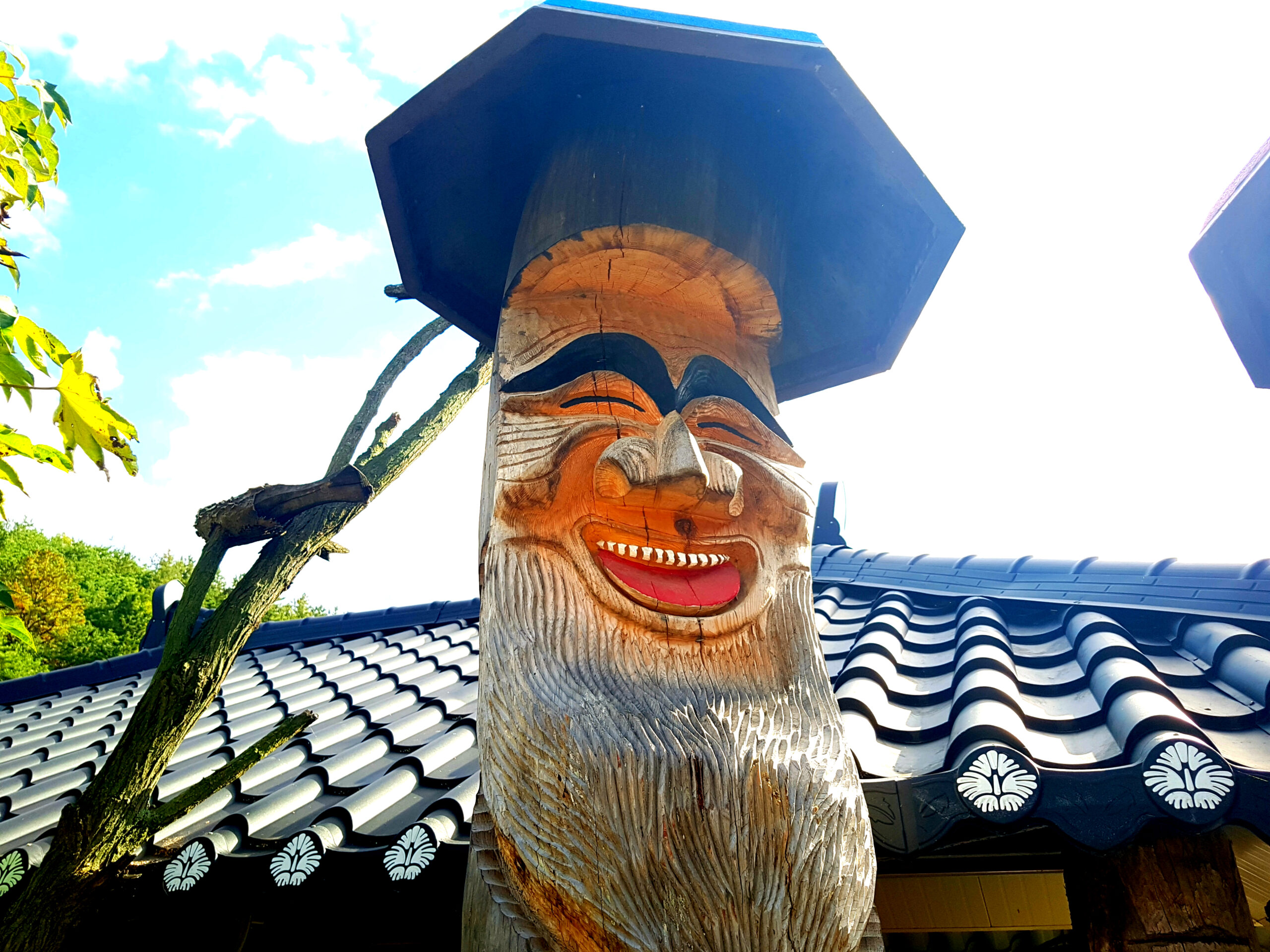
- When you are in Gwangju it’s hard to escape May 18, or “5.18,” as it’s often stylized. There is the 5.18 Liberty Park, the 5.18 Archives, and the 5.18 Square in front of the old provincial capital buildings. There is the May 18 National Cemetery, reached by riding bus number 518 north along Democracy Road. Gwangju’s city hall, built in 2004, will remind you of the date – its left half has five floors and its right half has 18.
- The city is dotted with 29 stone monuments, each one marking a key event during the uprising, all connected by an ambitious 70 km walking tour. Although we will not do the walking tour, we will be sure to point out the monuments that we pass.
- Begin the day at the May 18th Cemetery, which opened in 1997. The May 18th Cemetery was created to commemorate the civilian casualties from an uprising that occurred on May 18, 1980. A small but emotionally charged museum shows photographs, blood-stained flags, and a hard-hitting film that gives a dramatic account of the traumatic events that still scar the country's political landscape. A memorial hall displays photographs of the ordinary folk - from students to grandmothers – who lost their lives.
- Enjoy lunch at Daein Market and later explore Daeinsijang. By the early 2000s, this traditional market in the city center was nearly shuttered, but as part of the 2008 Gwangju Biennale, artists added colorful murals, giving people a new reason to visit. Today more than 50 artists also have their studios here, and there are cafes and galleries along with the traditional stalls.
- Continue on to the May 18th Memorial Park and the Memorial Cultural Center, which honors the Gwangju Democratization Movement.
- Stop at the May 18 Archives, listed in the UNESCO Memory of the World Register.
- Dinner at Bitgoeul Tteokgalbi this evening.
October 3
B,L,D
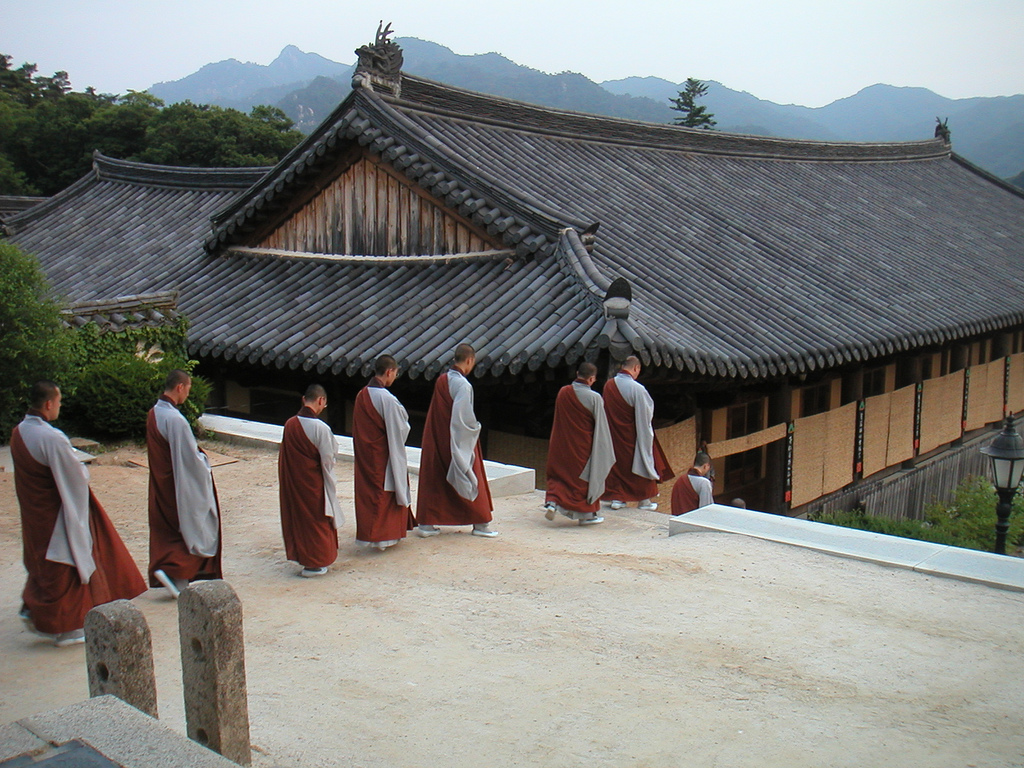
- Drive to Haein-sa Temple. Set in the thickly forested foothills of Mt. Gaya, a national park, Haein-sa is one of the greatest centers of Buddhist scholarship in the Orient. Still a vital monastic center it is easy to imagine that one has been transported back 1,000 years to Korean Buddhism’s heyday.
- The temple complex consists of 50 major buildings beside 13 hermitages hidden away in the surrounding hills. Haein-sa’s chief claim to fame: the long, grilled wooden storehouse which contains the tens of thousands of wood blocks on which are inscribed the Tripitaka Koreana, the complete canon of Buddhist scripture.
- Enjoy a special meeting with monks of the Haeinsa Temple and a specially prepared lunch of the dwenjang and gochujang (stews).
- Continue 1.5 hours to Daegu, a historic stronghold of power for South Korea’s premier political family. From 1000 year old Buddhist sites and traditional markets to vast green spaces and contemporary cafes, Daegu is one of the country’s most vibrant cities.
- Visit the Daegu Yangnyeongsi Museum of Oriental Medicine and explore the herbal medicine market whose history is as vast as its scope. It dates from 1658, making it Korea’s oldest medicine market and still one of its largest. The store spills onto the street with fragrant curiosities from lizards’ tails to magic mushrooms.
- Check-in at the Daegu Grand Hotel.
- Dinner at the hotel this evening.
October 4
B,L,D
- On February 28, 1960, students from eight high schools in Daegu staged a protest against then-President Syngman Rhee’s attempt to fraudulently continue his administration. That movement led to the April 19 Revolution that year, which toppled Rhee. President Moon Jae-recently said the Daegu Democracy Movement was the root of the candlelit protest adding that people power could overcome abuses by the state. Drive to The Society for the 2.28 Movement for Democracy for a discussion on the Daegu Democracy Movement of 1960.
- Head two hours north to the UNESCO World Heritage site of Hahoe Village. This picturesque village has been continuously inhabited for over 600 years and is one of the best preserved Joseon villages in the nation. Cradled in a bend of the Nakdong River, this charming area features both tiled and straw roofed houses. Spend the morning exploring the village, including the enormous and ancient zelkova tree at the center of the village. Stop at the Byeongsan Seowon, one of the most beautiful Confucian academies in the nation. This school was built in 1613 to commemorate Yu Seong-ryeon, and act as a center of learning for the Pungsan Yu family.
- Enjoy a traditional Bulgogi lunch served with 24 side dishes at a local restaurant.
- Close by is the village of Andong where we will visit the Andong Folk Museum. Andong was the ancestral home of the Kwon and Kim clans, important yangban (aristocrat) families which held many high government posts during the Joseon Dynasty. Andong is known as a center of culture and folk traditions.
- Continue on to Gyeongju called the “museum without walls,” is perhaps Korea’s most fascinating city. The visitor who spends a day or two here soon finds themselves enthralled by, and overwhelmingly curious about, the much older culture of Silla, of which Gyeongju was the heart. The Silla era lasted nearly a thousand years, from 57 BC to 935 AD, and Gyeongju, then called Seorabeol, was the kingdom’s capital throughout. Relics of that long period are richly scattered through the valley. The entire valley is dotted with burial tombs, tiered pagodas, fortress ruins, relief sculptures and palace grounds.
- Late afternoon visit to Seokkuram, which has become a major pilgrimage site for practitioners and students of Buddhism and Buddhist art. It displays a Buddha image considered by many to be the most perfect Buddha image of its kind anywhere in the world. The beauty of this image is difficult to convey in words. The expression, the perfect proportions and the pure elegance of this image are quite breath-taking.
- Check in to the Gyeongju Hilton. Dinner is at the hotel.
October 5
B,L,D
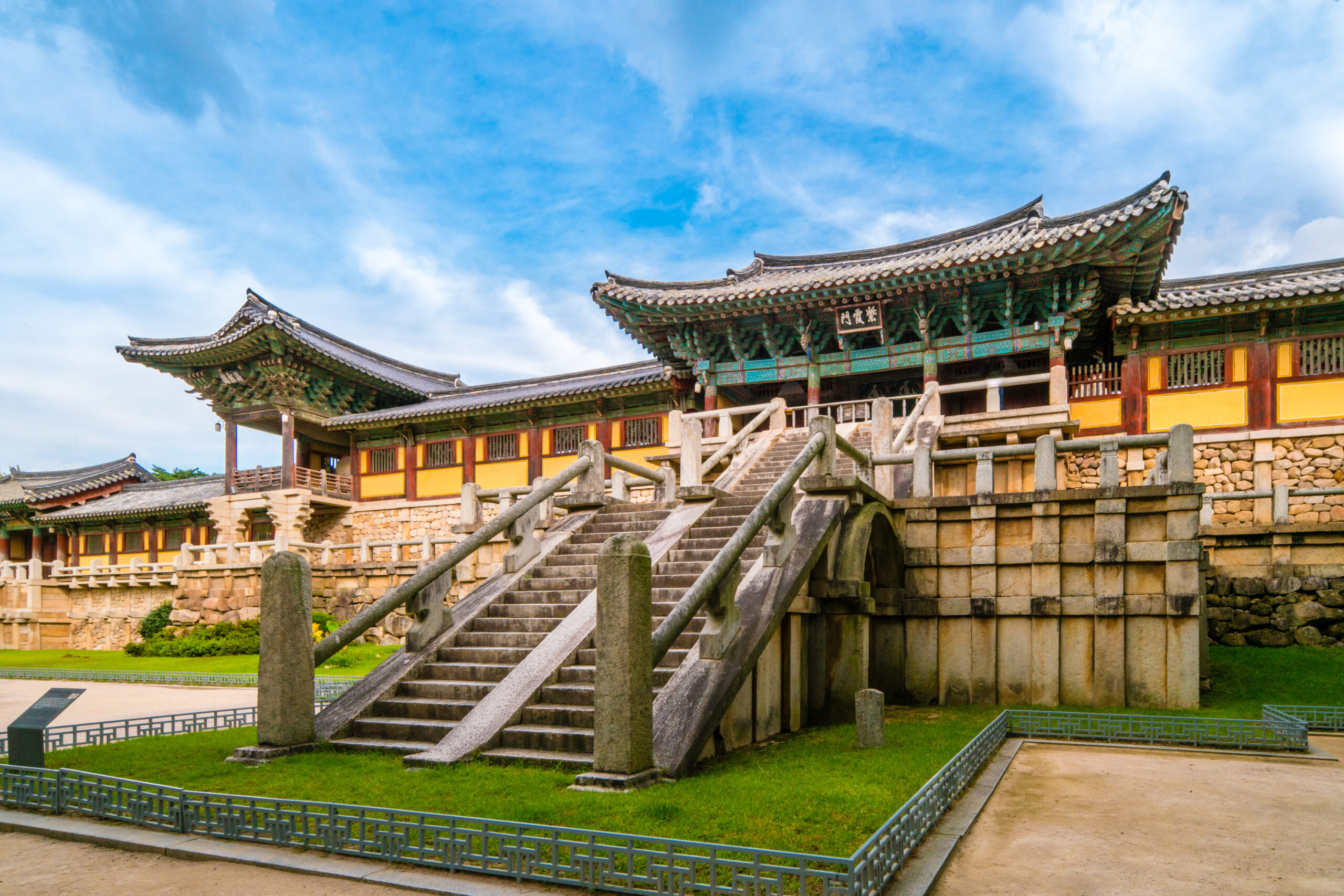
- This morning drive to the tombs at Tumuli Park, which holds the resting places of 1,000 years of kings and queens in this unique “park” on the southeast side of Gyeongju. One notable tomb within Tumili Park is Cheonmachong tomb meaning “Heavenly Horse Tomb.” The name comes from a painting of a heavenly horse that was found during the tomb’s excavation.
- After lunch at a local restaurant, continue to the National Museum which displays many of Gyeongju’s treasures. There are over 80,000 items here, some of the finest of the objects unearthed during a number of excavations.
- End the day at the studio of painter Park Dae-sung, a well-known contemporary ink painter. He is most famous for his works representing monumental mountains. Interestingly he has never received any formal academic training or studied under a teacher and paints with only one hand, having lost the other in a childhood accident.
- Dinner this evening is at the Yijo Korean Restaurant.
October 6
B,L
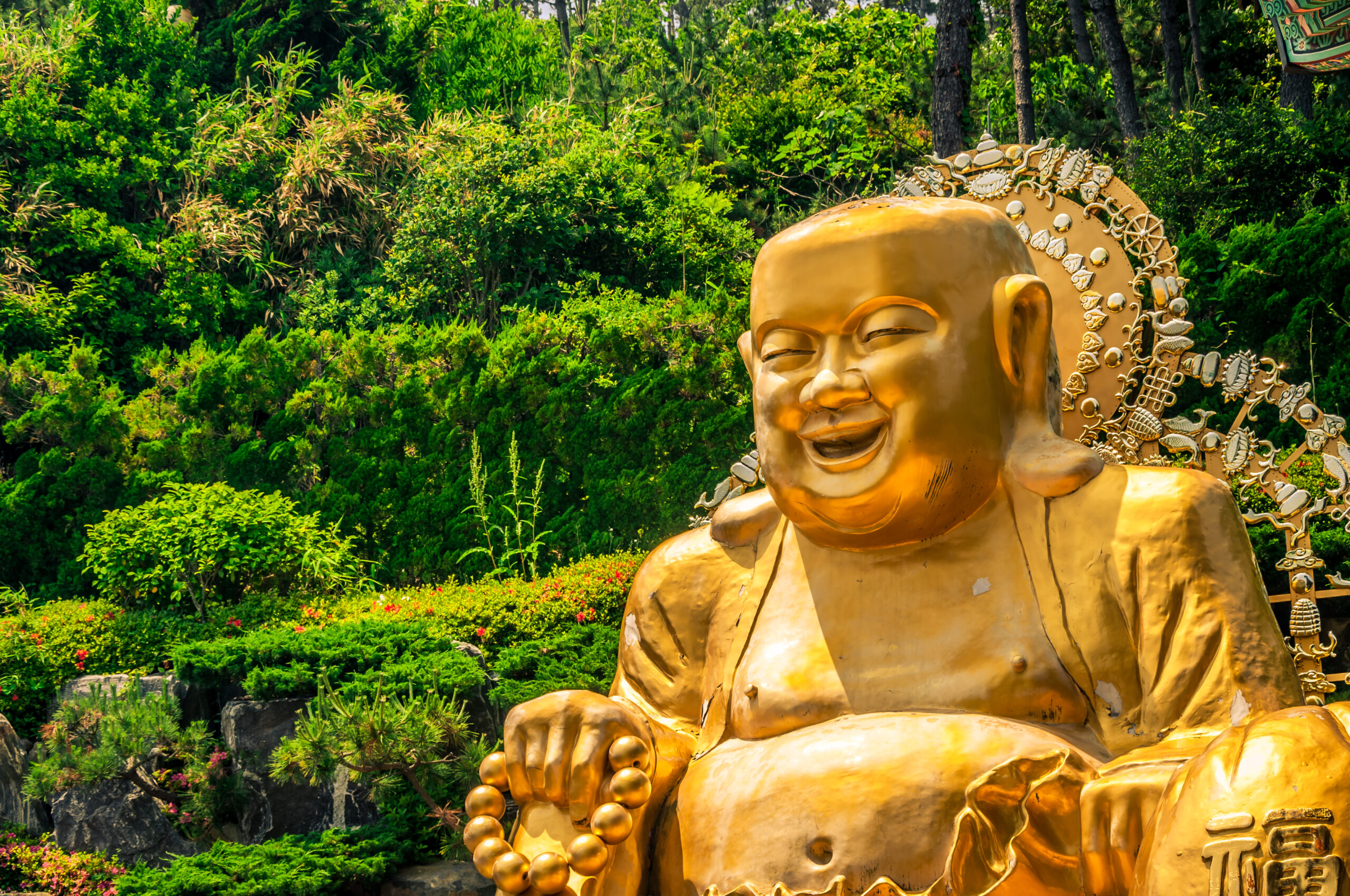
- Return to Seoul, a drive of just over 2.5 hours, and on arrival visit the Leeum Samsung Museum of Art, which is built on a stunning property right in the heart of Itaewon. Three renowned European architects were commissioned to design the different buildings that make up the museum and the result is stunning! Our focus this afternoon will be Museum One which houses Korean artifacts such as celadon and porcelain, Buddhist paintings, historic bronze sculptures, and jewelry found inside ancient tombs.
- After lunch, meet to discuss South Korea’s Candlelight Revolution, which was the culmination of twenty successive Saturday night rallies that brought out over 16 million people from a population of 51 million to the streets between 2016–2017. The protesters were responding to emerging stories about bribes that President Park had received in return for favors to businesses. It was a movement that brought millions to the streets and led to a rare—perhaps unprecedented—peaceful and democratic overthrow of a democratically elected national leader. Take a tour of historic spots of the contemporary democratization movement.
- Check-in to the Hotel Gracery Seoul and enjoy dinner at leisure.
October 7
B,L,D
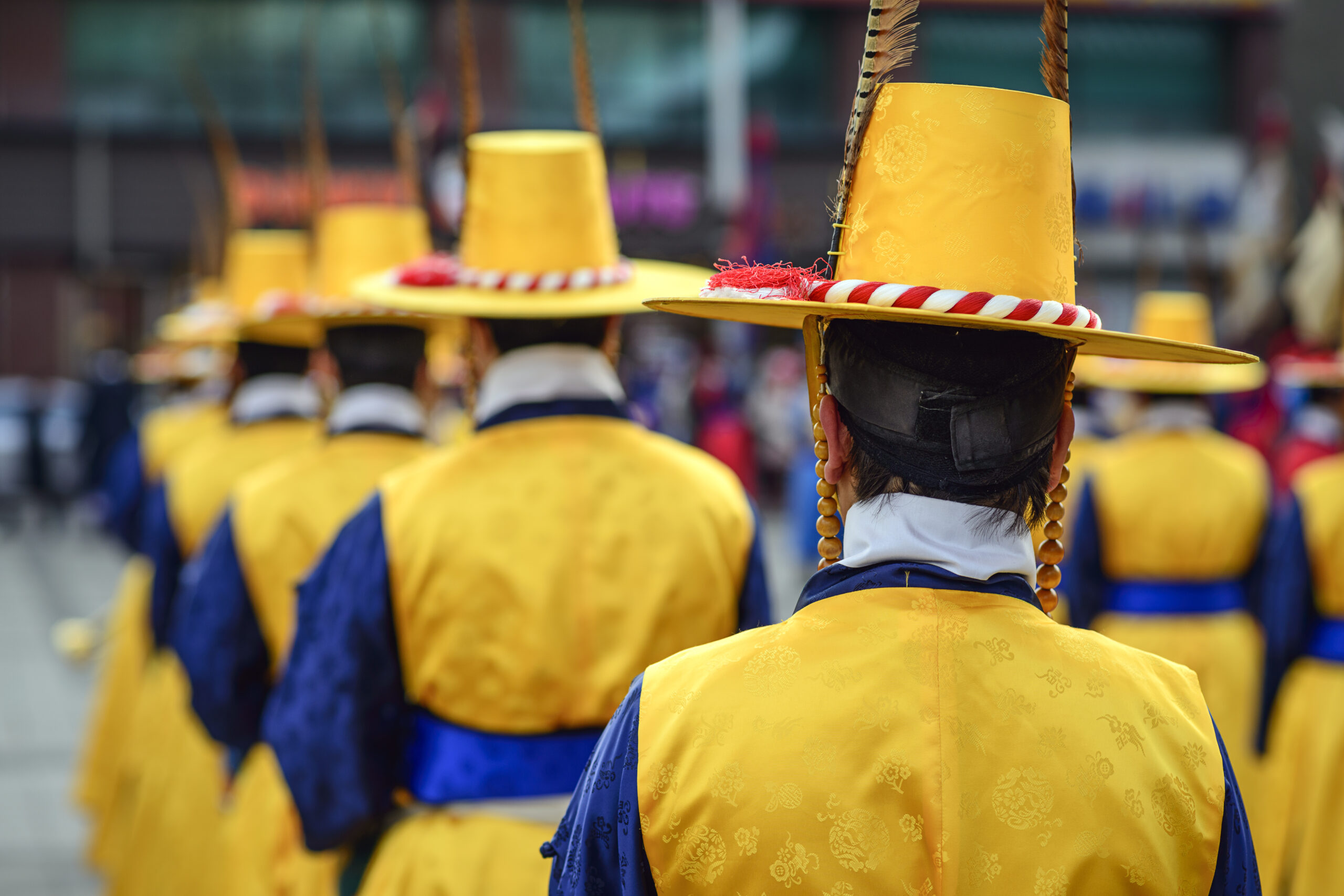
- This morning meet with Emanuel Pastreich for a discussion, “The Crisis in Korean Politics." Mr. Pastreich founded The Asia Institute in 2007 while working in Daejeon, Korea. He writes extensively on culture, technology, the environment and international relations with a focus on Northeast Asia.
- After lunch return to the hotel and enjoy free time on your own.
- Farewell dinner this evening.
October 8
B
- Depart on flights back to the U.S.
Trip Price
Per person double occupancy: $7,800
Single supplement: $1,780
Included
- Hotel accommodations based on double occupancy as listed
- Meals as listed in the itinerary including bottled water
- All sightseeing and excursions in a private air conditioned bus
- All private events and speakers as listed (subject to availability)
- All entrance fees included as listed in the itinerary
- Services of an English-speaking Korean guide and tour manager who will travel with the group from beginning to end
- Bottled water on the bus at all times
- Porterage
- Basic gratuity to tour managers, guides and bus drivers
Not Included
- International airfare to and from Seoul
- Drinks with meals, other than bottled water
- Passport fees
- Excess luggage charges
- Travel insurance
- Items of a purely personal nature
- Any item not listed