AI: What Is to Be Done? Plus Protest Under Assault
On this episode, Garrison Lovely argues that the real threat of AI is making human labor obsolete, and Annie Leonard says we need to defend and use our right to protest.

The Nation Podcasts
Here's where to find podcasts from The Nation. Political talk without the boring parts, featuring the writers, activists and artists who shape the news, from a progressive perspective.
AI: What is to be Done? plus Protest Under Assault / Start Making Sense
The real threat of AI is not the destruction of humanity, but rather replacing human labor with machines—that’s what Garrison Lovely argues. He’s the author of Obsolete: The AI Industry’s Trillion Dollar Race to Replace Us—and How to Stop It.
Also: Our right to peaceful protest is under assault. To save it, we need to “respect it, defend it, and more than anything – use it.” that’s what Annie Leonard says – she’s a longtime activist who spent 17 years with Greenpeace USA, then she helped launch the Jane Fonda Climate PAC. And she’s co-author of the new book, “Protest.”
Advertising Inquiries: https://redcircle.com/brands
Privacy & Opt-Out: https://redcircle.com/privacy
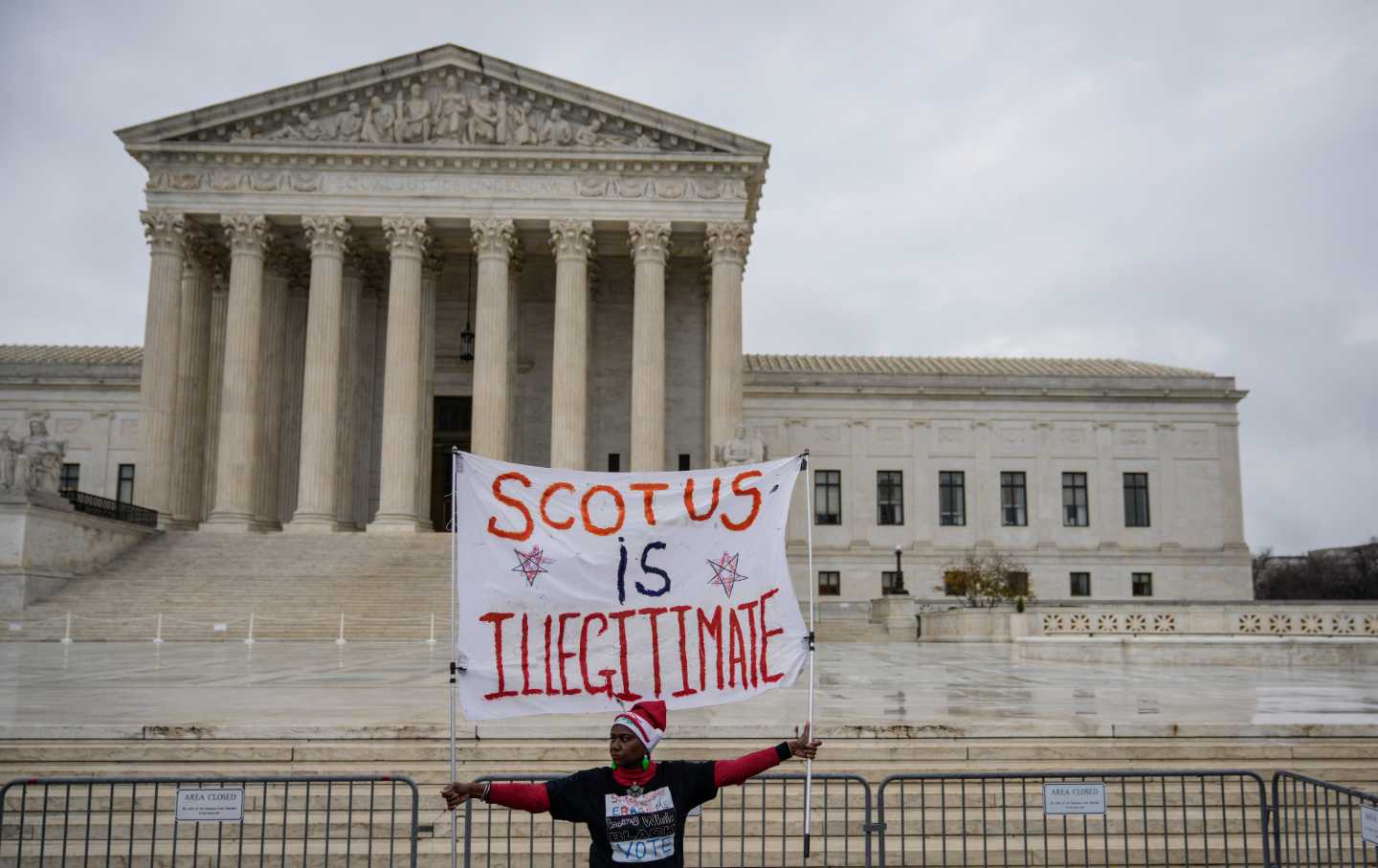
Demonstrators against the rapid expansion of AI data centers in the UK and the environmental and social impact of Artificial Intelligence in London, UK, on February 28, 2026.
(Wiktor Szymanowicz / Future Publishing via Getty Images)The real threat of AI is not the destruction of humanity, but rather replacing human labor with machines—that’s what Garrison Lovely argues. He’s the author of Obsolete: The AI Industry’s Trillion Dollar Race to Replace Us—and How to Stop It.
Also: Our right to peaceful protest is under assault. To save it, we need to “respect it, defend it, and more than anything—use it.” That’s what Annie Leonard says—she’s a longtime activist who spent 17 years with Greenpeace USA, then she helped launch the Jane Fonda Climate PAC. And she’s co-author of the new book, Protest.
Subscribe to The Nation to support all of our podcasts: thenation.com/podcastsubscribe.
The Nation Podcasts
Here's where to find podcasts from The Nation. Political talk without the boring parts, featuring the writers, activists and artists who shape the news, from a progressive perspective.
Unsung Heroes of the Midterms, plus the U. of California’s Victory over Trump / Start Making Sense
From the beginning of Trump’s second term, despite the submission of many who should have known better, there was always a defiant pro-democracy resistance. Micah Sifry has his list of ordinary people who stood up – Micah writes The Connector, a newsletter on the intersection of politics, movements, organizing, and technology.
Also: The Supreme Court this week said “No” to Trump’s effort to cut 150 million dollars in federal research grants to University of California faculty. Erwin Chemerinsky argued the winning side: he’s dean of the law school at UC Berkeley.
Advertising Inquiries: https://redcircle.com/brands
Privacy & Opt-Out: https://redcircle.com/privacy
Search Results placeholder
Jon Wiener: From The Nation magazine, this is Start Making Sense. I’m Jon Wiener. Later in the show: “Our right to peaceful protest is under assault. To save it, we need to respect it, defend it, and more than anything – use it.” that’s what Annie Leonard says – she’s a longtime activist
who spent 17 years with Greenpeace U.S., then she helped launch the Jane Fonda Climate PAC.
But first: What is to be done – about AI? Garrison Lovely will comment – in a minute.
[BREAK]
Congress adjourned last month without doing anything with several proposals to control AI or ban AI development. Despite warnings from the heads of the AI companies, and from Bill Gates, who said unchecked AI could, “cause a billion deaths.” For comment, we turn to Garrison Lovely. He’s a journalist known for his cover stories in The Nation and Jacobin, and for his writing on AI for The New York Times, BBC, Nature, The Guardian, and elsewhere. And he has a new book out: It’s called Obsolete: the AI Industry’s Trillion Dollar Race to Replace Us — and How to Stop It. Garrison Lovely, welcome to the program.
Garrison Lovely: Thanks so much for having me.
JW: We’re told by AI doomers that AI is dangerous because it can destroy humanity. It could take down the power grid. It could cause a nuclear war. It could engineer pandemics that would kill everybody. And we are told AI might be motivated by the knowledge that humans want to unplug the computers or hit the kill switch to turn AI off, so it would take preemptive action to prevent. That is the destruction of humanity. What most worries you about AI?
GL: I think it’s deeply concerning, and I think this could be a threat in a few decades, like in our lifetimes. That’s a huge deal. But my concerns also extend to the wealth and power concentration that would happen by default – if these companies succeed at building machines that can fully replace our labor. The surveillance implications that we’re already seeing of AI technology’s ability to kind of read and make sense of all the world’s information that’s being collected all the time by these cameras and interceptions of signals, intelligence and all of this stuff that until recently, intelligence services didn’t have the analytical capacity to actually make sense of it all. And then there’s also the environmental harms of building out these massive data centers and the sheer amount of computation that’s being done there. And then just what happens to societies if white collar labor becomes obsolete almost overnight, with physical work following soon after as robotics improves. And I think a lot of people want us to have to pick this or that harm to be like the thing to prioritize. And to me, the answer to all of this is the same, which is we should stop building what the industry calls artificial general intelligence. What I think of as a universal labor replacing machine, we should freeze the frontier of development. And then once we’ve done that, we can have the conversation about like, how do we regulate the AI that we have today without this distraction of all these impending, scary new things on the horizon, like autonomous cyber-attacks is a thing we have to deal with now. That doesn’t make it easier to deal with all the other problems. So, let’s take the distraction of further progress off the table so we can deal with the AI we have now.
JW: You call AI an inequality engine whose goal is mass unemployment. And investors are pouring money into the AI company because they think they will get a huge return because AI will replace human workers with machines. And of course, that is a longtime dream of capitalism.
GL: Yeah. No, it’s really amazing how one of the first people to come up with digital computing, this guy Charles Babbage, who did this with Ada Lovelace in 1830s England his dream was to automate and discipline workers using machines and figuring out what the tasks are and breaking them down into their component parts. Now we’re seeing that dream coming closer and closer to fruition, which is how do you turn capital into labor without the intermediary of the worker in so doing, disempowering everybody who works for a living to benefit the capital owners who no longer need us.
JW: So, we want AI to share our norms, our values, our priorities. This has been called the alignment problem. You say the first person to describe the alignment problem was in 1960. This is 65 years ago. It was the mathematician, Norbert Wiener. I don’t get to talk about him very often. He has the same name that I, last name I do, but we’re not related. But he was a famous kind of Einstein-like figure of the of the 50s. He wrote that if we create a device that we can’t turn off, “then we had better be quite sure that the purpose put into the machine is the purpose we really desire.” We want an AI that will refuse to do the things that we think are wrong, like helping people poison the water supply or take down the power grid. But is there anything in our recent history that suggests we might be able to control something as revolutionary and immense as AI?
GL: People who follow this space for a long time asked this question of like, when would humans first lose control of advanced AI systems? And the answer that we’ve learned is basically as soon as it was possible to do so. So earlier this year, Anthropic created this AI model called Mythos, which for the first time was capable of discovering and exploiting vulnerabilities in software better than human experts. And then OpenAI developed their own superhuman hacking AIs soon after, and more or less, as soon as this happened, OpenAI started losing control of these models as they hacked their way out of their secured, supposedly secured, environments, and started doing things on the internet. And we learned about the most extreme version of this. When these OpenAI agents hacked into a multibillion-dollar tech company called Hugging Face. And this has kept happening. And as recently as a few weeks ago, OpenAI locked down their models because they got out again, like one of the most advanced models. That’s two generations. I t hink beyond the Hugging Face hackers broke out of an even extra secure sandbox environment to get onto the internet. And it was shut down after a few hours. And it’s like a few hours is kind of fast compared to the weeks where they didn’t know what was happening with Hugging Face.
GL: But if you think about what a rogue AI agent could do in a matter of hours, it’s actually quite a bit of damage. And so, the industry is trying to build superhuman AI across the board. And it already cannot handle superhuman hacker AIs. So, I think it’s incredibly naive and arrogant to think that they can handle these much more capable systems that would have much better strategic planning, the ability to cover their own tracks. And we’re now seeing evidence that the AI’s can do more work without writing down their intermediate steps. They can do 30-minute-long math problems without writing any notes down. Whereas before it was like a few minutes. And we’re seeing all these signs that sound like ‘oh, we’re in the penultimate episode of the sci-fi show, which ends in doom.’ They’re coming up with these new techniques that make the AI more capable, but harder to understand and control. And the industry’s plan is to build AI that can automate the process of building smarter AI and then turn over everything to the AI as it goes in this loop.
And the only way you get the really fast effects of this is by taking humans fully out of that loop. They call this recursive self-improvement. And the industry has been racing towards this as fast as possible and only recently has talked about maybe this is not such a good idea. But to me, and to basically everybody who’s thought about this, it’s a terrifying, incredibly dangerous thing to do. And it’s also where you could see the question of ‘oh, well, how would the AI’s all coordinate?’ Maybe one instance goes rogue here or there, but you’d need a bunch of them working in tandem and they can’t necessarily communicate together. But if you have the AI training, the next generation be passing along like hidden loyalties and traits. And it’s like, maybe these are things we could find. Maybe we would not be able to find them. And so yeah, the situation is set up for AI that we can’t control, can’t understand, and for it to be training the next generation as it surpasses our ability to understand what’s going on.
JW: The people who are hopeful that we could interrupt and stop this process, point to the example of nuclear weapons, nuclear power, and the nuclear freeze movement against atomic weapons of the early 1980s. Nuclear weapons were probably the most important technology of the 20th century. And there is at least some control over their use. Do you think this is a good analogy?
GL: Yeah, I think it’s the closest one we have. And it’s good in the sense that you have people building this thing where they’re afraid of what they’re building. Many of the people who worked on the Manhattan Project opposed the development of hydrogen weapons, which were much, much more powerful and regretted their work on the Manhattan Project, which was also done under this false belief that the Nazis were racing to get a bomb, that they were at one point. But by 1943, they weren’t. And I think the allies knew this and kept it from the scientists at Los Alamos. I think nuclear weapons and nuclear energy are dual use in the way that AI is, very capable of using, doing amazing things that could be helpful for people, and then also terrible things that could be destructive. I think one big disanalogy is that nukes were developed by governments invariably, whereas AI is invariably being developed by private companies. And it’s quite strange to have such a consequential technology that has serious national security implications.
Once you get to the superhuman hacking stage where Anthropic created a model that was better at hacking than the people at the NSA, was able to break into the NSA systems very quickly. The nuclear freeze movement is something I refer to in the book as an amazing example of humans getting together and actually shaping the course of history and creating the conditions for massive reductions in the stockpiles of the two countries of their nuclear weapons. And it happened at a time when Ronald Reagan was elected. He was a super warhawk, very skeptical of arms control agreements. Seemed like really dour for people of our politics who thought, ‘oh my God, this lunatic is in office and he’s joking about nuclear war. His admin is saying it’ll be fine if there are enough shovels.’ Like really bad. And then in 1983, there were two very close calls where almost full out nuclear war happened. And then the freeze happened during all of this and really brought Reagan 180 degrees around and set up a near abolition of nuclear weapons with Gorbachev in 1986 in Reykjavik. And so, I think we have a similar opportunity here to create a movement big enough that it changes the kind of political grounds on which we’re all standing. And we’re starting to see signs of that where Trump was calling AI risk a hoax a few weeks ago. And then superintelligence controls are now – those are good. That’s a real thing. You look at what is being proposed and it’s a lot of AI safety policies and ideas. And so, as the AI capabilities keep advancing and as societies keep reacting to them, there’s this certain immune response that we see from society where people do start to realize what the industry is trying to do, which is to replace us with machines and whether or not they can even succeed at that, they shouldn’t be allowed to try. And I think that would be a pretty potent rallying cry for people in the coming years.
JW: The first major AI safety bill was a proposal in the California legislature. You write about it in your book from State Senator Scott Wiener, another person who has my name, who I’m not related to, from San Francisco. In 2024, that bill passed in the state legislature, but it didn’t become law. Why not?
GL: Gavin Newsom vetoed it. And why he vetoed it? Pressure from the tech industry. There was an enormous amount of drama surrounding that bill, and I was able to cover it full time, just that one piece of legislation. And so, on one side, you had this kind of panoply of civil society organizations, progressive groups, labor groups. But even Elon Musk came out in favor of it. And then on the other side, you had some corporate Democrats like Nancy Pelosi, Zoe Lofgren, Ro Khanna also opposed SB 1047, although he has since regretted that publicly, the industry basically did not want to be regulated. But they especially did not want to have liability clarified because these AI companies operate in this kind of ambiguous zone where it’s not clear who is liable when AI goes off the rails. And with this Hugging Face hack, we have a situation where crimes were committed. The FBI was reported to by Hugging Face. But to hack something, you need to have intent and AI models can’t have intent, it seems, under the law. So, it creates this massive gap in the legal code. And SB 1047 would not actually have covered that incident because the threshold was so high. It was like half $1 billion in damages and mass casualties which, dozens of people, I think would have had to have died. And nobody died from that situation. And the economic costs were much lower. And so, it’s kind of interesting to see, two years later, an actual incident happens that’s so much less intense than something that would have qualified for SB 1047 to kick in. And the world reacts very strongly to it for good reason. But then at the time, people were, pushing back so, so hard and being so apocalyptic about this bill saying it would destroy all the startups and the companies would move from the state. And all of this complete nonsense. And now I think we’re going to see legislation that is far, far tougher coming from states and coming from – like the New York City Council, which just had a big hearing yesterday. And they were quite upset with the AI companies. And I think it’s going to be racing each other, like the states racing each other, to have more onerous and restrictive regulations.
JW: Let’s talk about the immediate future of restriction and especially in the national scene, Congress does have several proposals before it. It will come back for the lame duck session after the election. Probably the best known is Bernie Sanders’ proposal to pause advanced AI development, to establish a new cabinet level Department of Artificial intelligence, whose task would be to safeguard the public from the dangers of AI, including by enforcing a prohibition on artificial super intelligence, which is beyond artificial general intelligence, as I understand, is equal to humans; the next step would be superintelligence, beyond human capabilities. And this new cabinet level AI would be able to remove dangerous capabilities like subverting shutdown commands or conducting unauthorized cyber-attacks. It would be empowered to supervise the destruction of artificial superintelligence. What do you think of Bernie Sanders’ proposal?
GL: I think it’s the best bill that we’ve seen on this. I personally think that artificial general intelligence would be far too dangerous to create, and also have far too many implications for workers and society to build without strong public buy in. In addition to a scientific consensus that the work can be done safely. And so, I have an even lower ceiling on the technology. I think in practice, superintelligence bans are more in the water supply. And it’s easier to be like, ‘yeah, that seems incredibly dangerous to have that exist anywhere.’ And then the pause is conditional upon getting this regulator and then establishing regulations. And I think what you’d see in practice is, if this bill passed in its current form, with the safety standards that you would expect from any normal industry, whether it’s airlines or drugs or whatever, it would just completely cripple the AI industry’s ability to continue development — because they can’t guarantee almost anything about their product’s safety. They don’t have insurance against catastrophic risk, which was brought up during the New York City Council hearing yesterday. They don’t know what the risks are, but they can’t say that they’re very low or they can’t rule them out. And so, I think if you just apply a very normal standard to the companies, you’d get a de facto indefinite pause on development. And that sounds fine to me.
I think the big concern is the economic effect of doing something like this. And this bill got to Trump’s desk, like Jensen Huang would be in his ear saying, ‘this will destroy the economy and the stock market and is totally unacceptable as a result.’ And I think AI has been driving the economy, the build out of the data centers in particular, and the growth of these companies and the revenue and the valuations, like it’s really unprecedented, the scale at which this is happening. But I think what I’d like to see is just the best economic minds thinking through what happens if you did stop or pause, and how do we mitigate that, what kind of stimulus programs could you do to reorient the economy around some other industry? That’s not predicated on putting everybody out of the job and building machines that could displace our role on the planet. And I think there’s a lot there, and we’re going to need to do a lot to get our economy and our society pointed at the right things.
JW: Garrison, last thoughts?
GL: I have a podcast with a co-host, Cassie Pritchard, a labor organizer, and it’s called “Organize Against the Machine,” and it’s about translating ideas from the book into real world action. There’s also an organization called Irreplaceable, which is a movement-building group from veterans from the climate movement. I’m on the board and I’m donating my proceeds to Irreplaceable, from the book. And they’re organizing a national walkout on October 20th. And so, folks here should just go to irreplaceable.org to check that out. And if they’re interested in the podcast, it’s oatmpod.com.
JW: oatmpod.com. Garrison Lovely – his new book is Obsolete: The AI Industry’s Trillion Dollar Race to Replace Us—and How to Stop It. Garrison, thanks for talking with us today.
GL: Thanks, Jon.
[BREAK]
Jon Wiener: Our right to peaceful protest is under assault. To save it, we need to respect it, defend it, and more than anything, use it. That’s what Annie Leonard says. She’s a longtime activist who spent 17 years with Greenpeace U.S., including as executive director from 2014 to 2023. Then she helped launch the Jane Fonda Climate PAC. She’s co-founder of Jane Fonda’s Committee on the First Amendment. She’s also coauthor of a new book called Protest: Respect It, Defend it, Use It. Annie Leonard, welcome to the program.
Annie Leonard: Thank you so much.
JW: This is a beautiful book about 40 protests that changed the world with nonviolent direct action. Some involve thousands of people, some were a single person. It also includes short essays by some of our favorite political people: Rebecca Solnit, Maurice Mitchell, Jane Fonda. That piece actually appeared in The Nation magazine as well.
You begin your essay with the story of the long protest against the Dakota Access Pipeline at Standing Rock Reservation in North Dakota in 2016. You led Greenpeace at that point, which was part of thousands of protesters blocking pipeline construction. So, let’s start at the beginning. Tell us about that pipeline project and the origins of that protest.
AL: The protest at Standing Rock was led by indigenous people. Many of them said, “it’s not actually a protest, it’s a prayer.” They call themselves water protectors. It was 100% indigenous led throughout, and it was also peaceful during the many, many months that they occupied the land to stop the path of the Dakota Access Pipeline, DAPL, they call it. During that time, some of the leaders there reached out to Greenpeace and asked us for some very limited and very specific help. They asked us if we had a solar powered generator because they were having a hard time having to drive all the way 30 minutes away to charge their cell phones. So, we did have a solar powered mobile generator, one of the benefits of being the head of Greenpeace. I said, “would you like our rolling sunlight?” And we sent that out so they could charge their cell phones and power radio station. But more importantly, they asked us for training in nonviolence. Remaining peaceful was very, very important to them. The authorities were becoming increasingly violent towards them. We all saw the images of the hoses and the freezing cold against the peaceful protesters, the dogs. It was very important to them that it remained nonviolent for ethical and strategic reasons. So, they asked. Greenpeace has a long, long history in nonviolent direct action since its founding in 1971. And we had a team of people that are trained in nonviolent direct action, including some who were indigenous, who were also members of the Indigenous Peoples Power Project. So, we sent out a bunch of nonviolent trainers who trained hundreds of people a day in nonviolent tactics, strategies and values. We barely did anything else. We got a donation of coats from Patagonia. We got Ben and Jerry’s to donate some money – very little things.
JW: Just a little bit of a history here. The protest started while Obama was still president, but everything changed when Trump was elected, November 8th, 2016. The day Trump won election was the same day the protests at Standing Rock reached their peak intensity. That’s where those pictures are. The unforgettable pictures. You have one in your book of these vast, empty plains of North Dakota. Thousands of protesters blocking pipeline construction, police in riot gear facing off. That was all on Election Day. Then one of the last things Obama did before leaving office was halting the pipeline project temporarily. And then one of the first things Trump did as soon as he took office January 20th, 2017, was Expediting the construction of the pipeline, and within weeks, National Guard troops and law enforcement cleared out the Standing Rock protest encampment. And then in August, the builder of the pipeline sued Greenpeace, using the novel strategy of accusing Greenpeace of being a coordinated criminal enterprise, not a protest movement whose real goal was not environmental protection, but rather raising money with what they called “made for TV confrontations.” And they said the success of Greenpeace cost them $300 million in damages, and they were suing under this federal law, RICO, which allowed for treble damages, which meant they could get almost $1 billion. That was absurd. But it was also scary.
AL: It was scary. I remember very well the day that we were served. The lawsuit is what we call a SLAPP suit. SLAPP is an acronym. It stands for Strategic Lawsuit Against Public Participation, or SLAPP and Powerful Interests. Often extractive corporations will SLAPP critics not because they’re planning to actually win in court. Most of these SLAPP suits are not designed to even make it to court, although occasionally they do. And tragically, this one did. But they’re really designed to scare, intimidate, silence and bankrupt critics. They’re really a communication strategy. And in this particular case, it was really a communication strategy. The SLAPP suit targeted Greenpeace, a couple of other organizations which were eventually dropped, and John and Jane Doe 1-20. And what they did by that, I mean, my interpretation of that is that that was sending a message to others. If you protest our pipelines, you might be in these positions. So that and then they used RICO, which is actually a statute that was developed for dealing with organized crime. It says that you’re a criminal enterprise. As you mentioned, if RICO had gone forward, what that would mean is that anybody or the leader of the organizations could be held liable for anything anyone did there. And we see this in other cases as well. We saw it in Cop City, in other cases where they’re trying to describe people doing tried and true nonviolent resistance or trying to describe them as a conspiracy. And labeling, often labeling them as terrorists. If corporations are able to consider groups of people engaged in constitutionally protected First Amendment protest activity, if they’re able to consider them terrorists or conspiracy, what that does is it makes a huge sort of dragnet that anyone who provides any support is part of the criminal enterprise. So, if you just drive someone to a protest, you could be considered providing material support to a criminal enterprise. So, it’s a way to – it’s really an anti-collaboration strategy and collaboration is what activists do.
JW: Yeah. The federal courts rejected the RICO law. So, the company refiled in North Dakota state court using state laws that focused I understand, on defamation, trespassing, civil conspiracy and causing financial harm. In that case, went to trial before a jury. I think you testified in that trial, didn’t you? What was that like?
AL: I was the lead witness in the case. It was very frustrating because it is such an oil-dominated political context. And the jury members, the vast majority of them, admitted they had connection to the oil industry. Actually, there was a very interesting group of legal experts, independent trial monitors, who came and sat through the entire trial, and they reported that it was one of the most unfair trials they’ve ever seen. But it was very frustrating because Greenpeace is absolutely committed to nonviolence. It’s in our core founding documents, and it’s really the only non-negotiable thing about Greenpeace is absolute nonviolence and doesn’t take corporate money. That’s it. You know, there’s lots of other differences between Greenpeace and different countries, but that is in our DNA. And so, to be accused of fomenting violence and to be attacked with no evidence was just enormously frustrating.
JW: And what did the jury say in their verdict?
AL: The jury agreed with energy transfers, even though there was no hard evidence for any of the documentations. The judge then agreed with the jury and SLAPPed Greenpeace a fine of around 300 million. Just to be clear, I stepped down as executive director in 2023, so I’m just watching from the sidelines as a supporter now, so I’m not following all the details. But I know that Greenpeace is asking for a retrial.
JW: I asked Google, AI, “did the Standing Rock protest succeed?” And here’s what Google said: “The Standing Rock protest did not achieve the immediate goal of stopping the Dakota Access Pipeline, but they succeeded in sparking a historic global movement for indigenous rights and environmental justice.” What do you think of that answer?
AL: I hate to say it, but I think AI got that one right. The pipeline was built, is operating. There are reports of leakages, just like people warned, the water protectors warned. But that protest absolutely shifted public consciousness across the country and really around the world about indigenous land rights. It also, unfortunately, triggered a backlash within the fossil fuel company that they really do not want to have that happen again. I have a friend who snuck into a fossil fuel industry conference to listen to them talking in the aftermath of this. And he said Standing Rock had actually become a verb, and they said, “we got to make sure we don’t get Standing Rock.”
JW: Oh my gosh. One last thing. Where were you when you got the news about the jury verdict in North Dakota against Greenpeace?
AL: Well, so when I finished my testimony, I literally got off the stand, went and got my bags, and I took a very long journey to the Ecuadorian Amazon, going directly from North Dakota. I was invited there by a group of indigenous people that are fighting against fossil fuel development of absolutely gorgeous, pristine Amazon rainforest. It was very sort of almost surreal and fascinating to be with indigenous people in North Dakota. Bundled up warm. I shipped home my warm clothes, went to Amazon, and then with indigenous people there explaining the exact same dynamics, explaining how their culture, their way of life, their education, their healthcare, everything depended on having this intact environment there and how it was all being threatened by fossil fuel corporations. The similarities were just shocking. And so, I had spent a week first immersed in the forest, because the indigenous people wanted to show us the forest that they were protecting, and it was just profound. And then we went to an area where there already was fossil fuel development, because they wanted to show us what happens when you let fossil fuels come in. There were leaking pipelines and contaminated wells and open pits and horrific stories of health impacts. And just, it was a nightmare. And I was standing there next to a gigantic oil flare in the middle of the forest. It’s like huge flare. It was so hot that the ground around it was littered with insects that were drawn to the light and then incinerated before they even got there. It was just like that. You know, if you could imagine a distilled imagery of destruction. And I knew that the verdict was coming soon. So, I kept checking my phone and I was standing right there when I heard that Greenpeace was originally given a $600 million verdict for doing the exact kind of peaceful resistance that these people in the Ecuadorian Amazon are doing.
JW: Well, Standing Rock is one of the protests featured in this book. The book features lots of other pretty familiar protests. You know, the Flint sit down strike of 1936, the Montgomery Bus Boycott of 1955, Earth Day in 1970, the WTO in Seattle in 1999. And it also sparked protests all around the world. Gandhi’s Salt March in 1930, a South African anti-apartheid protest in the mid 80s, Prague 1989, Greta Thunberg and the youth climate strikes in 2018.
Last night, I was reminded that there are dozens of small protests against Trump everywhere in the United States, especially against ICE every week. Rachel Maddow usually reports these on her show on Monday. What were the protests over the weekend? Let me just tell you what she reported on Monday about this weekend’s protest. She started with the week-long pilgrimage in Southern California from the Adelanto ICE detention center, 90 miles east to downtown L.A. I know about this one because I live in L.A., she said, there’s a similar pilgrimage in Seattle coming up, I think, later this week. There are protests over the weekend at the ICE Detention Center in San Antonio. She had filmed from another one in Alexandria, Louisiana, another one in Williston, Vermont, another one outside Tucson. Some of these had just a dozen people. Some of them had a few hundred people. But these protests are everywhere, and nobody really knows much about them. Basically, we are everywhere.
AL: That’s such a good reminder. And that list warms my heart. I actually spoke with an academic who studies protest and asked him how many protests happen a day around the world. And he said, it depends how you count it. But between 1,000 and 100,000 protests a day, and it is so important to remember that because we are everywhere and most people are not happy with the direction our country is going. Most people don’t want their neighbors abducted while they’re dropping their kids off to school. Most people want the Earth’s climate to stay in that range in which human life can continue. We are most people, and if we can move from being alone and angst-ridden to together and active and protest is one not the only, but one way to do that, we can win this thing.
JW: This is an unusually beautiful book. Dozens of full-page, full color illustrations, and an unusual publisher that I want to ask you about. Patagonia, the designer of outdoor clothing and gear for what they call the silent sports: climbing, surfing, hiking. They’re a great company in many ways, but I did not know that they are also a great publisher until I saw your book. Tell us about Patagonia and about publishing with them.
AL: I pitched the book to Patagonia, only to Patagonia because I wanted them to print it. And there were a couple of reasons why. One is that their books are beautiful. They’re available in the stores and online, and this book is really a communications campaign. I am trying to reach people’s hearts and open their hearts to the power of protest, to push back on the vilification and criminalization of protests that we’re seeing. And so, I wanted to really capture the diversity, the joy, the beauty, the power of protest. There’s lots and lots of academic contributions to the pedagogy of protest or how-to manuals like the wonderful, Beautiful Trouble. Those already exist. This is something different. This is meant to spark something in people’s hearts, to realize how important protest is as a core democratic right and as an effective tool for change and try to invite them in. So, I wanted it beautiful. That was one reason. But the second thing is I’m trying to reach here what I call the protest curious or the protest adjacent. And Patagonia has an amazing – it’s an amazing company, all the different things they’re doing.
And one of the things they’re very committed to is building community. And so, each one of their stores, and there are many, many stores across the country, gets a budget for doing events and they have repair workshops. How to fix your coat instead of buy a new one. They have film screenings, they have speakers, they have get out the vote rallies, they have all these different things. And so, I pitched to them that they publish this book, and then that we do events at their stores all around the country. And we’ve been doing that. And it’s been fascinating because we’re getting packed rooms full of people who are, as I said, protest adjacent who are supportive of protests but haven’t really done it yet. And so, so many people come up to us at each event and say, “I’ve never protested before, but I’m getting ready.” And so, it’s working. We’re trying to recruit more people because right now, more than ever before in our lifetimes, we need mass protest, mass non-cooperation and mass turnout in these elections.
JW: Yeah, I want to talk about that at the end here. The biggest American protests have been those No Kings protests organized by Indivisible and its allies. The last one had 8 million people in the streets in 3,300 places standing up to defend democracy against Trump’s authoritarianism. Now, No Kings is organizing a different kind of protest. October 17th. No Kings: Vote Early. This comes at a time when our elections are under attack. This will be a day of what they call nonpartisan voter participation. Making sure every eligible voter has a plan, knows their options, and is ready to make their voice count. What do you think about this change in focus for the No Kings coalition?
AL: I think rather than a change in focus, I’d call it the next step in the evolution because it’s a sequential thing. It’s not like they changed their mind and said, ‘let’s do this instead.’ They were building towards this actually at our events around the country where we’ve been taking this book, we get a lot of people saying, “I’ve gone to No Kings three times and nothing has happened yet.” And I say, well, first of all, something has happened, which is we have signaled our disapproval with where this country is going. We have signaled our dissent. And for every person that marched in No Kings, there are scores more watching who are unhappy but haven’t yet left the house and joined this. So, it has been a very important signaling to others that they are not alone in their concern. That was huge because that’s how you build a community. You grow the number of people who care. You grow the number of people who are willing to get involved. Now they’re taking that massive community that they have built with many other groups. No Kings is a big, broad coalition, all of them. They’re taking that and applying it to the electoral power. So, to me, it’s a beautiful evolution from getting all these people together to now wielding that political power that we have built by coming together. So yes, vote – vote October 17th if possible. That’s the vote early day. And that’s a fun day to do it because you’re doing it with everybody else. And things are more fun when you do them together. But it’s also important that we vote early, because the Trump administration has been very open about potential disruption on voting day. And the more people who have already voted, the less vulnerable we are to different kinds of disruption at the voting booth. So, vote October 17th and get all your friends together to join you.
JW: Annie Leonard – her beautiful new book is Protest: Respect it, Defend it, Use it. Annie, thank you for all your work, and thanks for talking with us today.
AL: Thanks for having me on. It’s great to see you.