The Rise of the Far Right in Europe
On this episode of The Time of Monsters: David Broder on centrist failures feeding extremist politics.

The Nation Podcasts
Here's where to find podcasts from The Nation. Political talk without the boring parts, featuring the writers, activists and artists who shape the news, from a progressive perspective.
The Rise of the Far Right in Europe w/ David Broder | The Time of Monsters with Jeet Heer
Only a few years ago, European elites were patting themselves on the back for fending off the
tide of right-wing anti-system parties (often styled as populists). But recent polls in France,
Germany and the United Kingdom show that that the far right is once again gaining traction,
thanks in no small part centrist governments that have demoralized the population and
legitimized xenophobia. David Broder, author of Mussolini’s Grandchildren and European editor
of Jacobin, wrote a wide-ranging essay on this for The New York Times. I spoke to David about
both the dismal decisions of mainstream parties and also possible alternatives.
Advertising Inquiries: https://redcircle.com/brands
Privacy & Opt-Out: https://redcircle.com/privacy
Co-leaders of the far-right Alternative for Germany party (AfD) Alice Weidel (L) and Tino Chrupalla (R) in Berlin on December 5, 2025.
(Tobias Schwarz / AFP via Getty Images)Only a few years ago, European elites were patting themselves on the back for fending off the tide of right-wing anti-system parties (often styled as populists). But recent polls in France, Germany, and the United Kingdom show that that the far right is once again gaining traction, thanks in no small part to centrist governments that have demoralized the population and legitimized xenophobia. David Broder, author of Mussolini’s Grandchildren and European editor of Jacobin, wrote a wide-ranging essay on this for The New York Times. I spoke to David about both the dismal decisions of mainstream parties and possible alternatives.
Subscribe to The Nation to support all of our podcasts: thenation.com/podcastsubscribe.
The Nation Podcasts
Here's where to find podcasts from The Nation. Political talk without the boring parts, featuring the writers, activists and artists who shape the news, from a progressive perspective.
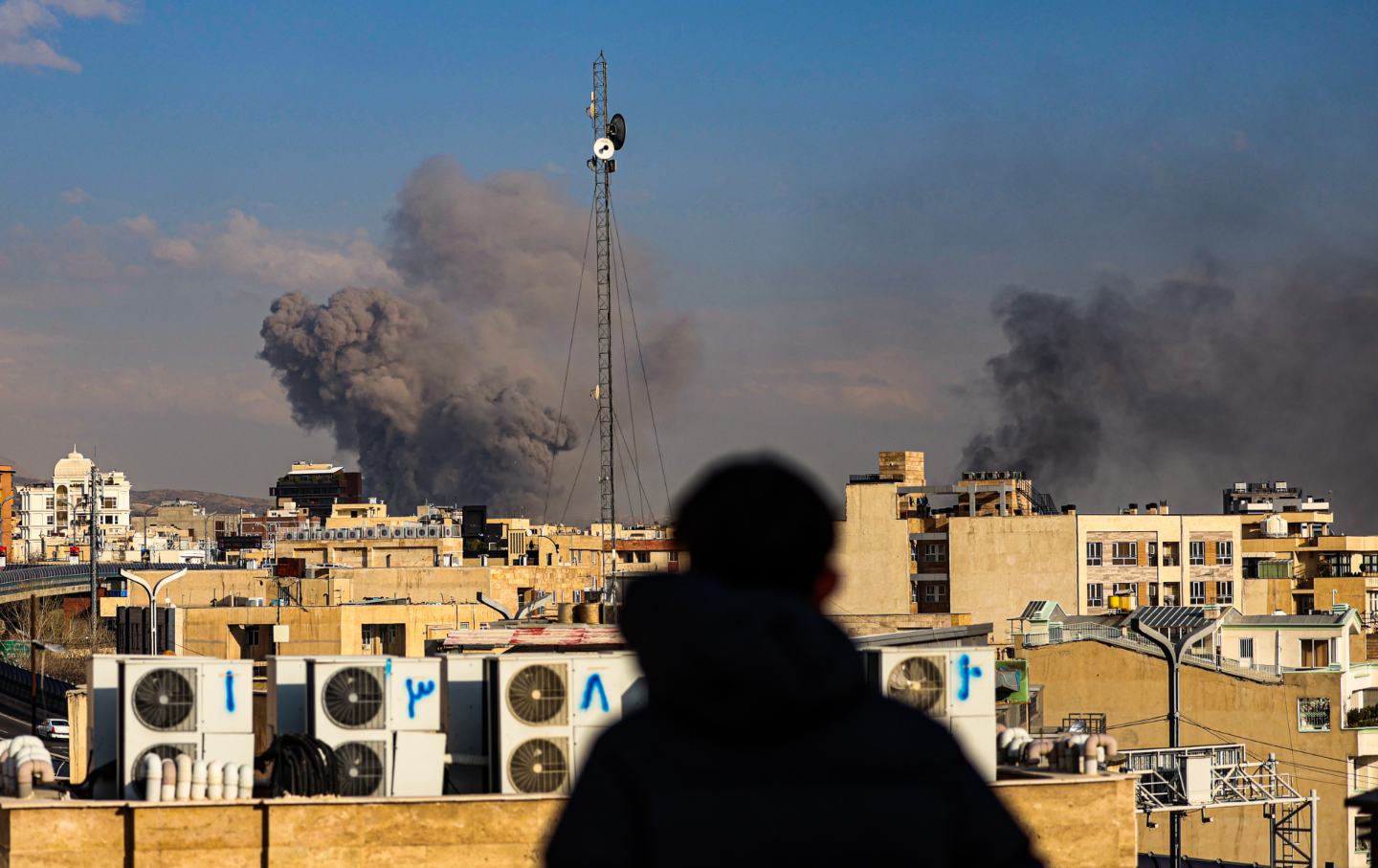
Stopping the Iran War w/ Emma Ashford | The Time of Monsters with Jeet Heer
The US/Israel War against Iran is shaping out to be a much bigger mess than expected
even by critics. As it turns into a regional conflict that has embroiled more than a dozen
nations, are there any possible ways Donald Trump can be forced to pull back. I spoke
with international affairs scholar Emma Ashford of the Stimson Center about the war
and paths to peace.
Advertising Inquiries: https://redcircle.com/brands
Privacy & Opt-Out: https://redcircle.com/privacy
Search Results placeholder
Subscribe to The Nation to Support all of our podcasts
Support independent journalism that does not fall in line
Even before February 28, the reasons for Donald Trump’s imploding approval rating were abundantly clear: untrammeled corruption and personal enrichment to the tune of billions of dollars during an affordability crisis, a foreign policy guided only by his own derelict sense of morality, and the deployment of a murderous campaign of occupation, detention, and deportation on American streets.
Now an undeclared, unauthorized, unpopular, and unconstitutional war of aggression against Iran has spread like wildfire through the region and into Europe. A new “forever war”—with an ever-increasing likelihood of American troops on the ground—may very well be upon us.
As we’ve seen over and over, this administration uses lies, misdirection, and attempts to flood the zone to justify its abuses of power at home and abroad. Just as Trump, Marco Rubio, and Pete Hegseth offer erratic and contradictory rationales for the attacks on Iran, the administration is also spreading the lie that the upcoming midterm elections are under threat from noncitizens on voter rolls. When these lies go unchecked, they become the basis for further authoritarian encroachment and war.
In these dark times, independent journalism is uniquely able to uncover the falsehoods that threaten our republic—and civilians around the world—and shine a bright light on the truth.
The Nation’s experienced team of writers, editors, and fact-checkers understands the scale of what we’re up against and the urgency with which we have to act. That’s why we’re publishing critical reporting and analysis of the war on Iran, ICE violence at home, new forms of voter suppression emerging in the courts, and much more.
But this journalism is possible only with your support.
This March, The Nation needs to raise $50,000 to ensure that we have the resources for reporting and analysis that sets the record straight and empowers people of conscience to organize. Will you donate today?