State of the Union: Not Good—Plus, Jackie Robinson v. Paul Robeson
Trump’s State of the Union speech was predictable, but revealing of his state of mind. John Nichols has our analysis.

The Nation Podcasts
Here's where to find podcasts from The Nation. Political talk without the boring parts, featuring the writers, activists and artists who shape the news, from a progressive perspective.
State of the Union: Not Good; plus Jackie Robinson v. Paul Robeson / Start Making Sense
Trump’s State of the Union speech was predictable, but nevertheless revealing of his state of mind. John Nichols has our analysis.
Also: In 1949 when Jackie Robinson appeared before HUAC, the House Un-American Activities Committee, to discredit Paul Robeson. Howard Bryant talks about why that happened, and what happened afterwards – to each of them. His new book is “Kings and Pawns.”
Advertising Inquiries: https://redcircle.com/brands
Privacy & Opt-Out: https://redcircle.com/privacy
Search Results placeholder
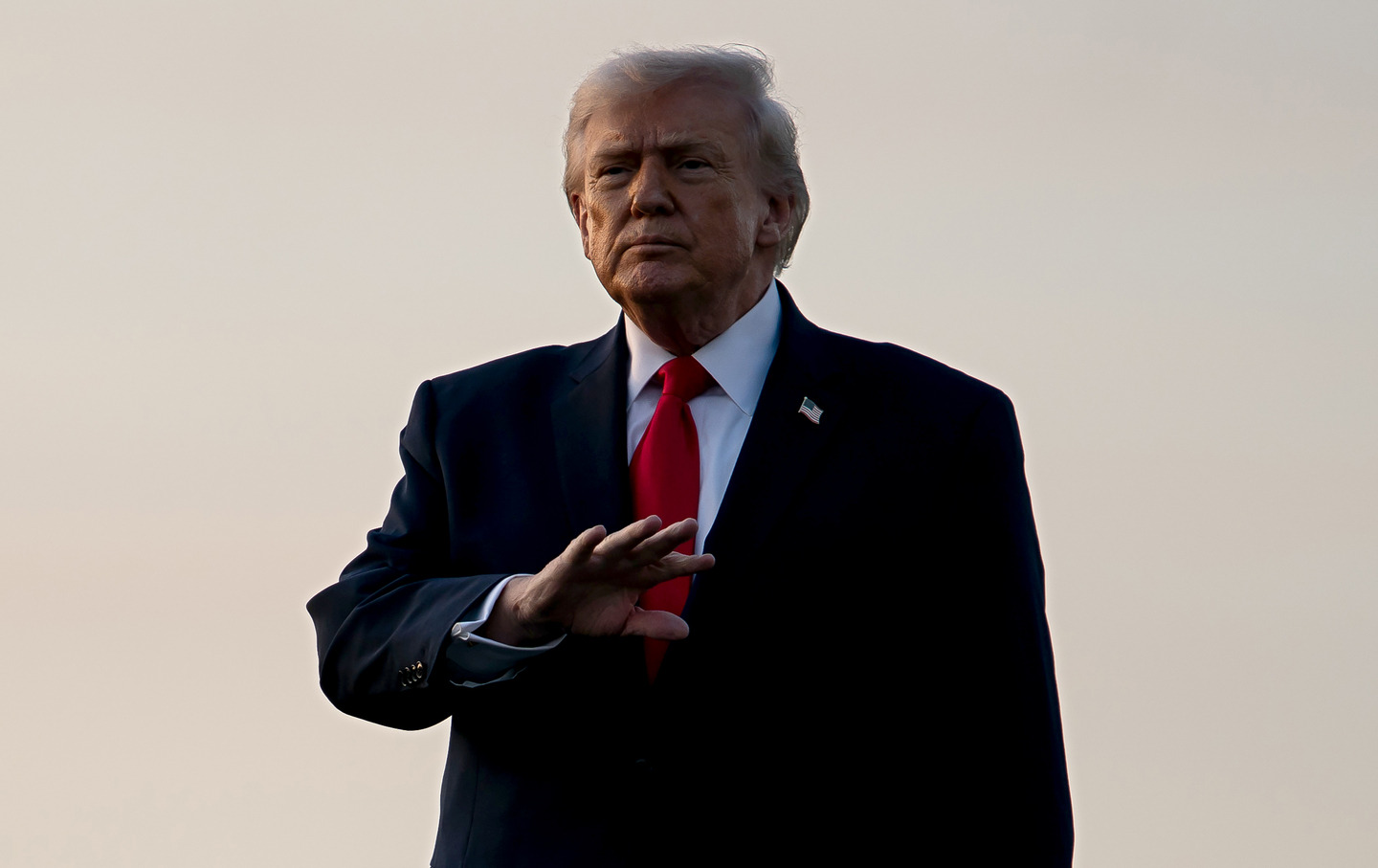
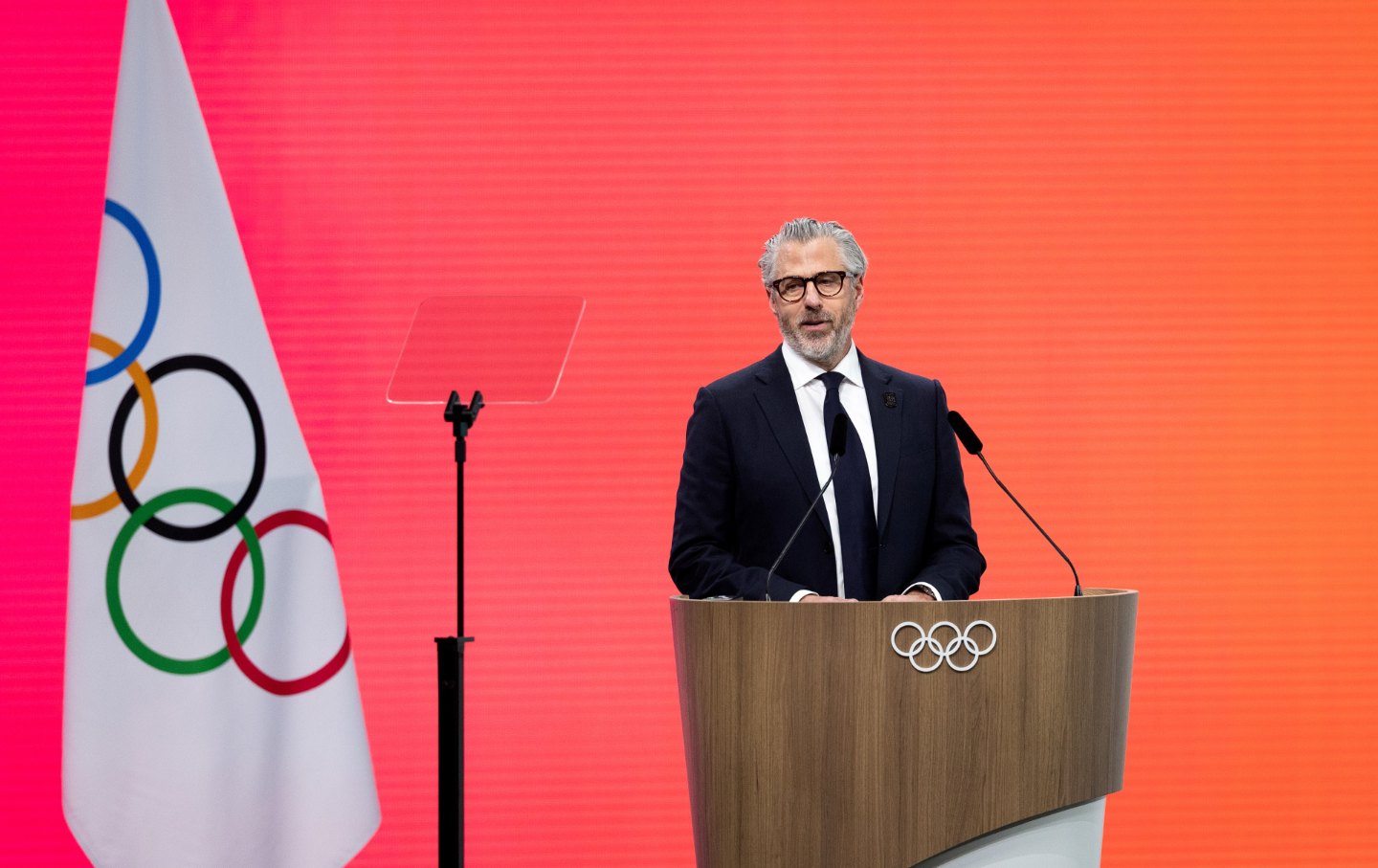
President Donald Trump addresses a joint session of Congress.
(Ricky Carioti / The Washington Post via Getty Images)Trump’s State of the Union speech was predictable, but nevertheless revealing of his state of mind. John Nichols has our analysis.
Also: In 1949, Jackie Robinson appeared before the House Un-American Activities Committee to discredit Paul Robeson. Howard Bryant talks about why that happened, and what happened afterward—to each of them. His new book is Kings and Pawns.
Subscribe to The Nation to support all of our podcasts: thenation.com/podcastsubscribe.
The Nation Podcasts
Here's where to find podcasts from The Nation. Political talk without the boring parts, featuring the writers, activists and artists who shape the news, from a progressive perspective.
State of the Union: Not Good; plus Jackie Robinson v. Paul Robeson / Start Making Sense
Trump’s State of the Union speech was predictable, but nevertheless revealing of his state of mind. John Nichols has our analysis.
Also: In 1949 when Jackie Robinson appeared before HUAC, the House Un-American Activities Committee, to discredit Paul Robeson. Howard Bryant talks about why that happened, and what happened afterwards – to each of them. His new book is “Kings and Pawns.”
Advertising Inquiries: https://redcircle.com/brands
Privacy & Opt-Out: https://redcircle.com/privacy
Search Results placeholder
Subscribe to The Nation to Support all of our podcasts
Jon Wiener: From The Nation magazine, this is Start Making Sense. I’m Jon Wiener. Later in the show: in 1949, Jackie Robinson appeared before HUAC, the House un-American Activities Committee, to discredit Paul Robeson. Howard Bryant will talk about why that happened, and what happened afterwards – to each of them. His new book is “Kings and Pawns.” But first: the state of the union. John Nichols has our analysis – in a minute.
[BREAK]
JW: First up: Trump’s State of the Union speech, Tuesday night. For our analysis, we turn to John Nichols. Of course, he’s executive editor of The Nation. John, welcome back.
John Nichols: I would say it is an honor to be with you, Jon, although I’m a little tired.
JW: [Laughter] This is instant analysis of the classic kind. We have just finished listening to the longest State of the Union speech in American history, and we’re tired.
JN: Well, or at least tired of it. Yeah. Yeah. It was really kind of an epic moment. At a certain point, I realized how long it was and how long it was going to be, because you could feel from the rhythm of it, you’re not at the end. And I have to wonder whether the people who were going to feel best about this night are the ones who didn’t attend.
JW: I want to talk about that because several of our friends and a lot of progressives in Congress announced ahead of time that they were not going to watch. They said they knew what he would say. He would say the economy has never been better. He would say that Democrats have never been worse. He would say he ended eight wars and he would say the 2020 election was stolen. Are friends, right? That it was pretty predictable.
JN: It was very predictable. In fact, intriguingly for a speech that I think a lot of people did tune into because they were concerned that he might launch some new initiative, even start a war or something like that. It was not a speech that made a lot of news. I would argue that by and large, it followed pattern. A lot of rambling. At the end of the day, if there were newsworthy events, I guess first and foremost would be the length. I mean, that’ll be in the record books. And then also a couple of the moments where people did challenge him. Al Green, the congressman from Texas, was thrown out at the start of the speech for holding up a sign that said, I believe black people aren’t apes, which was a reference to a video that Trump posted regarding former President Obama and Michelle Obama, and then an exchange between the president and Ilhan Omar, the congresswoman from Minnesota, where he was disparaging Somalis and she was saying that he should be ashamed of himself for killing Americans. I think speaking of the instance in Minneapolis, of the killings of Alex Prety and Renee Goode,
JW: The background here was the polls. Of course, the CNN poll released just before the speech showed him. With 36% of Americans approving of the job he’s doing as president, only 26% of independence approve. And really the biggest story for ordinary Americans in the United States is the Epstein files. 90% of people say they have seen news of the Epstein files. It’s hard to believe in this day of fragmented news coverage, 70% of Americans say the Epstein files show that wealthy and powerful people in the United States are rarely held accountable for their actions. 75% of Americans believe Trump is still intentionally hiding information. A dozen of Epstein’s victims were in the audience invited by Democrats. What did Trump say about the Epstein files?
JN: It didn’t really come up a lot, Jon. And it is notable that many Democrats who were at the speech, and as you note a number of folks didn’t go, there were a lot of empty seats, but those who were had released the Epstein or release the, and then it had a redacted name files. And so the files were, people were aware of ’em obviously in the room. And it’s notable that the two key players on releasing the Epstein files, Congressman Thomas Massey from Kentucky and Congressman Ana from California, a very conservative Republican, a very progressive Democrat, sat together and sat next to each other during the speech. And that was striking. Nancy Mace, another very conservative Republican, also went out of her way to make reference in some of her actions to the files. So you did see a modestly bipartisan expression of concern and engagement with these issues. But no, there wasn’t a discussion in the speech and you saw Attorney General Pam Bondy there and other folks really in this kind of celebration of Trump mode. I think very much in an effort as so much of the administration has been in recent months to kind of draw the attention anywhere, but what the American people might want to talk about.
JW: And the second biggest issue for the American public, polls show, is ICE and immigration detention. Trump has said he would go after criminals who were in the country illegally, but everyone knows that almost all the thousands of people he’s detained have no criminal charges, although they do have families and jobs. And that is the reason why there is a partial government shutdown of the Department of Homeland Security that Democrats are demanding some limits on ICE’s actions. Trump reduced this to something about shoveling snow.
JN: Yeah, look, the striking thing about the whole speech was that it did kind of go back to Trump’s baseline attacks on immigrants and attacks on anybody might treat an immigrant as a human being. He Rachel Maddow immediately after the speech, used the term violence porn to talk about how many of the descriptions of incidents, not necessarily accurate descriptions, by the way were incredibly bloody and horrifying and that, and he seemed to be suggesting the long-term Donald Trump suggestion that immigrants are somehow the most dangerous possible people when in fact we know that that’s just false. That’s not the reality. And so I do think that in many ways this was a speech for Trump that was true to form. It was him going back to some of his standard lines, standard lies in many, many cases. And what’s striking about it, John, is that he did this at a point when his own popularity is so very low and where people have clearly turned against him on what were his strong issues. And back in 2024, it’s fair to say that if you look at polling, his stronger issues were the economy and his criticism of Biden’s having the economy and immigration issues tonight. He did talk quite a bit about the economy and he lied a lot about it, right? He is just completely false premises. He talked about inheriting the worst economy in history. It wasn’t the worst economy in history. He talked about numbers on inflation, numbers on other things that were just completely out of whack.
JW: $1.89 gas. I haven’t seen $1.89 gas anywhere.
JN: You got to drive a lot to find that. And then when he got to the immigration issue, which has been his touchstone since 2015, again, you had just all sorts of false premises cruelty in many of his statements. And so I think that it’s hard to imagine how this speech is going to shift any of those numbers we were talking about. My sense is that to the extent that there was a strategy, and when you speak for this long rest assured there’s no strategy. But if there was some sort of theory on how to go about this or what he was trying to accomplish, I think it’s more reinforcing the base than it is kind of winning over some portion of people. And that’s because at this point, when you look at the polling, his base is even starting to get uncomfortable with him.
JW: Yeah, you’re quoting Rachel Maddow calling this violence porn. That’s what surprised me about this, how bloody this speech was many horrible stories, blood pouring down the aisle, blood pouring out of wounds, people shot in the head, and he seemed to be kind of relishing these stories, which didn’t frankly have a whole lot to do with anything except that he blamed them on illegal immigrants. And of course, as you say, this has been his theme for a long time, that the immigrants who come to this country are violent criminals, whereas we know the overwhelming majority are not, and the overwhelming majority of those who have been detained are not.
JN: I would just say also, look, there were the few of the people he referenced in the speech veterans and other folks where you’ll note that even the Democrats and Republicans got up and applauded in some of these circumstances. There were points where people could agree on some of what he’s saying, but even there was just such blood, so much blood in the descriptions and stuff like that, or so much horror in the descriptions that you really have to pause and ask about the president’s worldview. I mean, How does he see things? This was not in any sense the sort of uplifting speech that one might seek to deliver in a moment like this. The only uplifting part I think was at the very end, a little bit at the beginning, a little bit at the very end where he started tried to talk about the anniversary of the United States 250th anniversary, and there it looked like he actually did stick to his script a little bit, but what could have been a speech where he did try to really claim that legacy of 250 years. It just obscured by all the falsehoods, all the violent talk. And I think he, once again, not the first time really undermined his own attempt to try. And again, with those 250th anniversary references, deliver some kind of appealing message.
JW: So what do you do when your polls are so terrible and when even your own base is shrinking? Your supporters are fleeing, the courts have turned against you, you’re about to suffer a shellacking in the midterms. How about going to war where Iran, he has assembled the largest military force since the invasion of Iraq, which he just barely mentioned. David Sanger wrote an interesting comment at the New York Times, scroll on this. He said the state of the Union was Trump’s best chance to describe his goals in Iran. Is he simply trying to stop the nuclear program? Does he want to overthrow the regime? Is he trying to protect the protestors? What are his goals in Iran? He did not say, he just listed over the years and didn’t really say why it would be worth the risks to attack or why this would be different from other wars have been failure. So this is what we were kind of waiting to hear. Are we going to war against Iran? And if so, what is his argument? We didn’t get any of that really.
JN: No, I think you’re right. And I think people were, I mean, when you say waiting to hear, I think a lot of people were fretful. They were concerned that they might hear something deeply troubling in this regard. Instead, what the president did is repeat some history not always accurately. And then the striking thing was the juxtaposition of him saying that not long ago we obliterated Iran’s nuclear program, just wiped it out. It was all over. And then say, okay, but now we’ve got this problem. And look, I understand the subtleties, the negotiation and stuff like this, but you’ve either got to be one side or the other on some of these questions and it just wasn’t there. Also, I do think that an opportunity to talk about the protests in Iran was just sort of lost on really what was a jumble of sort of talking points. And so I think that the critique is correct. This was a missed opportunity and frankly, to some extent, I’m glad.
I don’t think that any rush to war in this case or in most cases makes sense. And I think the American people are there. If you look at the polling data, people don’t want a war with Iran. They don’t want an attack on Iran at this point because of their own, I think knowledge of our history. They know what happened the last time we went off on a search for weapons of mass destruction in the Middle East. It ended up horribly for the region and for the United States. And so I think at the end of the day, most of his foreign policy talk in this speech was rambling, not very coherent, and again, didn’t provide a lot of clarity on where he might go, where he might want to go. The one striking thing though is that I looked as much as I could at Marco Rubio, the Secretary of State, and I dare say that even when Trump singled him out for applause, I don’t think I saw Rubio smile one time.
JW: He seemed miserable.
Often when Trump reads his speeches from the teleprompter, he looks bored, and that was the case tonight, and you’re just kind of waiting for when he will come to life. When he came to life tonight, the first time was he was when he introduced the Olympic men’s hockey team and announced he was giving a medal to the goalie that he got really excited and happy about,
JN: Got very excited about that. He also got really excited when he was running through all his false premises about the economy. He started getting really fast, and that was somewhat earlier in the speech, and I had a brief moment, John, where I thought maybe this would be a quick speech.
JW: [Laughter]
JN: I know he was going so fast and so enthusiastically through all this economic quote data, which was ridiculous. And maybe it was because he didn’t want us to pause and think about the fact that here’s a guy saying he inherited the worst economy in history, speaking in a capital where Franklin Roosevelt once spoke and having taken over during the Great Depression, it was so absurd at times that it was easily dismissed, and yet the absurd moments were often the ones where Trump seemed to get most excited.
JW: And the other moment where he went off the prompter is again, very predictable, one where he is hurling abuse at the Democrats. My favorite quote was, these people are crazy. I’m telling you, they’re crazy, boy oh boy, Democrats are destroying our country, but we’ve stopped it just in the nick of time. Do you think anybody’s convinced by that kind of talk?
JN: Well, for one thing, the Democrats didn’t seem very crazy. There weren’t that many of ’em there. And a second point, I mean, I understand there was a bar in Washington that said it was going to give free drinks or discounted drinks until the first insult. I think that bar probably came out just fine.
JW: Then of course, the other thing we were waiting for was what he would say with the Supreme Court justice present about the tariff decision. He stuck to the prompter on that one and just sort of made some vague comments about, well, we’re going to solve this and it’s going to be better than ever.
JN: Well, the justices were there, and that was an interesting thing in the first point, right? Because
JW: Not all of ’em, but Roberts –
JN: and he said some pretty rough things about them within recent moments, so it’s not like they’re going to forget. And I think a lot of people were looking for that potential flashpoint, a point where you might say something that was disparaging toward the justices and then the camera would flash to them and you’d see some sort of discomfort. To this extent, I would argue that Donald Trump was on his best political behavior because he didn’t want that image. He doesn’t want to spend a lot of time talking about the fact that he’s been knocked down by the court on one of the most important issues of his presidency. And it’s also, I would suggest to you, John, that might’ve been a point where if he had tried to go after the court on that, he might not have gotten a lot of applause because what the court did was reassert the power of Congress to be a participant in decisions about tariffs and things of this nature, and he’s speaking to the Congress. And so you would’ve put Republicans in the house in a very difficult position right up to and including Speaker Mike Johnson of having to jump up and applaud the president of the United States saying he’s mad because the court said Congress should have a role in something.
JW: And in fact, what he said was that he was going to solve this without going to Congress. And I’m sure the Republicans were all greatly relieved to hear that.
JN: Well, they sure don’t want to have that debate. I mean, and at this point I would tell you that if you did bring a tariff debate to the Congress, there’s a very good chance that you’d see some interesting political alliances which wouldn’t necessarily favor for Trump.
JW: In conclusion here: I think Americans know what the state of the union is. Only 10% of Americans say things are going well in America, 52% say things are going poorly and major changes are needed. I understand that. inside MAGA in Congress, it’s understood that the Democrats are going to take the House in the midterms, and that Trump will be impeached. Do you think he did anything tonight in the State of the Union to change that political situation?
JN: No. I have to be quite honest. I think that’s an important thing because at the heart of the matter here tonight, when you have the kind of poll numbers that Donald Trump has, and when you’re coming off your election cycle, that went terribly for the Republicans. And then a series of special election results that have shown dramatic shifts toward the Democrats, even in very Republican areas and especially dramatic shifts among independent voters, really moving toward the Democratic column.
The whole point from a political view of the state of unit address should have been to try and alter that pattern. And I don’t think there was anything that the President did that might alter that pattern. And I suspect some of the most disappointed and frustrated people in the room were the Republicans who have to run for reelection carrying the burden of Donald Trump. There’s no question he will be a central issue in the fall elections.
And he gave them very little to run on of false premises about the economy, a lot of talk about blood and not much to get enthusiastic about or hopeful about. At the end of the day, I would say this was a failed state of the Union address, and I don’t say that because I disagree with Trump. Many people I disagree with have given successful speeches. In this case, though he had certain needs, certain necessities, and he just didn’t rise to it. What he gave people was two hours of kind of repeats of the past rather than any kind of vision for the future.
JW: He didn’t give Republicans anything to run on: John Nichols. Read him @thenation.com. Longest State of the Union speech in history: John, special thanks for this one.
JN: Yes, I feel we both did our journalistic duty tonight.
[BREAK]
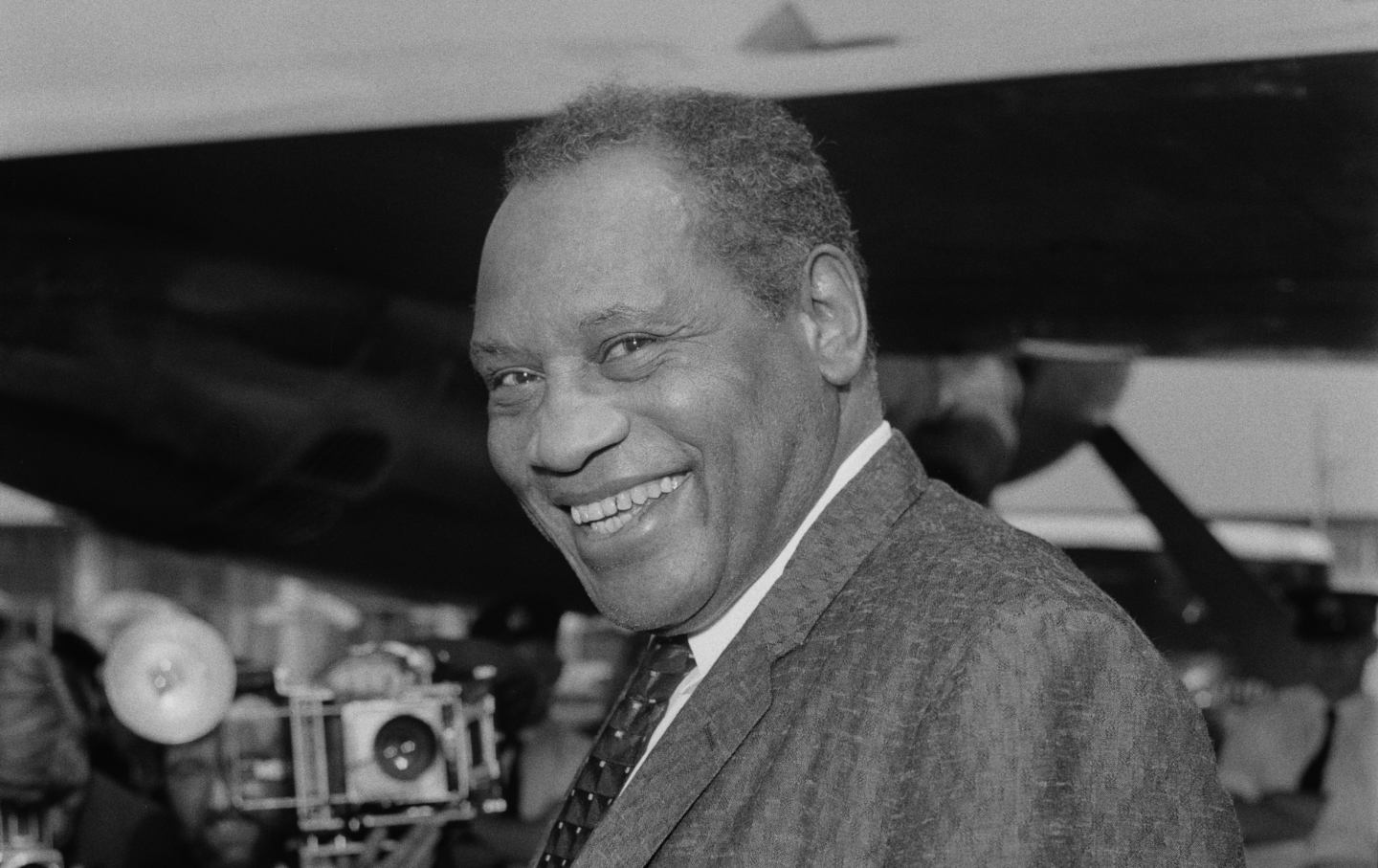
JW: In 1949, Jackie Robinson appeared before the House Un-American Activities Committee, HUAC, to discredit Paul Robeson. That became a defining moment in the lives of two great Black Americans, and it illuminates the politics of race in that dark time like few other events. That clash is the subject of a new book now by Howard Bryant. It’s called Kings and Pawns: Jackie Robinson and Paul Robeson in America. Howard Bryant has written 11 books including a biography of Hank Aaron that was named one of the 10 Best Books of the Year by Dwight Garner at The New York Times. Bryant served as guest editor of the Best American Sports writing in 2017. He’s been the sports correspondent for NPRs Weekend Edition since 2006. He’s been a finalist for the National Magazine Award four times. He’s an Emmy award winner. He won the Casey Award for the best baseball book of the year twice. He lives in Western Mass where we reached him today – in a blizzard. Howard Bryant, welcome to the program.
Howard Bryant: Thank you for your patience, Jon. The elements haven’t been cooperating, but I’m glad I’m here.
JW: Most people know who Jackie Robinson was – the first Black player to integrate Major League Baseball, a Star for the Brooklyn Dodgers starting in 1947. He testified against Paul Robeson for HUAC in 1949. Who was Paul Robeson in 1949?
HB: Well, in 1949, Paul Robeson was a man on the run – in a lot of ways. He had been easily one of the most famous Americans in the first half of the 20th century. He was one of the greatest college football players he played in the National Football League. We talk about Jackie Robinson integrating Major League Baseball in 1947. Paul Robeson had integrated Broadway in 1943. He was the giant real proof of what was possible in Black America, even in a segregated society. But by 1949, because of his politics, because of his progressive politics, he was a very strident anti-capitalist. And he was very, very much forceful in his critiques of the federal government’s lack of will in signing an anti-lynching bill. And because he also refused to denounce his own relationships with the Soviet Union, by 1949, this country had considered him a traitor. And the only way, as we have seen over the many, many decades, the one way to sort of quiet the strong Black voices was to find another strong Black voice to undermine his position. And so, in 1949, the committee called on Jackie Robinson to testify against Robeson’s thoughts. It really did turn out to be this question of a loyalty test for African-Americans: were Black people loyal to this country in the face of the coming Cold War?
JW: And what was HUAC in 1949?
HB: HUAC was the most notorious government body this country has ever produced — to go after anybody who was considered un-American, who was considered subversive, who was considered friendly with the Soviet Union, or as they called back in the day, a “fellow traveler.” And many, many people were trotted in front, especially in Hollywood on the west coast as well with the Hollywood 10, and so many other organizations, especially as the United States and the Soviet Union are becoming more and more adversarial. This committee was both a legal and extralegal tool to turn Americans against one another. For me, I’m a Cold War kid myself, but for my age, the Cold War had been international. It had been the USA versus Russia, it had been the Olympics, but this period was a real time of domestic strife where Americans were pitted against each other to prove their loyalty or lose everything.
JW: Now, when HUAC invited Jackie Robinson to testify against Paul Robeson in 1949, he really did disagree with Robeson about a lot of political issues. Jackie Robinson was a Republican. Paul Robeson was a communist. But what’s wrong with Black people disagreeing about politics? I mean, Malcolm X disagreed with Martin Luther King, Cornell West criticized the Barack Obama. Why was this headline news?
HB: What it really came down to, once again, was the stifling of left-wing politics. I don’t think it really was very much a difference between Black people disagreeing on politics as much as it was taking a powerful voice – Robeson was on the left side of the Democratic Party if he was even part of the Democratic Party, he was part of the Progressive Party. And I think what it really was was a part of a continuum, really part of the continuum that this country has always had against pro-union, pro-labor politics, anti-capitalist politics. And it wasn’t just Jackie Robinson, it was also a lot of the Black establishment, the NAACP, the Urban League, a lot of the early generation of Black congressmen, they all lined up against Robeson. And part of the reason that they did strategically was the belief that Black people were only 10% of the population. And when you have such small numbers, you need these coalitions, the number of people who are sympathetic to the cause. And those Black organizations believed that if you were wrapped up or tied in any way to the Soviet Union, to socialism, to communism, then your allies in civil rights would run for cover.
JW: The immediate, let’s call it provocation for HUAC, was when Robeson was in Paris and was quoted by American newspapers saying Black Americans would not fight in a war against the Soviet Union. And that was taken up by HUAC and what they called hearings regarding communist infiltration of minority groups. I think it’s important that Jackie Robinson appeared voluntarily he was not subpoenaed. But what exactly did Jackie Robinson say about Paul Robeson in his testimony?
HB: Well, he was not subpoenaed. That is absolutely true. He did go on his own. That is also absolutely true. But I’m not sure how voluntary it was because he was pressured by his boss, by Branch Ricky, who did bring him to the Major Leagues. And he did feel a great deal of loyalty toward Branch Ricky. He also felt that he had an obligation to African Americans, to Black people. He wasn’t told to go, but he felt he had to go. And what he said was remarkable. To me, it was really the beginning of this idea that we use today called Athlete Activism, where you have these athletes taking it upon themselves because they’re the ones who made it. They’re the famous, they are the rich, they are the accomplished. I’ve always said that the Black athlete is the most successful, most accomplished, most visible Black employee this country has ever produced.
And in that hearing, Jackie, he gave the committee the red meat it was looking for. There was a member, Lester Granger, who was part of the Urban League, who wrote part of the speech and where he did criticize Robeson by saying that “he’s got too much invested in this country to fall for a siren song sung in bass.” And he did question whether or not Robeson actually made the Paris comments. And he said “if he did, they sound very silly to me.” Those were the comments that made the newspapers. But the rest of his testimony that didn’t make the papers–that is actually very, very lasting and more simpatico with how Robeson felt when he said, “listen, it doesn’t make a difference if a communist or anybody else is talking about the conditions of the black community. We don’t need the communist to tell us that we do have problems in housing and inequality and job inequality and police brutality and all of these things that are very much part of the Black experience.”
The press and the committee did not make a big deal out of those comments, but those comments were as powerful as anything as he had said that day. And when you go and look at the transcripts of that testimony down at the Library of Congress, you can see that those were the parts of the speech that he wrote himself. Didn’t get a lot of press at the time, but in retrospect you see that he did try to go there to be his own man.
JW: Yeah. If I can just quote what he said from the transcript. He said that Robeson “has a right to his personal views, and if he wants to sound silly when he expresses them in public, that’s his business and not mine. He’s still a famous ex-athlete, a great singer and actor.” And then he also said, and this is what you’ve emphasized, “the fact that it is a communist who denounces injustice in the courts, police brutality and lynching doesn’t change the truth of his charges.” But as you say, that didn’t make the headlines. What made the headlines was that line that “Black Americans are not going to quote throw it away because of a siren song sung in bass.” So, you think he was pressured by Branch Ricky. What do we know about that?
HB: Well, what we know is that Ricky was a very hardcore Republican, very much an anti-New Dealer, anti-FDR – saw someone like Robeson as a true threat. He did not appreciate the fact that Robeson did not denounce his connections to the Communist Party and his relationships and friendships with the party. And so the other piece of this is that Branch Rickey also understood that a lot of the pressure to integrate the Major Leagues was coming from that left wing of the party, it was coming from the Progressives and the Communist Party and the CPUSA and the CIO. And he did not want to share that credit for integration either. So it was very important to him to make sure that everybody knew that it was him and not communist pressure, not local pressure in Brooklyn, that was the motivation for him to integrate with Jackie Robinson.
Now, the truth is different. His version of the integration story has pretty much gone unchallenged for 80 years. He was under enormous pressure from those political groups. He was under pressure from the Brooklyn community that of all places, this is where integration should take place. And he was also under pressure from the state because integration was coming. At some point, there was no way you could send the message to the world that the United States fought for freedom in World War II in was going to be a segregated country at home. And so Ricky had enormous motivation to control that narrative. Without Branch Ricky, there is no chapter. This book doesn’t even take place that it was really Branch Ricky who, whose politics guided Jackie Robinson’s and not the other way around.
JW: And how much of a communist was Paul Robeson, really? And here I think we need to talk about the difference between the popular front period of the thirties and World War II when the United States and the Soviet Union were allies and lots of Americans, Black and white were sympathetic interested in the Soviet Union, Robeson continued that into the 1947, 48 period when it became not so popular anymore.
HB: Yeah, and beyond. I think politically, he was clearly a socialist and said so many, many times that he did not believe that capitalism would do anything other than destroy human beings. And so he saw himself very much aligned with the language that we still hear today, the 99% against the 1%. He was clearly enamored with the Soviet experiment in a lot of ways that African Americans were at the time. I think that the number of people in the twenties, in the thirties of African Americans who were enamored by and taken by the possibility of living in a community or a society that did tackle racism and that did outlaw racism and did not believe in racism, is that that element of people was cut off historically has been cut off historically from the Great migration when the idea is essentially the same, to find a place where you can live.
It was taking place at the exact same time, the small number of African Americans who moved to the Soviet Union. Paul Robeson’s mother-in-law lived in the Soviet Union. His son was educated in the Soviet Union. So he saw this as an opportunity for a higher quality of life. And I think that one of the tragedies of the book in a lot of ways was I think that there was a feeling of betrayal on both sides. He didn’t really have a country here in some ways. And then by 1956, when he testifies in front of HUAC himself, seven years after Jackie Robinson’s testimony, it’s very clear now that Khrushchev, who is now running the Soviet Union, acknowledges all of Stalin’s crimes that is a double blow to Robeson. He believed very, very deeply in this experiment, and it’s almost like a dual betrayal.
JW: So we’ve been talking thus far, like this is a political debate, but a month after the Jackie Robinson testimony at HUAC, Robeson was scheduled to sing at a left-wing concert in Peekskill, New York. That was a horrible night.
HB: He had a first concert that was canceled because a mob, anti-Robeson mob showed up at the grounds where he was supposed to sing and disrupted the concert before it even took place. And so undeterred Robeson decided to go back a week later, and that was a horrible, both of them, very bloody riots. And in a lot of cases, in instances, Robeson believed that that mob was trying to kill him. The legacy of Peekskill of that riot does connect directly to Jackie Robinson’s testimony. Jackie Robinson did not destroy Paul Robeson’s career, as is the common thought. Robeson’s career was already deep trouble by 1949 because the mood of the country was shifting. But what Jackie’s testimony did, and in addition to Jackie’s testimony, the isolation of Robeson by the Black establishment, it sent the message to the more rabid right-wing elements that it was open season on Robeson, that it was okay to attack him. And the violence really increased both extralegally in terms of those angry mobs at Peekskill and also from the federal government, which then refused to issue him a passport for nearly the next decade. He was not allowed to travel from 1950 to 1958.
JW: I want to talk also a little bit more about Jackie Robinson’s politics. We said he was a Republican. I know in 1960, he supported Nixon against Kennedy. You call him one of the Republican party’s most tireless defenders. Why was that?
HB: Well, I think that he was conservative by nature. He never registered Republican in his words. He said he was always registered Independent, but he clearly leaned Republic. He believed when you are only 10% of the population, you have to be represented by both parties. You have to have, both parties have to have a stake in your success. And so I think politically, he leaned more toward the Republican party, I think because they gave him more of an ear. I don’t think he necessarily had a great deal politically against the Democrats, but he had a lot against John F. Kennedy. He did not believe that Kennedy knew enough or cared enough about Black issues when they met face-to-face. And I think he was more taken and charmed by Nixon. And later his wife, Rachel, would say it was one of the biggest political mistakes of his career. That and testifying against Robeson. His frustrations grew when he began to discover that the listening to him did not translate into action, he became very frustrated. By 1963, he ends up writing an editorial, an article in The Saturday Evening Post titled the “GOP for White Men Only.” So you can see the beginnings as the GOP moves to toward Goldwater. You can see Jackie’s disillusionment growing.
JW: And where did he end up politically?
HB: He ended up in the Democratic Party. He ended up voting for Humphrey, I believe in ‘68. The thing about Jackie that’s really interesting about this politically is that he always believed as disillusioned as he had become with the country, he was always still very open to activism. He was open to change. He was open to anybody who was willing to fight. And I always found that fascinating about him because you’ve got this juxtaposition of a man who gives an interview in 1969 to The New York Times that says, “I won’t stand for the flag. I don’t salute the flag. I don’t sing the national anthem. When I see a car with an American flag pasted to it, I assume the guy behind the wheel is not my friend.” I mean, that’s where he is emotionally. He was constantly involved. He was constantly trying to change and work with young people and fight for civil rights and all of it. So you would think that somebody who had reached that level of disillusionment might check out, but Jackie never did. And that was the really inspiring thing about him as a man.
JW: One more thing that I have to bring up here. As a Los Angeles resident and Dodgers fan, 1947, the Dodgers had one Black player, Jackie Robinson, a superstar. In 2025, the Dodgers had one American-born Black player, Mookie Bets, a superstar. What do you make of that?
HB: Well, I think that, as we said with Branch Ricky, who benefited from the integration story more and was able to tell that story and to have that story really remain a huge part of the Dodger lore. The Dodgers have never lived up to that. After that initial period, after that first 10 years where you had Jackie and Don Newcombe and Junior Gilliam and Roy Campanella and all those great Black players and that they were at the forefront of integration. The Los Angeles Dodgers have never been the same team as the Brooklyn Dodgers. This story that we’ve told ourselves for the past 75 years is not really the story. Jackie made everybody feel good, but we never really talk about the effect that all of this had on him as a person.
JW: Last question. How does the story end for Paul Robeson?
HB: It’s an interesting story for Paul Robeson. I mean, to me, his supporters, the love for him, the respect for him was – it never wavered. The nicknames were the same. The tallest tree in the forest, big Paul, I mean, he was very much a gigantic figure. And because of the politics of the time, and also in my opinion, not just the politics of the time, but because of the timidity on the part of a lot of the Black community to support somebody who was such a giant, the distancing, the political distancing of him, really the legacy is of a man that was in a lot of ways disappeared from the historical African American history narrative. You listen to people talk about a man as if he didn’t exist. And I’ve always asked myself, how could somebody with his level of accomplishment be treated as invisible? That’s not an accident.
JW: Howard Bryant: his new book is Kings and Pawns: Jackie Robinson and Paul Robeson in America. Howard, thanks for this book, and thanks for talking with us today.
HB It’s my pleasure. Thank you for having me.