Rebecca Solnit on No Kings—Plus, Reforming the LAPD After Rodney King
On this episode of Start Making Sense, the author of Hope in the Dark looks ahead, and Danny Goldberg explains how the Rodney King riots led to greater control of the LAPD.

The Nation Podcasts
Here's where to find podcasts from The Nation. Political talk without the boring parts, featuring the writers, activists and artists who shape the news, from a progressive perspective.
Rebecca Solnit on No Kings—Plus, Reforming the LAPD after Rodney King | Start Making Sense
No Kings Day on Oct. 18 was the largest peaceful protest in American history. Rebecca Solnit comments, and refutes Republican statements about violence on the left. Her most recent book is “Orwell’s Roses.”
Also: the fight to control the LA police: a decades long effort that culminated in 1992, after the Rodney King riots, when longtime police chief Darryl Gates was forced out. Danny Goldberg comments – at the time he was board chair of the ACLU of Southern California Foundation, and his new book is “Liberals With Attitude.”
Advertising Inquiries: https://redcircle.com/brands
Privacy & Opt-Out: https://redcircle.com/privacy
Protesters rally during the “No Kings” national day of protest in Los Angeles, California on October 18, 2025.
(Frederic J. Brown / AFP via Getty Images)No Kings Day on October 18 was the largest peaceful protest in American history. Rebecca Solnit comments, and refutes Republican statements about violence on the left. Her most recent book is Orwell’s Roses.
Also: the fight to control the LA police: a decades long effort that culminated in 1992, after the Rodney King riots, when longtime police chief Darryl Gates was forced out. Danny Goldberg comments—at the time, he was board chair of the ACLU Foundation of Southern California, and his new book is Liberals With Attitude.
Subscribe to The Nation to support all of our podcasts: thenation.com/podcastsubscribe.
The Nation Podcasts
Here's where to find podcasts from The Nation. Political talk without the boring parts, featuring the writers, activists and artists who shape the news, from a progressive perspective.
Trump’s Attacks on Voting, and on Iran / Start Making Sense
After Senate Democrats block the SAVE act, Trump is likely to declare a national security emergency – claiming China could interfere in the midterms – as a basis for restricting voting. David Cole comments; he’s former legal director of the ACLU.
Also: Congress must challenge Trump’s war on Iran and assert its constitutional duty to take up War Powers resolutions and assert its primacy over matters of war and peace. John Nichols explains.
Advertising Inquiries: https://redcircle.com/brands
Privacy & Opt-Out: https://redcircle.com/privacy
Search Results placeholder
Jon Wiener: From The Nation magazine, this is Start Making Sense. I’m Jon Wiener. Later in the show: the fight to control the LA police: a decades-long effort that culminated in 1992, after the Rodney King riots, when longtime police chief Darryl Gates was forced out. Danny Goldberg will explain — his new book is “Liberals With Attitude.” But first: No Kings Day on Oct. 18 was the largest peaceful protest in American history. Rebecca Solnit will comment – in a minute.
[BREAK]
Saturday was no King’s Day in America, and something like 7 million people joined more than 2,700 events to protest Trump’s attacks on democracy. For comment, we turn to Rebecca Solnit. She’s a writer and activist who’s written more than 25 books, including Men Explain Things to Me, Orwell’s Roses, and Hope in the Dark – that one changed my life. She’s a columnist for The Guardian US Edition, she writes for The Nation, and you can read her regularly at MeditationsInAnEmergency.com. Rebecca, welcome back.
Rebecca Solnit: Always a pleasure, Jon.
JW: 7 million people at No King’s Day on Saturday – and it was entirely peaceful, hardly a single arrest at any of the events anywhere in America. The No Kings protest in my neighborhood in LA was really happy, fun, people were excited to see each other, see how many people showed up. It was a wonderful day here in West LA. How was it where you were?
RS: I was in San Francisco, and I think it might be the biggest march I’ve ever seen. I got off the BART train, couldn’t get into the crowd, was too big, too dense to penetrate, so I marched at the beginning, got to the rally site about a mile and a half away, pretty early. The march continued for two hours because there were so many people – just filled Market Street and for two hours, so it was amazing.
Two things that I think are really great are happening in how people are resisting the Trump administration and this rising fascism. One of them is that they’re really representing themselves as kind of Mr. and Mrs. America and all the ships at sea — as really mainstream. They’re reclaiming patriotism. I saw a woman with a sign that said, ‘this is what a patriot looks like’ –with arrows going in all directions. Lots of American flags, the constitution, refusing what the right has done pretty successfully for years — to let them claim the claim and own the flag and patriotism.
And just a footnote to that: thanks to the Portland inflatable-costume-wearing protestors, we’ve also reclaimed frogs from Groypers, the followers of Nick Fuentes who had Pepe the Frog as a right-wing meme. Frogs are now squarely Indivisible resistance, and God knows that amphibian did not belong with those fascists.
JW: Well, I’m in awe, not just of the massive turnout, but of the massive scale of organizing. 2,700 events means that teams of organizers worked in 2,700 different places, and this takes energy and commitment and also training and planning. The Indivisible group and its allies who called this event put a lot of work into training organizers and monitors, not only in how to recruit people for a big event, but in dealing with potential problems, and their big emphasis is on nonviolence and de-escalation. 2,700 events, that’s a lot of trained organizers — and our friends at Indivisible say once people take the Indivisible training, this is not a one-off. They know how to do it now, and they’re going to keep doing it.
RS: I’m sure you agree that the most exciting thing isn’t just the numbers, isn’t just how huge it was in New York and LA and San Francisco and Chicago and Seattle and so forth. It was in all these little towns where 40 people showed up in a town of population 140 because it was the county seat. And something Erica Chenowith and the Crowd Counting consortium just reported on Thursday: their very careful data shows that there’s far more protests and anti-Trump activity in red counties that voted for Trump than during his first term. And that just the scale, the number of protests is way, way higher than it was in 2017, his first year of his first term. They are making so many enemies, and something’s got to give. I don’t know how, I don’t know when, but it’s a wild, wild moment.
JW: And of course, the Republicans — in this case led by House Speaker Mike Johnson — spent the week saying that No Kings would be a day when the ‘pro Hamas,’ ‘hate America’ crowd would gather with the group they call ‘the terrorist wing of the Democratic Party.’ I think they’re talking about us.
Aaron Blake at the CNN pointed out this is a weird strategy, because what they’re saying is so obviously untrue. These weren’t the first No Kings rallies, after all. They were held back in June at 2,000 places, and it was all very normal looking, ordinary Americans gathering happily. And obviously nobody was intimidated or persuaded by these attacks coming from Trump and his people. So why do you think they’re working so hard to portray us as violent weirdos who hate America?
RS: An authoritarian is nothing without a marginalized, outsider, othered enemy that poses a terrible threat — because that’s always the justification for a crackdown, a suspension of rights and liberties and maybe the law itself, militarization, de-normalization of society. They’ve been claiming it’s immigrants, and now they’re claiming it’s Antifa, and now they’re claiming that all those nice middle-aged white people I saw marching are Hamas-supporting terrorists. And that’s probably news to all the dentists and accountants and retired schoolteachers and military veterans who were in those crowds.
On the one hand, I think anybody who’s participating who sees that kind of stuff probably gets a little more ferocious in their opposition. On the other hand, there’s a way we’ve been talking about for nine years in that lies are kind of a show, they’re kind of dominance behavior in a baboon sense. They’re showing us their rumps.
The sense that facts, truth, science, law, history, don’t contain them, that they can, as I always like to say, bully the truth – it’s like Karl Rove way back during the Iraq War when he was Bush’s advisor saying, ‘oh, you’re still a member of the reality-based community. We make our own reality now’ — which didn’t work out that well for them in the long term.
But what’s really striking to me as I continue to watch it get weirder and weirder is you can see it as a sign of strength as I just described. You can also see it as a sign of weakness. These are people, if they told the truth about the Epstein files, about the economy, about why Congress has been out of session for most of the last three months, about massive corruption, about lack of support, they’re incompetent, they’re vicious, they’re corrupt, they’re wildly unpopular, and so you can see lies as a sign of strength, but you can also see them, and this has been a real shift for me, as a sign of weakness. They cannot possibly tell the truth about any of those things.
JW: A sign of weakness. Actually, there was new evidence of that on Saturday, when we got a new AP poll showing the current approval ratings of Trump — it’s the worst major poll for Trump since he took office in January: 37% approve, 61% disapprove. And if you look at the independents, let’s leave out the Republicans and the Democrats, if you look at the independents on specific issues: on immigration: independents disapprove of Trump, 66 to 26; on the economy, independents disapprove of Trump 78 to 18; on healthcare, independents disapprove of Trump 79 to 16. So it’s not a case that ‘we are not alone.’ The case here is, when it comes to disapproving of Trump, we’re in the great majority.
RS: Well, they’re doing great organizing work for us. Those numbers are really interesting. I think so many of the problems over the past few decades, at least in this country, are from terrible mainstream media coverage that leaves us with an uninformed and misinformed public, on abortion, on climate action, on immigration, those are really mainstream centrist uncontroversial ideas, but the mainstream media keeps representing them as some kind of edgy, marginalized, radical thing, which doesn’t help.
One of the beauties of something like No Kings is people feel a sense of belonging, of membership. ‘I’m not alone. People share my beliefs and my commitments.’ The real world is not the media bubble that we get from the mainstream, which is why alternative media is such an important part of it all, and ultimately, I feel like we’re watching the dinosaurs of legacy media lumbering into their tar pits and extinctions. And the truth is, we’re much better people who want a much better future than the mainstream media will ever tell us as we are or as possible.
JW: In your new piece @thenation.com, you take up the argument that’s coming from some establishment sources that the left is more violent since Trump took office than it has been in the past. And this is coming not just from Trump’s White House and Kristi Noem. There’s the Center for Strategic and International Studies – CSIS — concluded in a recent report, 2025 marks the first time in more than 30 years that left-wing terrorist attacks outnumber those from the violent far right. Now, we thank you for actually looking into this, looking at this report. How many violent left-wing events did they identify?
RS: Oh my God, Jon, are you sitting down? It’s going to take me one hand to count them: five. It was crazy because it’s been played up so much of like, ‘oh, there’s this surge of left-wing terrorism’ because they’re not just calling it violence, they’re calling it ‘terrorism.’ And then the claim is that left-wing terrorism outnumbers right-wing terrorism, which was so exciting to somebody on the White House staff that she tweeted this graph where you could see that decades of really high incidences of right-wing violence and then suddenly it goes way down, and they’ve got these whole five incidents to cite as left-wing. But the truth about those five incidents is the ones I could find were by solo actors.
JW: The most prominent one, of course, was the assassination of Charlie Kirk. The assassin allegedly was Tyler Robinson. What do we know about Tyler Robinson?
RS: The only reason he’s portrayed as left-wing is he didn’t like Charlie Kirk and it’s alleged that he had a trans lover. And I got to say, we lots of people with lots of sexual desires, with lots of political orientations, and here’s gay Peter Thiel on the far right funding JD Vance and stuff like that. I don’t think that proves anything. What we do know for sure is he grew up in a southern Utah Mormon Republican family. His dad was a sheriff. His family was very kind of trigger happy in that lots of pictures of them with guns, they taught him to use guns. The gun he allegedly used, he’s still very far from being tried and found guilty is said to have been his grandfather’s. And he’s very young, I think he’s 22. And so he emerged out of this far right gun culture and the idea that somehow people do rebel against their families. But I think when you’re 22, the way you were brought up counts for a lot. And he was brought up in red, red, red, crimson, scarlet America.
JW: And one of the other cases that’s gotten a lot of attention is the Army veteran who in April broke into the governor’s mansion in Pennsylvania and set it on fire while governor Josh Shapiro and his family slept. This person’s name is Cody Balmer. We’re told he was angry about Gaza. What else do we know about the arson attack on the governor’s mansion in Pennsylvania?
RS: The Gaza thing was the only thing mentioned about him in this report I was taking apart. When I did some independent research, I found out he’s a military veteran, which often radicalizes people by training them to use weapons, giving them PTSD, normalizing killing. You literally have to disinhibit soldiers to make them killers for the military. But he also had a history of domestic violence, which is a real marker for other kinds of violence and which I see as misogynist and authoritarian, as a kind of the authoritarian of the household. And according to his mother, he has some pretty severe mental health problems including bipolar disorder and schizophrenia. There was a fantastic piece in The New Yorker some years ago that said, when people have schizophrenia in India, the voices they hear in their heads tend to tell them to do things like stay up all night cleaning the house.
It’s in the United States that the voices schizophrenics hear – and here I want to say most people with schizophrenia, most people with mental illness are not violent, but people with schizophrenia in the US do hear voices that tell them to commit violence.
What I see with a lot of mental illness and violence is that people, it’s like you don’t have a strong immune system against what’s in the air. You’re easily launched into an overreaction to whatever is in atmosphere that we have to do something about that ‘these people are dangerous,’ et cetera. We just don’t know that much else about him. And the mental illness is like, that’s not such a left – I don’t know, he’s not a great specimen.
And out of these five, and then the guy cited Luigi Mangione, the handsome young fellow who assassinated a healthcare CEO point blank on the streets of Manhattan and was caught a little bit later: he’s from a wealthy Baltimore family. And according to a friend of his, he had some right-wing views, he had some left wing views. None of the people cited were textbook leftists. So this whole attempt to build up this big alarming case that somehow the left is much more dangerous, really plays into right-wing stories and really doesn’t hold water at all.
JW: Of course, there have been violent left-wing movements in my lifetime. We remember the Weather Underground of the early seventies who – they decided that the American people were hopeless, no point in trying to organize or convince them. And that a small group who engaged in what they regarded as mostly symbolic violent attacks on official targets, was the only way to stop the war in Vietnam. How did that work out for the Weather Underground?
RS: It worked out terribly. I think a couple people blew themselves up. A few people got life sentences. And I’m friends with Mark Rudd who was part of the Weather Underground. He didn’t commit violence, but he had gone into that offshoot of SDS because he was so beside himself about the war, he’s long ago recognized that they were just wrong and mistaken, morally wrong, mistaken, that this was a useful way to do anything. And he’s been a passionate advocate of nonviolence. And something that I don’t think people understand well enough is that yeah, there was a bunch of left-wing violence in the sixties and seventies. A lot of it, feeling to me as somebody who came up a little later kind of fantasy-driven that they were going to be the great guerilla armies we were seeing in Latin America and Africa and Asia and so forth. And they never were Che Guevara, the Vietcong, whatever it was.
JW: And of course, the Vietcong told them, ‘don’t do this. We want a mass movement with millions of people, not a couple of you guys blowing up targets in Washington DC.’
RS: Yeah, in a way, violence was an experiment tried by the left. It failed. And not only did it fail, but I think one of the most underrepresented things and the sort of history of the American left is the profundity of the anti-nuclear movements embrace Quaker consensus process and feminist kind of equalization of participation, a lot of violence involved, charismatic leader dudes and a lot of inequality, kind of cultish following and creating a kind of internal democracy, a kind of figurative politics. ‘If you want to see peace, you better be peace’ is really part of every movement I’ve ever participated in this country and has had global influence — and really picking up from Thoreau and Martin Luther King, but also from Quakers and feminists to build a whole new way of building mass movements, doing direct action, trying to keep everyone safe.
Of course, the media and the right likes to conflate property destruction with violence against living beings, and they are quite different things. Property destruction is often done by young hotheads, it’s often un-strategic. But if no humans were harmed in the making of this movie, it’s quite different than a mass shooting, a terrorist incident, January 6th, 2021.
JW: Pardoning the January 6th rioters.
RS: They were fucking terrorists. And the fact that that’s just kind of yet another thing gone by — the Trump administration hides its atrocities behind its atrocities, its obscenities behind its obscenities, its corruptions behind its corruptions. The ones this week distract us from the ones last week.
JW: So No Kings, people join No Kings day because they want to change the world. You have some wonderful passage in your new piece in The Nation about what it takes to change the world.
RS: To actually change the world usually takes years to decades and has a lot more to do with collective work to build coalitions, shift public opinion, or pass legislation, which happens through stuff like meetings, maybe some lawsuits, maybe some protests and some public events, more meetings, definitely some fundraising, and maybe a few meetings besides that. I’ve seen climate and environmental and indigenous and feminist and queer rights victories, one after the other, for decades, following the underlying shifts in public opinion. None of it at the point of a gun. All of it from the often tedious, at times exhilarating work of activism, of nonviolent activism and organizing.
JW: Rebecca Solnit, she wrote about Trump’s claims that the left today is violent and how the left has responded with dancers in frog costumes and mass ukulele renditions of “This Land is Your Land.” You can read her piece @thenation.com and you can read her newsletter MeditationsInAnEmergency.com. Thank you, Rebecca.
RS: Thank you, Jon.
[BREAK]
JW: Now it’s time to talk about the fight to control the LA police – a decades-long effort that culminated in 1992 after the Rodney King riots, when longtime police Chief Daryl Gates was forced out. How that happened is a subject of a terrific new book. It’s called Liberals with Attitude. The author is Danny Goldberg. He’s a political activist, an author, and a music business guy. He’s written five previous books, including the bestseller, Serving the Servant: Remembering Kurt Cobain. He served on the boards of Public Citizen and New Jewish Narrative. He was chair of the ACLU Foundation of Southern California from 1987 to 1994, which of course includes the events in the book. He’s also been personal manager for Kurt Cobain, Nirvana, Sonic Youth, Bonnie Raitt, and others. And he’s been president of three major record companies, Atlantic, Warner Brothers, and Mercury. Danny Goldberg, welcome to the program.
Danny Goldberg: Thanks. Thanks for having me on.
JW: Daryl Gates was LA Chief of Police from 1978 to 1992, 14 years. You say the first person you wanted to talk to about Daryl Gates was Maxine Waters, member of Congress from South LA, first elected in 1991. What did she say?
DG: ‘Black people hated Daryl Gates.’ Maxine Waters called for Gates to resign 10 years before the Rodney King beating — after a woman named Eula Love was killed by two LAPD officers. And I thought she’s the only person alive that was in politics then and still in politics now. And her career spans the years of both Daryl Gates and Donald Trump. And she’s just still incredibly articulate and funny and brilliant, but she remembered those events vividly.
JW: Maxine Waters would’ve been the first to tell you that the problems with the LAPD did not begin with Daryl Gates.
DG: No, the structural problem starts in the late 1930s during a period when I guess there had been a lot of corruption in City Hall. And so, at that point, the city charter was rewritten to make the LAPD virtually autonomous. And the portion of the charter that applied to the LAPD was written primarily by William Parker, who then, who was kind of running the equivalent of the policeman’s Union at the time, and who then becomes chief shortly thereafter and is one of the most powerful police chiefs in American history. He was the mentor of Daryl Gates. Gates as a young cadet, just out of the police academy was Parker’s driver, and he was groomed to be the chief. And like Daryl Gates, his mentee, Parker was a virulent racist. He wouldn’t even say the word negro. And when he was in charge, he did not permit Black and white officers to share the same police car. He said after the ‘65 Watts riots, he said that Martin Luther King did not speak for the Black community and refused to have a meeting with him – that was Gates’s mentor. And Gates proudly said it many times in, I think in his memoir, that he considered himself a clone of Bill Parker. And in terms of race relations, he was a clone.
JW: So the Rodney King video was first aired on TV in Los Angeles, March 4th, 1991, 82 seconds. This was a video tape taken by George Holiday, which showed four LAPD officers beating an unarmed Rodney King, hitting him 56 times with metal batons, kicking him, while more than 20 other cops watched. What did Al Sharpton call that video?
DG: Well, after George Floyd’s murder was captured on video tape in 2020, Sharpton referred to the Rodney King video as “the Jackie Robinson of police tapes.” And the reason is because camcorders had just become priced at a low enough level that regular citizens could get ‘em and do what we now all do on our phones. And George Holiday I think was a plumber, he lived in an apartment building that looked down on the place where King was beaten, and it happened that the Gulf War had ended three days earlier and CNN had risen to popularity based on 24/7 coverage of the Gulf War, and they didn’t have anything to show. So they showed that Rodney King tape dozens and dozens of times, and within a month there was a poll that showed that more than 70% of the American public and more than 90% of people in LA had seen it, and 90% of those who did see it thought that the behavior of the police officers was brutal.
JW: What exactly was Daryl Gates’s role in dealing with actions of LA’s most brutal cops? Did he approve of their behavior?
DG: Well, it’s impossible to read his mind, but we can look at what he did. After the King beating Mayor Bradley asked Warren Christopher, who was going to become US Secretary of State the following year, to have a commission to study racism and brutality on the LAPD. And at that, Jesse Brewer who had been the assistant chief to Gates and the highest-ranking Black LAPD officer ever up until that time had just retired a few months before the Rodney King beating. And what he testified that – his famous quote was, ‘we know who the bad guys are on the force, we just don’t do anything about them.’ And he went on to say that they believed there were around 60 officers, and this is out of 8,000, less than one per cent, but those 60 officers had patterns of racism and brutality that wrought havoc on the community, and there was a code of silence that made it very difficult for other officers to turn on them. But even when other officers did want to sanction or in some cases fire officers for brutality, the testimony of Brewer was that Daryl Gates a hundred percent of the time refused to ever sanction officers and would overrule his own subordinates. At the time of the beating Gates, who was very sophisticated about politics and about the media, said that he felt that the beating was an aberration. And a few weeks later, Jesse Jackson at a rally outside of Parker Center said the aberration wasn’t the beating, the aberration was the video.
JW: So when the Rodney King events took place, the mayor Tom Bradley was 74 years old. He’d been mayor for almost 20 years, LA’s first Black mayor, a great triumph for progressive LA when he was first elected in 1973. But in 1991, the Reverend James Lawson, the LA civil rights leader who had worked with Martin Luther King. complained publicly that Bradley failed to call for the resignation of Daryl Gates. What do you think of Tom Bradley’s actions in 1991?
DG: He had always been a very centrist politician. He was no left winger. He and Maxine Waters often disagreed on issues and often supported different candidates for city council races. He was very business oriented, very into growth building things, the airport, the trains and so on. Very proud of the Olympics coming to LA in the eighties. And he also was a risk averse politician, and he knew that Daryl Gates was very popular, and he had hated Daryl Gates for 40 years. Tom Bradley started as an LAPD officer himself, and he rose to lieutenant. And then in those days, a Black man couldn’t go any higher in the LAPD, and that’s when he entered politics, ran for the city council, and then was elected mayor. And a lot of people in the Black community had criticized him over the years for not confronting Daryl Gates more. And Bradley said, ‘look, I don’t want to start a fight that I can’t win’ — he was that kind of a politician. At the time Lawson criticized him was right after the Rodney King beating when the ACLU and one LA politician, former council member Mike Wu, called for Gates’s resignation, and Bradley took about six weeks before he called for Gates to step down.
So during that six week period, my belief now is that Bradley, he was going to call for Gates’s resignation, but Lawson had no way of knowing that when he made that statement. And Bradley was formulating the strategy that he eventually executed to finally get the city charter changed so that the LAPD was more accountable to the rest of city government and get Daryl Gates to finally relinquish power. But Bradley was very methodical, careful. He was considered like a good poker player, you could never tell what he was thinking by looking at him, but he was brilliant.
He put together the coalition when he was elected a mayor in ’73, the Black population was 18%. The other Black mayors in America that had been elected then Newark and Cleveland, the Black proportion was double that in those cities. So he had to put together a multiracial coalition, kind of like what Barack Obama had to do a quarter of a century later when he was elected president.
And he was methodical, and he took his time, but he did rise to the occasion, and I’m pretty sure if Reverend Lawson were still alive, he would acknowledge that because the result was what Lawson and the ACLU and Maxine Waters wanted. But Bradley did it in his own way, and he did it in a way that had teeth and was going to stick and not just be therapeutic virtue signaling, but he actually wanted to get the change accomplished. And I think Bradley’s a role model for putting together a coalition that was successful on law enforcement and race, very rare accomplishment in America.
JW: The trial of the cops who beat Rodney King ended on April 29th, 1992. The jury deliberated for seven days and then acquitted all four officers. Then of course, the riots began, which lasted for six days, resulted in widespread destruction, 63 deaths, thousands of injuries, a billion dollars-worth of damage and destruction.
The first afternoon, a truck driver named Reginald Denny, who was white, was dragged from his truck in South LA, at the corner of Florence and Normandy, nearly beaten to death by four Black men. The whole thing was broadcast live on TV from a news helicopter. The LAPD did nothing to help Reginald Denny. He was eventually rescued by a group of Black residents. It was one of the most unforgettable episodes of the riots.
You argue in your book that Daryl Gates failure to send the LAPD to Florence and Normandy to rescue Reginald Denny, for hours, and the way he held back the police response after the riots began. You argue that was intentional, that Gates’ messages message was, you don’t like the LAPD. See how you like LA without the LAPD. Please explain why you think it was intentional.
DG: Well, let me just say that most historians do not agree with me. When the riots started, he drove to Brentwood, which was an hour or so depending on traffic. to a fundraiser, to oppose the passage of the ballot initiative that would create term limits that would require Gates to leave. Even after coming back from the fundraiser, he was completely disengaged — when he had a reputation for his previous 13 years of running the department as being a control freak who was hands-on about everything.
Gates gave different explanations for it at different times. At one point he said that he was depressed because his son, who was a drug addict, had OD’d and was in the hospital. But Gates hadn’t really spoken to his son much the last few years. He believed that was a tough love approach. I’m not second guessing him as a father, but I find it highly dubious that this would’ve interfered with him performing his duties.
So my speculation is that Gates may have wanted the riot to be as bad as possible because he may have felt it would have inured to him politically. The Charter Amendment, which was called Charter Amendment F, was running ahead in the poll of seven or eight points, it looked like it was going to pass.
In 1965, Gates was in charge of the response to the Watts Riot, he was then a commander on the LAPD, and was acutely aware of the effect that riot had 25 years earlier on the politics of LA. And in that instance, in the sixties, the popularity of the LAPD and its chief went up after the riot for the kind of reasons that you’re suggesting people think because people thought, ‘gee, that’s all that’s protecting us from violence and chaos. We better support the status quo.’
Of course, no one can read his mind and he passed away some years ago. But that’s my speculation in the book, yes, that it was a Hail Mary pass hoping that it would change the political dynamic in the city. It ended up having the opposite result and Charter F passed by a wider margin than it would’ve were not for the riot. But I don’t see how Gates could have anticipated that. He would’ve probably been looking at the sixties and thinking maybe history would repeat itself and inure to his benefit.
JW: The outcome of all this was not just getting rid of the chief of police, it was restructuring the LAPD to make it less independent, to limit the police chief’s term to two five-year terms, to make the police department subject to the city council, expanding civilian power to discipline officers accused of misconduct.
The main lesson of the victory in reforming the LAPD, you write, is that ‘cooperation between the political left and center is required to overcome white grievance and unaccountable power.’ Previously you said you give Bradley a lot of credit for that. Tell us a little more about how that cooperation came about from your position in the ACLU.
DG: He definitely made some moves that were explicitly to create messages both to the left and the center. Why the left? Because that’s the base, that’s the activist support, that’s the Black community, that’s what keeps the story alive. Typically, when there are these problems, public interest fades after a few weeks, but people are worried about crime 365 days a year, so the waiting game has often served the purposes of police officers and officials who were resistant to change. And so Bradley put Stanley Sheinbaum on the police commission. Sheinbaum was a left-wing philanthropist. He was my mentor, so I do idolize him, but he had run the ACLU Board for 10 years, it was his idea that I’d take the role that he was to have as the chair. He was a – had married Betty Warner who was the heiress to the Warner Brothers Fortune and was one of the leading left-of-center philanthropists along with Norman Lear, his best friend in the city.
And that was a shock to people because he had no background in city government and everyone knew his job was to confront Daryl Gates and to keep beating the drum on the moral argument. The same week, Bradley appointed Warren Christopher, who was the ultimate insider Democratic Party insider. He had been assistant Secretary of State under President Carter. He was managing partner at O’Melveny & Myers, which was one of the biggest, if not the biggest corporate law firm in Los Angeles. He had very different – very much of a centrist, big Bill Clinton supporter, and he becomes Clinton’s Secretary of State. He asked Richard Reardon to be a back-channel to Gates and to John Ferraro, who was Gates’ biggest supporter on the city council and who had the title of President of the city council. Rearden was then kind of a well-known Republican fundraiser, conservative Republican fundraiser, he ends up succeeding Bradley as mayor, and Rearden had been a big supporter of Daryl Gates after the Rodney King beating. And then a couple of months later he did a 180. Ramona Ripston, who was the executive director of the ACLU, called me and asked me to meet with Rearden because he wanted to create his own back-channel relationship with the ACLU.
And it shows Bradley’s ability to get people with very divergent ideologies to work together on a narrow-focused issue. It’s not like the ACLU agreed with him on everything or that Maxine Waters agreed with Warren Christopher on most things, but they understood the urgency for the soul of the city that they put aside their other disagreements and worked together against the conservative racist rights that supported Gates. And I think it’s a good role model for today because the bitterness between the center and the left can be just as bitter as between either of them and the right. We don’t have to go through it. I mean, I am doing this from New York City where Hakeem Jeffries, the senior Democrat in the House and a resident of Brooklyn, New York, has not endorsed a Democrat, the winner of the Democratic nomination for Mayor.
JW: Yeah, we heard about that.
DG: That is not what Tom Bradley would’ve done. Tom Bradley would’ve disagreed with Zohran Mamdani whenever he felt like it, but he would’ve understood this is our candidate and we have to be together or else Donald Trump controls the New York City government. So I think Bradley really was a role model about how to create those kinds of coalitions. And that’s what kind of echoes to me today. The psychology of needing to get sort of moderate whites to feel safe enough that they can be in favor of racial justice requires a certain kind of political genius that I do think Tom Bradley had.
JW: Danny Goldberg – his new book about reforming the LAPD is titled Liberals with Attitude. Danny, thanks for talking with us today.
DG: Thanks so much, Jon.
Subscribe to The Nation to Support all of our podcasts
Support independent journalism that does not fall in line
Even before February 28, the reasons for Donald Trump’s imploding approval rating were abundantly clear: untrammeled corruption and personal enrichment to the tune of billions of dollars during an affordability crisis, a foreign policy guided only by his own derelict sense of morality, and the deployment of a murderous campaign of occupation, detention, and deportation on American streets.
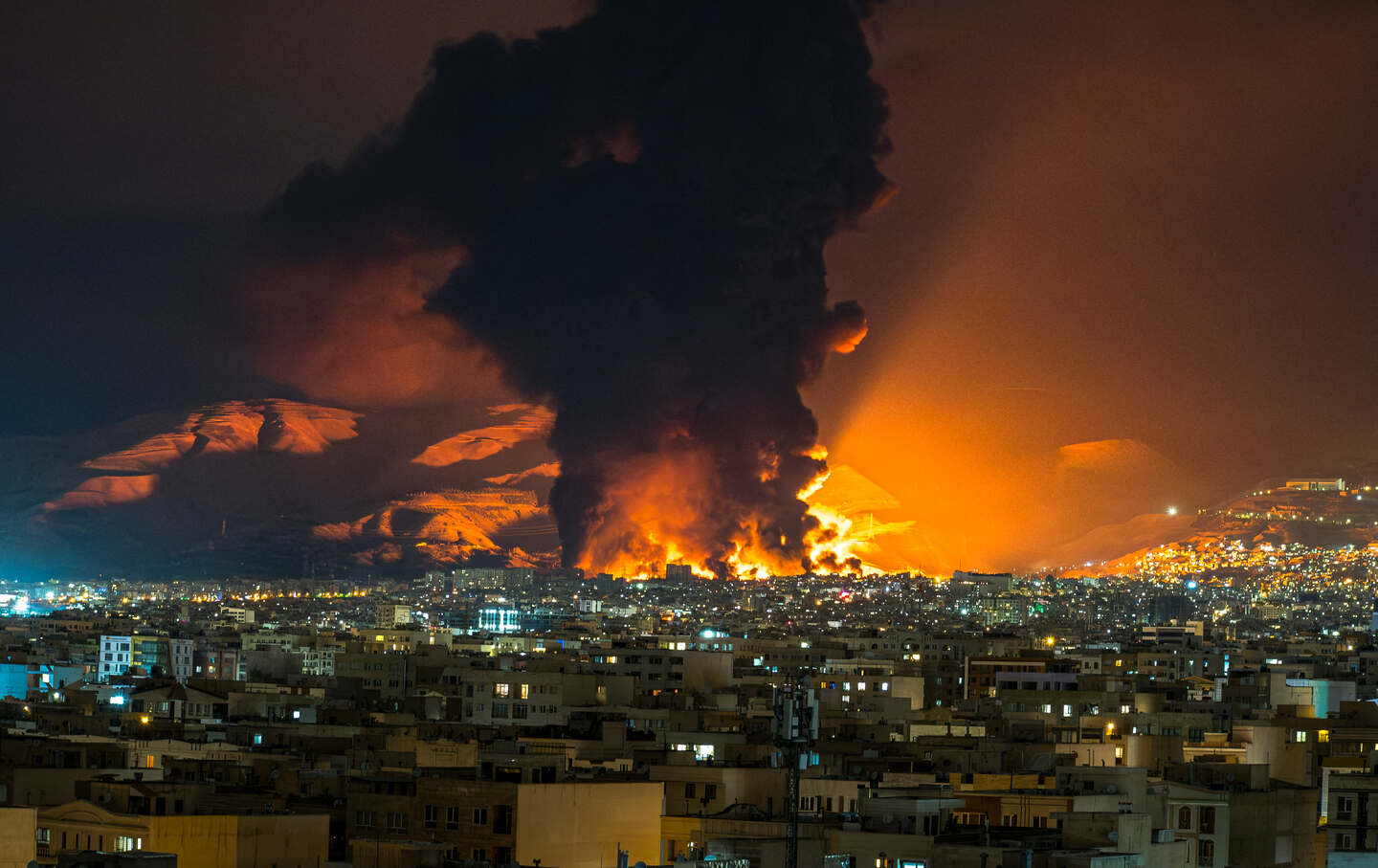
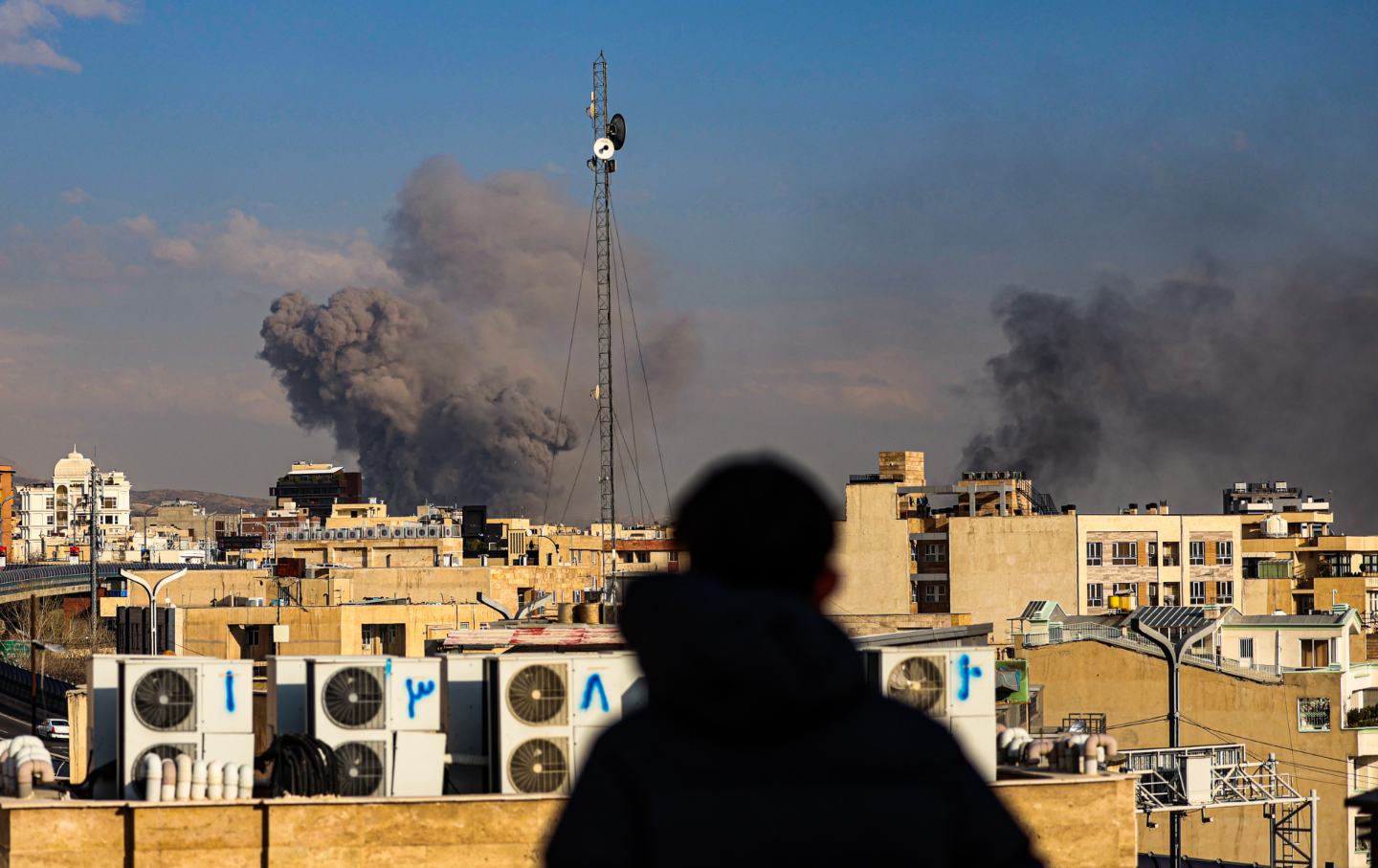
Now an undeclared, unauthorized, unpopular, and unconstitutional war of aggression against Iran has spread like wildfire through the region and into Europe. A new “forever war”—with an ever-increasing likelihood of American troops on the ground—may very well be upon us.
As we’ve seen over and over, this administration uses lies, misdirection, and attempts to flood the zone to justify its abuses of power at home and abroad. Just as Trump, Marco Rubio, and Pete Hegseth offer erratic and contradictory rationales for the attacks on Iran, the administration is also spreading the lie that the upcoming midterm elections are under threat from noncitizens on voter rolls. When these lies go unchecked, they become the basis for further authoritarian encroachment and war.
In these dark times, independent journalism is uniquely able to uncover the falsehoods that threaten our republic—and civilians around the world—and shine a bright light on the truth.
The Nation’s experienced team of writers, editors, and fact-checkers understands the scale of what we’re up against and the urgency with which we have to act. That’s why we’re publishing critical reporting and analysis of the war on Iran, ICE violence at home, new forms of voter suppression emerging in the courts, and much more.
But this journalism is possible only with your support.
This March, The Nation needs to raise $50,000 to ensure that we have the resources for reporting and analysis that sets the record straight and empowers people of conscience to organize. Will you donate today?