A New History of the Americas, Part 2, With Greg Grandin
The second of a two-part American Prestige series, exploring US–Latin American relations from the Civil War to today, and why revolutionary currents still shape the region.

The Nation Podcasts
Here's where to find podcasts from The Nation. Political talk without the boring parts, featuring the writers, activists and artists who shape the news, from a progressive perspective.
A New History of the Americas, Pt. 2 w/ Greg Grandin | American Prestige
Danny and Derek once again speak with historianGreg Grandin about his recent book,America, América: A New History of the New World. In this second part of the conversation, they follow US–Latin American relations from the American Civil War through the present. The discussion covers the Spanish-American War of 1898 and the contradictions of U.S. expansion cloaked in the language of human rights, the Mexican Revolution as a defining challenge to US power, Woodrow Wilson’s and FDR’s occupations and the Good Neighbor Policy, the Cold War, the neoliberal turn, the endurance of social movements in the face of American-backed violence, and why contemporary Latin American politics still display revolutionary undercurrents.
Advertising Inquiries: https://redcircle.com/brands
Privacy & Opt-Out: https://redcircle.com/privacy
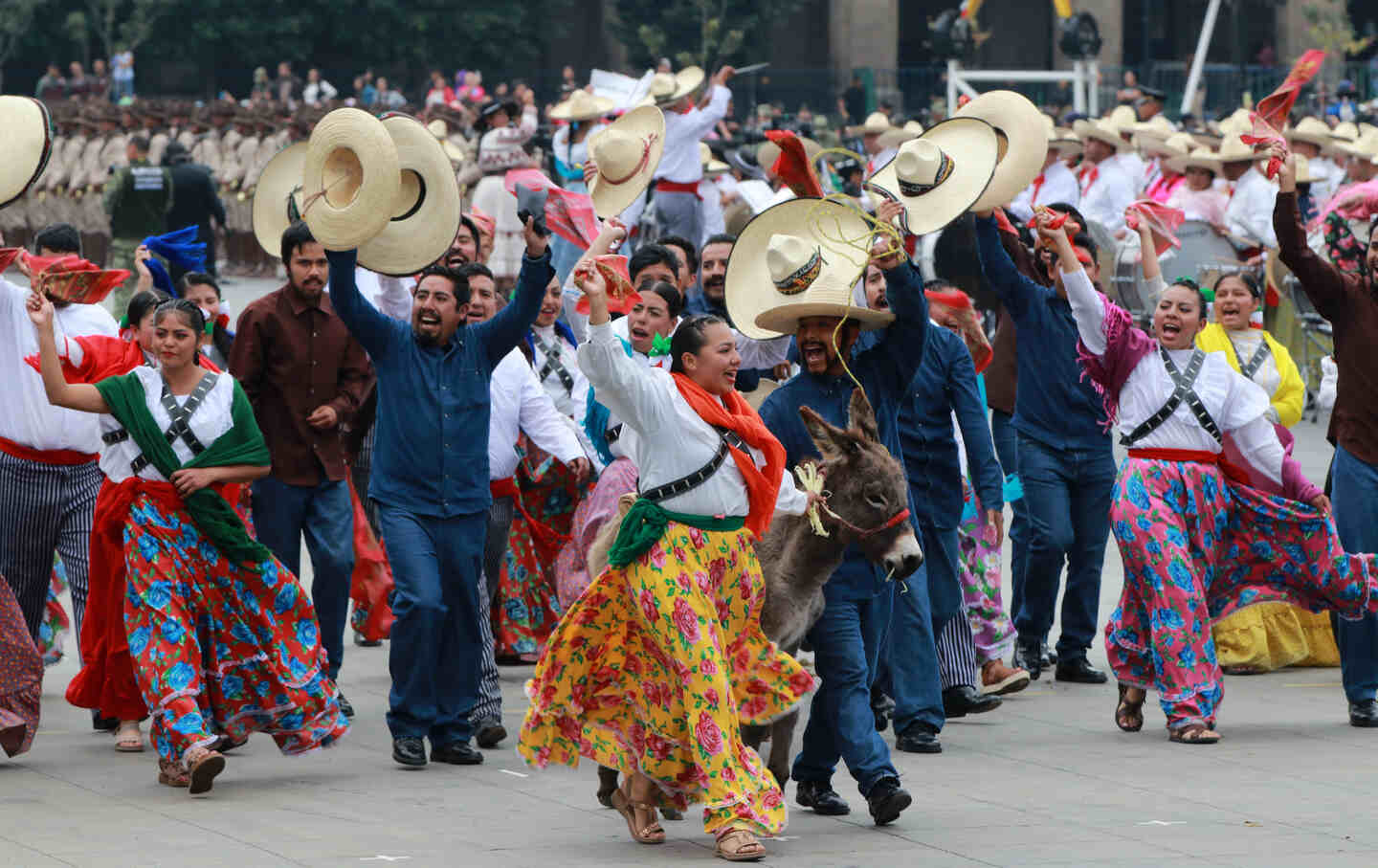
Members of the Mexican armed forces, in Mexican Revolution-era uniforms, parade to mark the 114th anniversary of the Mexican Revolution in Mexico City, Mexico, on November 20, 2024.
(Jose Luis Torales/NurPhoto via Getty Images)Danny and Derek once again speak with historian Greg Grandin about his recent book, America, América: A New History of the New World. In this second part of the conversation, they follow US–Latin American relations from the American Civil War through the present. The discussion covers the Spanish-American War of 1898 and the contradictions of US expansion cloaked in the language of human rights, the Mexican Revolution as a defining challenge to US power, Woodrow Wilson’s and FDR’s occupations and the Good Neighbor Policy, the Cold War, the neoliberal turn, the endurance of social movements in the face of American-backed violence, and why contemporary Latin American politics still displays revolutionary undercurrents.
Subscribe to The Nation to support all of our podcasts: thenation.com/podcastsubscribe.
The Nation Podcasts
Here's where to find podcasts from The Nation. Political talk without the boring parts, featuring the writers, activists and artists who shape the news, from a progressive perspective.
Canada-US Trade War Escalates, Houthis Seize Yemeni Port, Report Says Netanyahu Ignored 10/7 Warnings / American Prestige
I, for one, welcome our new AI overlords. In this week’s news: the EU’s Copernicus Climate Change Service confirms last month was tied for the hottest ever recorded (0:52); the Houthis/Ansar Allah take the port city of Mokha (1:45); the U.S. and Iran exchange ship attacks as oil prices rise (5:25); the IAEA refers Iran to the United Nations (7:32); Trump predicts an end to the Iran war immediately after the midterms (8:59); 12 countries ban products made in Israeli settlements (10:52); a new report alleges that Netanyahu ignored October 7 warnings and a chance to recover hostages (13:49); the IDF takes a strategic ridge in Lebanon, then escalates strikes (18:30); an arbitration court rules against India on the Indus Waters Treaty (20:49); new claims of famine emerge in Sudan’s Darfur region (23:05); the Nigerian government and Boko Haram maintain a ceasefire (24:59); the Trump administration phases out U.S. support for anti-AIDS programs in Namibia (27:21); American envoys Jared Kushner and Steve Witkoff visit Russia and Ukraine (29:22); Ukraine tries to close Russian airspace (31:20); and in a trade war update, Canadian tariffs on U.S. goods take effect (32:50).
Don't forget Derek's Substack, Foreign Exchanges.
Enjoy Danny's new Substack, Imperialist Realism.
Advertising Inquiries: https://redcircle.com/brands
Privacy & Opt-Out: https://redcircle.com/privacy
Search Results placeholder
Subscribe to The Nation to Support all of our podcasts
Become a Sustaining Donor This September
Between the reemergence of right-wing red-baiting and Donald Trump’s use of the chilling National Security Presidential Memorandum–7 to criminalize left political organizing, we’re seeing McCarthyism reborn before our eyes.
This assault on democracy cannot be ignored or wished away. Resisting it requires bravery in the face of threats and repression, a steadfast commitment to the truth, and the unwavering belief that we can—and will—overcome this darkness.
We must have an independent media that sets the record straight, unearths corruption and abuses of power, and advances a politics of justice and dignity for all if we’re to win this fight.
That’s why I’m writing to you today. This September, The Nation needs to add 100 monthly donors to sustain our progressive journalism. Your contribution makes the next investigative report, the next truth-speaking column, and the next pathbreaking essay all possible.
I hope you’ll support our work with a recurring donation today. If you donate $10 or more a month, we’ll send you a brand new “Hands Off the Free Press!” sticker to recognise your commitment to our cause. Please, donate today.
Onward,
Katrina vanden Heuvel
Editor and Publisher, The Nation