Minnesota Changed Everything—Plus, History on the Road, With Deepak Bharvaga
On this episode of Start Making Sense, Deepak Bharvaga explains the lessons of the resistance in Minneapolis, and Beverly Gage describes a historian’s road trip across America.

The Nation Podcasts
Here's where to find podcasts from The Nation. Political talk without the boring parts, featuring the writers, activists and artists who shape the news, from a progressive perspective.
Minnesota Changed Everything—Plus, History on the Road | Start Making Sense
Minnesota changed everything: how Minnesota’s resistance to ICE provides a model and inspiration for a national pro-democracy movement. Deepak Bhargava will explains; he’s president of the Freedom Together Foundation.
Also: July 4 will mark the 250th anniversary of the United States, which Trump is celebrating with a campaign to “eliminate” what he calls “divisive anti-American ideology” from American’s historic sites, national parks, and the National Zoo. Historian Beverly Gage has another idea – a road trip to visit some of those places where history happened. Her new book is This Land is Your Land: A Road Trip Through US History.
Advertising Inquiries: https://redcircle.com/brands
Privacy & Opt-Out: https://redcircle.com/privacy
Search Results placeholder
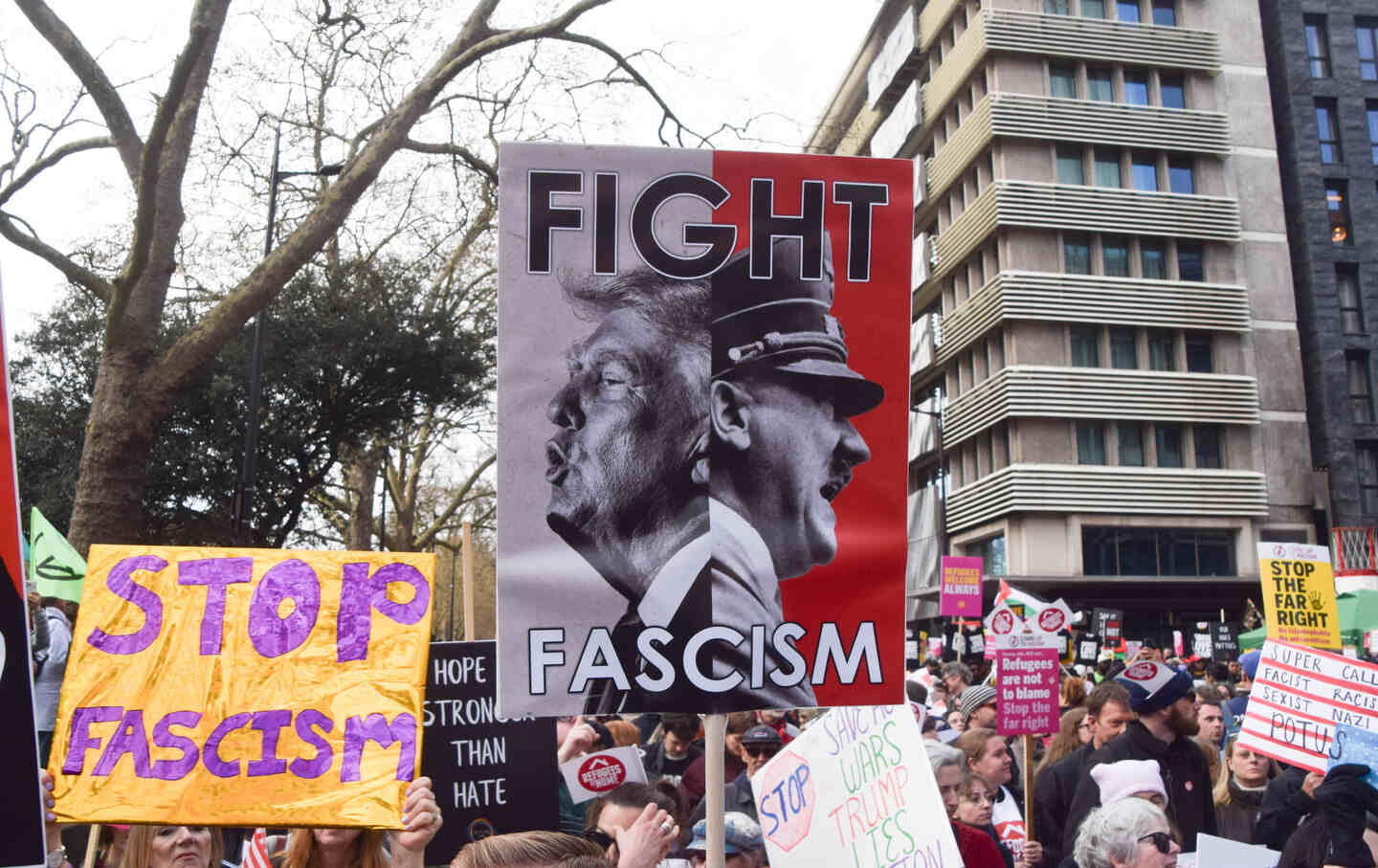
A demonstrator holds an anti-ICE sign that reads “We Stand with Minnesota, Nationwide Shutdown” while joining a protest.
(Probal Rashid / LightRocket via Getty Images)Minnesota changed everything! Minnesota’s resistance to ICE provides a model and inspiration for a national pro-democracy movement. Deepak Bhargava explains; he’s president of the Freedom Together Foundation.
Also: July 4 will mark the 250th anniversary of the United States, which Trump is celebrating with a campaign to “eliminate” what he calls “divisive anti-American ideology” from American’s historic sites, national parks, and the National Zoo. Historian Beverly Gage has another idea—a road trip to visit some of those places where history happened. Her new book is This Land is Your Land: A Road Trip Through US History.
Subscribe to The Nation to support all of our podcasts: thenation.com/podcastsubscribe.
The Nation Podcasts
Here's where to find podcasts from The Nation. Political talk without the boring parts, featuring the writers, activists and artists who shape the news, from a progressive perspective.
Minnesota Changed Everything—Plus, History on the Road | Start Making Sense
Minnesota changed everything: how Minnesota’s resistance to ICE provides a model and inspiration for a national pro-democracy movement. Deepak Bhargava will explains; he’s president of the Freedom Together Foundation.
Also: July 4 will mark the 250th anniversary of the United States, which Trump is celebrating with a campaign to “eliminate” what he calls “divisive anti-American ideology” from American’s historic sites, national parks, and the National Zoo. Historian Beverly Gage has another idea – a road trip to visit some of those places where history happened. Her new book is This Land is Your Land: A Road Trip Through US History.
Advertising Inquiries: https://redcircle.com/brands
Privacy & Opt-Out: https://redcircle.com/privacy
Search Results placeholder
Jon Wiener: From The Nation magazine, this is Start Making Sense. I’m Jon Wiener. Later in the hour: July 4 will mark the 250th anniversary of the United States, which Trump is celebrating with a campaign to “eliminate” what he calls “divisive anti-American ideology” from American’s historic sites, national parks, and the National Zoo. Historian Beverly Gage has another idea: a road trip to visit some of those places where history happened. She’ll explain, later in the hour. But first: how Minnesota’s resistance to ICE provides a model and inspiration for a national pro-democracy movement — Deepak Bhargava will comment, in a minute.
[BREAK]
Now it’s time to talk with Deepak Bhargava. He’s a longtime movement organizer, leader and strategist. He’s taught at the City University of New York. He’s coauthor of the book Practical Radicals: Seven Strategies to Change the World. He’s written for The New York Times and The Guardian, and he’s been a frequent contributor to The Nation. In 2024, he became president of the Freedom Together Foundation, which has $4 billion in assets. Its mission is helping people who have been denied power to build it so they can change unjust systems and create a more democratic, inclusive, and sustainable society. Deepak Bhargava, welcome to the program.
Deepak Bhargava: Thanks for having me, Jon. Great to be here.
JW: We’ll start today with your Minnesota moment – that’s news from my hometown of Saint Paul that you won’t get from Sean Hannity. Deepak, you’ve been organizing social movements in helping fund progressive groups for a couple of decades now. But you said recently “Minnesota changed everything.” Please explain.
DB: Yeah, well, I’ve been around organizing and social movements for a long time, as you said. And the response to the occupation in Minnesota by grassroots organizations, by labor unions, and by thousands and thousands of everyday folks, was the best example of organizing I have really seen in decades. It had the impact of forcing ICE out of the city, of dramatically changing immigration policy all across the country. And maybe most importantly, of lighting a cultural fuse. So, everybody from Kim Kardashian and Bruce Springsteen on the one side to everyday church folks and workers began talking about what was happening in terms of the violation of basic civil liberties and civil rights in this country in a way that had not happened before. So, it literally changed the map. And I would just point out that the funding bill passed by Congress does not include continued funding for ICE and it, or expanded funding for ICE, and that would have been an unimaginable result before Minnesota. Now, what made Minnesota so special was that the administration picked the state in the country that arguably has the strongest organizing infrastructure of any place in the country labor unions, faith organizations, neighborhood Latino groups that came together have been organizing together for over a decade and came together to mount a ferocious response. That organizational response was met by thousands of everyday people, some of whom were not remotely activists, who could not abide their neighbors being treated the way they were by masked officers invading neighborhoods. So, we saw something like an uprising of everyday people, a nonviolent uprising. They pulled off what may be the first general strike in a major American city since the Montgomery bus boycott. That is astonishing. Over 25% of the state’s population participated in the ‘No Work, No Buy Day of Action, they called it — tens of thousands in freezing cold temperatures, over and over again. The organizers estimate that maybe half of the city’s population participated in some way, providing food, or accompanying kids to school, or some aspect of mutual aid. So, Minnesota really did change everything — not just in Minnesota, but around the country.
JW: And I want to talk about the organizations that led that. There were, of course, labor unions. There were immigrants’ rights groups like Unidos Minnesota. I was surprised that faith groups were so significant. When I grew up in Saint Paul, the Lutherans were not known as a powerhouse of social justice organizing. But one of the things we learned from the group Faith in Minnesota was: don’t mess with the Lutherans!
DB: [LAUGHTER] Well, don’t mess the Lutherans — or the Catholics, or the Muslims, or the Jews, it turns out.
JW: Right.
DB: The interfaith organizing effort that’s actually been going on in the state for several decades, that is among the finest social justice, faith-based organizing efforts in the country — the local expression is ISAIAH.
JW: Yes.
DB: And this effort really was pivotal to the mass action we saw in Minnesota.
JW: Faith in Minnesota held a training early in the ICE struggle. Now, this training was not in the basement of a Lutheran church. This training was in the convention center downtown Minneapolis, the biggest space you can get in Minneapolis. 5,000 people showed up for this training in nonviolent direct action. That was a wake-up call to all of us that something big was about to happen in Minneapolis.
DB: Absolutely. And I think a pivotal moment in how this all unfolded was the decision of many, many of the clergy members associated with Faith in Action to engage in nonviolent civil disobedience at the airport, to try and interrupt the detention and deportation of Somali and other immigrants. That galvanized a kind of moral response from the members of their congregations and from the civic leadership at large. Those faith leaders played a critical role in pushing other elements, other leaders in the state and in the city and politics to take the strongest possible stand. And they created a moral frame for the struggle that I think is a big part of why it succeeded.
JW: So, on the one hand, there were these long standing, very well-known and well-staffed community organizing groups; but there were also a huge number of seemingly spontaneous rapid response groups in neighborhoods, organized block by block, that did not seem to be part of some long-term organizing strategy, that were pretty autonomous. It seemed to be spontaneous. But maybe I’m wrong about that.
DB: Oh, there was a lot of spontaneous energy, as I understand the story. And people did organize in their neighborhoods or around their school for immediate mutual aid and self-defense. The interesting thing about how this played out, though, was there was a kind of harmonizing of the formal organizational structures and the movement energy. Sometimes those things come into conflict. In this case, many of the members of the congregations that were organized, or of labor unions, were actually leaders in those neighborhood teams that formed. So, that leadership skill that people developed in organizations proved pivotal to the discipline and rigor of some of that neighborhood organizing.
And then the organizational leadership had such credibility that, for example, when Alex Pretti was murdered and the city was in a very tense state, the leadership of the organizations called for candlelight vigils in neighborhoods, partly as a way of diffusing any risk of violence, but also to get people out together to mourn and grieve and commit themselves to action. That was another pivotal point where strategic leadership played an essential role in this turning out the way that it did.
JW: And I want to talk about the role of nonprofit foundations in supporting the organizations that led in this struggle. Over the last at least decade or so, especially since the murder of George Floyd in May 2020, Minneapolis has seen a massive rise of philanthropic support, called the “racial reckoning,” let’s talk about how that changed the local charitable organizations, which are quite significant in the Twin Cities, and led to millions being dedicated to community organizing around social justice. Tell us a little bit about that.
DB: First of all, it is not a coincidence that the murder of George Floyd and the activism around that, its relationship to this new wave of activism is very clear, that many people had developed their skills and their leadership ability for moments of intense crisis through the struggle around racial justice, around the murder of George Floyd. So, there’s a clear through line there.
What’s interesting to me is that philanthropy helped to build a long-term civic infrastructure in Minnesota. And this story actually goes back decades of investment in neighborhoods, of investment in institutions to cultivate the kind of civic capacity that could be used when a massive existential threat hit.
I also think it’s very notable that the leaders in Minnesota, in philanthropy, just like the leaders in labor, the leaders in faith, used their public voice. They were outspoken. So, they not only provided funding to communities, for humanity who were experiencing intense humanitarian crises. We forget, people were trapped in their homes in subzero temperatures, unable to go to work, unable to go to school, and facing just the most dire circumstances. So, philanthropy had to mount an emergency response, as well as a strategic response, and also use of voice. And to me, it’s one of the most positive examples we have of that kind of long-term investment in civic infrastructure.
JW: And of course, Trump is aware that foundations, nonprofits, have been a crucial basis for organizing opposition to his rule. Along with his attacks on universities and law firms, he has talked about attacking, going after the big foundations that fund social justice work. He’s talked about taking away the tax-exempt status of nonprofit foundations. That’s a very difficult thing to do, but it’s also very intimidating to the big organizations. JD Vance listed the top four targets that they have in mind: the Open Society foundations, founded by George Soros; Indivisible, the organization that that inspired and leads the No Kings mobilizations; ActBlue, the Democratic Party funding organization, and CHIRLA, the Coalition for Immigrant Rights in Los Angeles. This is a pretty interesting list. I understand that after JD Vance made this announcement that the nonprofits, unlike the law firms, united and formed a mutual support pact. You’ve been a part of that effort. Tell us about that.
DB: I think we were all very troubled to see many leaders of universities, many leaders of businesses, media companies, immediately capitulate when the administration came after them. I think every person, regardless of your political persuasion, should believe that we have a right, all of us to speak in whatever way we want about whatever topics, whether we disagree or not. So, these are like fundamental core values that are being attacked here by the administration.
In that context, about 700 foundations came together last April. And remember, this was at the height of the capitulation by Columbia and by other major organizations. 700 foundations came together to say, “we will not obey in advance.” And we formed a coalition called Unite in Advance, whose purpose is really to defend our ability to give, to speak, to invest in ways we see fit in line with the constitutionally protected activities of every organization. And I think it offers a kind of model for how sectors should respond with solidarity, rather than by hiding or by looking out for themselves, because really, there is no safety for an institution in trying to go it alone or in trying to cut a deal, or in simply staying silent. The lessons of history are that the only protection you have is solidarity.
And you know, these threats are very serious. But I would point out that we’re a year in, more than a year in, and philanthropy is still able to operate in this country. And yes, there have been stressing congressional investigations and hearings. I’m sure there are – there may be administrative actions and enforcement actions going on that I’m not aware of, but overall, the sector is still standing. And to me, that is a testament to the importance of solidarity and organizing as a response to threats to fundamental civil liberties.
JW: One other aspect of the mutual support: the increase in the payout. This is kind of a technicality, but very important to the world of philanthropy that a lot of people don’t know about. Explain the payout, what it has been and what is happening now.
DB: Private foundations are required to spend at least 5% of their assets every year towards charitable activities. And that is often viewed as a ceiling rather than as a floor. And there is no reason that in times of great crisis, of great humanitarian need, of great turmoil, of crisis, of natural disaster, or in our own case, a democratic crisis that is fully human made, that we cannot increase our spending to respond to those needs. And in fact, I would argue we really have a moral and social obligation to do that.
So, at Freedom Together, we doubled our payouts. So, we now give out 10% a year towards social justice causes towards the defense of basic democratic rights. And many of our colleagues have followed suit and done similar kinds of increases to respond to this crisis.
I think it is incredibly important to understand that the pro-democracy movement in this country is doing essential work, defending liberties in the courts, protecting the integrity of free and fair elections, organizing at the grassroots. All of those things require money, and they need much more money today than they would have ten years ago in the absence of an existential democracy crisis. And so we have an obligation, as those with resources, to step forward and give more as individuals, as private foundations, in every single capacity.
JW: If not now, when?
DB: Exactly. A dollar today is worth so much more than a dollar in 10 years if there is a consolidation of authoritarianism in this country.
JW: I want to talk a little bit more about election protection. Trump is sinking, but as he becomes weaker, it’s been said many times, he becomes more dangerous. He will try to undermine, discredit or maybe even stop the midterms. Tell us about what you see your role as, and the role of nonprofit funders who have substantial resources, in the field of election protection, given what the state attorneys general are already planning to do.
DB: Just to state clearly, all of us who are nonprofits, all of us who are foundations, are, by law, nonpartisan entities. So, we are not able to support candidates or parties. But what we can do is we can support efforts to make sure that elections are free and fair.
And in this context, what that means is supporting litigation to ensure that there are not measures that prevent people from being able to access their constitutional right to vote.
We can support grassroots organizing to educate people about potential threats to their ability to vote, how to navigate new election rules when there are such things, how to come together with their neighbors to mobilize when necessary, to defend the right to vote, how to respond to potential military or ICE or National Guard incursions, which may occur in communities of color, particularly – that grassroots education, voter protection work is now so much more important than it’s ever been.
And then lastly, we can buttress the work that’s happening around ensuring that elections are able to operate at the local level. You know, we have a very decentralized election system in this country, which is actually a great asset because it means it’s very hard to commandeer that infrastructure from the top. It’s not built with a single national election structure. We have thousands of local election boards and county election administrators, but they are going to come under huge pressure. And most of those people are just simply good, nonpartisan bureaucrats who want to do mostly the right thing and just kind of make sure that things happen. So, we can support their efforts and protect them when they come under attack, make sure they have the resources to respond to unforeseen challenges.
So, with all those levels, the courts, the election administration piece, and especially in terms of grassroots organizing, we can play a vital role in resourcing the people on the front lines of democracy today.
JW: Deepak Bhargava – he’s president of the Freedom Together Foundation. Deepak, thank you for all your work, and thanks for talking with us today.
DB: Thank you Jon. Great to be with you.
[BREAK]
Jon Wiener: It’s time to start planning your celebration of the 250th anniversary of the founding of the United States in 1776. Trump is planning his version – at whitehouse.gov, you can learn that Trump will celebrate American greatness this semiquincentennial year by “restoring truth and sanity in American history,” which means, in his words, “eliminating divisive anti-American ideology” from “America’s historic sites, national parks, and the National Zoo.” Historian Beverly Gage has another idea: a road trip to visit some of those places where history happened. She teaches history at Yale, and her book on J. Edgar Hoover, titled G-Man, received the Pulitzer Prize in history, the Bancroft Prize in American History, and the National Book Critics Circle Award in biography. We talked about it here. Memorable segment. Her new book is This Land is Your Land: A Road Trip through US History. Beverly Gage, welcome back.
Beverly Gage: Thanks, Jon. It’s great to be here.
JW: I understand you were a part of the 200th anniversary celebration of the Declaration of Independence in 1976. You were just a little kid, of course. You call it your first historical memory.
BG: That’s right. I grew up outside of Philadelphia. So, big history city, and big city for the bicentennial. I was four years old when the bicentennial happened. And that was also the 1976 election, and my parents were big Jimmy Carter supporters, so they made me dress up as a peanut. And it was like a little, you know, sandwich board, peanut costume. And I marched in a bicentennial parade, and it was very itchy and very uncomfortable, and I didn’t like it at all. And that is my first memory of being part of history.
JW: And then you got a PhD in American history.
BG: That’s right. Many years later, I came around and got a PhD in American history. But even when I was in graduate school, before graduate school, and then throughout my time as a professor, I have really liked not only sitting at my desk or standing in front of a classroom but getting out on the road to kind of explore the country through its history.
JW: The first question you had to decide was where to begin the story of America. The 1619 Project proposed a bold idea. This was the New York Times project headed by journalist Nikole Hannah-Jones. They proposed the year the first Africans arrived at Jamestown was the right place to start American history,1619, the beginning of slavery and racism, racism that continues today. Trump and the MAGA movement immediately responded that the correct starting point was not 1619, it was 1776, the Declaration of Independence. And you start your book not at Jamestown in 1619, but in Philadelphia with the Declaration of Independence in 1776. But you argue you are not accepting the MAGA meaning of 1776.
BG: That’s right. I have not gone full MAGA. No, I thought two things. One, this is the semiquincentennial year and so it’s about the 250th, it’s about that moment in 1776. And so, it seemed good to start there. But I think more than that, I actually have had real concerns over the last couple of decades about the ways in which the left in particular, has kind of abandoned these American stories and traditions and symbols and really ceded them in some way to their political enemies. And that just seems to me both to be not true to American history as it actually existed, and also just a big political mistake. These are powerful symbols. They’re meaningful stories. And in fact, the American Revolution was a revolution. It might not be the perfect revolution. It might not be the revolution that you want today. But for its moment in time, it was a dramatic and meaningful thing. And to just sluff it off as a as a big nothingburger seems like a mistake to me.
JW: And the idea that “all men are created equal,” you call “the most important sentence in American history.”
BG: I think that’s right. I mean, it is a founding sentence. It obviously did not describe the world as it existed, but it described a certain kind of attitude and aspiration. And I think for most successful movements of change in American history, it has been one of the tools and one of the measures against which you can make your claims and know if you’re succeeding.
JW: Of course slavery is really the flashpoint for Trump and the people who want to have a happier version of American history. And Philadelphia has been a center of the battles where Trump has tried to eliminate information about how the Founding Fathers owned slaves, in particular at the historic site in Philadelphia that’s called the President’s House. In February, Trump sent workers with crowbars to pry off all 30 interpretive signs about slavery from the walls of the President’s House historical site. The city sued. A federal judge ordered the Trump administration to restore the displays about slavery. The judge said Trump “did not have the power to erase or alter historical truths.” And one of the panels Trump had removed and that was subsequently restored, was about a woman named Ona Judge. Tell us about Ona Judge.
BG: One of the challenges of writing this book is that I did all of my traveling in 2023 and 2024, so that I could then write the book and get it out in time for the semiquincentennial. And then, of course, 2025 came along and a lot of these sites started changing. And so, I did have a moment where I thought, wow, do I need to go back and change the verb tense? But I just acknowledge that in the book. And you know, that’s kind of what the book’s about is these battles over history, and they don’t stop, they keep going.
But Ona Judge is this fantastic, really interesting character. She was born into slavery at Mount Vernon, so she was enslaved by the Washington family. And as a teenager,as a very young girl, she became one of Martha Washington’s personal servants. And then when George Washington became president, first in New York and then Philadelphia, Ona Judge is one of the enslaved people who came with him to serve the family.
And so, the president’s house is the place where Washington lived in Philadelphia while he was president. And a lot of the displays were about enslaved people, including Ona Judge, who lived there as well. But the amazing thing about Ona Judge is that in 1796, when it’s clear that Washington is going to be stepping down and going back to Mount Vernon, she decides she is not going back with him, and she basically, you know, walks out the door into Philadelphia, which was a very anti-slavery city at the time – is aided and abetted by people in the city to make her escape. She ends up in New Hampshire living as a free woman. And George Washington is furious about this, he tries and tries to get her to come back, to get people to force her back. But it doesn’t happen. She lives out her life, really, as a free woman. I mean, she has a hard life after that.
The other thing that’s amazing about that story is that there was a law, because Pennsylvania was a relatively anti-slavery state, when George Washington lived there, there was a law that said any enslaved person who’s been in the city of Philadelphia for more than six months is allowed to petition for their freedom. And so, what Washington did very deliberately was to take the enslaved people in his household, rotate them out of the state of Pennsylvania, usually back to Virginia, but sometimes just like over to New Jersey, leave them there for a few days and then bring them back in to start over that six-month clock. So it was totally self-conscious. It is, you know, the great avatar of the birth of freedom, doing all of these machinations to keep these people in his household enslaved.
JW: And it’s one of the stories Trump wanted eliminated from the historical site, and it’s one of the stories featured in Beverly Gage’s new book, This Land Is Your Land.
Big picture here: A lot of historians have been teaching for a long time what you call the progress story: a country that once enslaved millions of Africans and their descendants, a country that massacred indigenous people, restricted citizenship to white residents, excluded women from public life — that country became a more egalitarian nation. This was the result of the work of generations of activists and movements who believed all people are created equal, people who fought to make the American dream a reality. That’s the way I taught American history before I retired. But you say that now, many of us are wondering how much of that is true anymore. Please explain.
BG: There are two pieces to that. So one is that, if you look at public opinion polling and you ask people, “do they think that the future is going to be better than the present or the past?” It used to be that people said, “yeah, right. We’ve got all these amazing visions of the future.” Now, they weren’t all the same vision of the future, but there was a sense that there was some sort of trajectory underway or that there was optimism, and that really isn’t the case anymore. And it’s quite dramatically not the case. And I think it’s a real concern for our body politic and for how people are really thinking about the world that they want to live in.
And then the other is the historical narrative, right? The way that we teach history and their two narratives of progress have come under attack for all sorts of good reasons. Sometimes they’re triumphal and exceptionalist. Sometimes they have been about civilizational progress that has led to some pretty serious injustices. But yeah, it’s interesting, I don’t think that it is the driving narrative of American history classes, certainly not in universities anymore.
And, you know, I thought it was interesting to pause and, and note that and actually think about what it means. I did find when I was out on the road going to all of these historic sites that actually now there’s a real disjuncture between a public narrative that’s being told at the sites, which still does tell the story of expanding rights for the most part. And then what you see in universities, and then what people are actually feeling and how they’re experiencing history, these all seem to be different things right now.
JW: One of the most interesting places where the progress story is told that you write about is the one park in the national park system that’s entirely devoted to women’s rights. You went there. Tell us about the Women’s Rights National Historical Park. First of all, where is it?
BG: This is in Seneca Falls. It’s part of chapter five of the book, which is one of my favorite chapters because it’s a little more out of the way. It’s a little more unexpected, but it’s a chapter that’s really about the Erie Canal corridor, so Albany to Buffalo, famously, in what we now describe as upstate New York, and it focuses on the 1830s, 40s, and 1850s, because that’s a period when this was the site of all these incredible movements that started flowering. And so Frederick Douglass was living there, and Susan B. Anthony and Elizabeth Cady Stanton and Harriet Tubman and John Brown and William Seward. And so, they’re all just there in these tiny towns as neighbors, reinventing themselves and reinventing the country.
So, Seneca Falls is one of those little towns there. And it still is just a little former mill town, but the place where the Women’s Rights Convention was held in 1848 is now a national park site. And so you can go in — and of course, what they did in that moment in 1848 was to take the Declaration of Independence, turn it into what Elizabeth Cady Stanton described as the Declaration of Sentiments. And in the book, I say she makes one of the great two-word edits of all time. It begins, “all men and women are created equal.”
JW: If the MAGA movement were interested in its historical origins, I think they’d probably look to the Confederacy and to Fort Sumter as the beginning of the Confederacy. What’s it like now to visit Fort Sumter? It’s out there in Charleston Harbor. Do they say in 1861, it was attacked by traitors defending slavery. Or do they say it was attacked by good people defending the southern way of life?
BG: Charleston is a little ambivalent on that question now. I mean, certainly, I think visiting Charleston, which is one of these great historic cities, they’ve done amazing things in terms of historic preservation there. Visiting Charleston now is very different than it would have been 20 or 30 years ago. There is a lot more recognition of slavery. There’s a lot more documentation of slavery. There’s a lot more questioning of the Confederacy.
One of the things that I wanted to do in going was to go on a big Civil War walking tour of downtown Charleston, and it was funny, I found one, but I only found one, and I talked to the guide about it. I don’t know if his perception is accurate. He says, “oh yeah, people don’t know what to do with these stories right now. And so like, they kind of don’t want to talk about it.” But Fort Sumter is still there. It’s part of the National Park Service. I did an American flag raising there, which was actually pretty moving and interesting.
And the great thing about South Carolina at the moment is that there are also some new parks that are devoted to Reconstruction, which is a piece of the story, and Black Reconstruction in particular, emancipation Reconstruction in the South Carolina Sea Islands. So those stories aren’t very well known and they’re pretty interesting.
JW: Reconstruction Era National Historical Park.
BG: Right. If you drive about two hours south of Charleston into the Sea Islands, which most people think of now for like Hilton Head for golf and that sort of thing, that is actually the first place during the war where emancipation happened. Because the Union Army came in and took over very fast, and then all the white southerners ran away. And so, you began to build these autonomous Black communities, land owning as well. They took over ownership of many of the lands there, which is pretty different from what ends up happening in a lot of places in Reconstruction.
JW: And civil rights history has a lot of museums and historic sites. You focus on Montgomery, site of the bus boycott of 1955 and 56, Rosa Parks, Martin Luther King. You say there’s at least three museums of that history in Montgomery. And the fourth one I did not know about: the Legacy Museum, which you said is different from all the other ones. Tell us about that.
BG: Right. The Legacy Museum was created by Bryan Stevenson, who lots of people know as a civil rights lawyer and an author. And the Legacy Museum is a retelling of American history, but through the lens of racial injustice. And so it starts with slavery. I think the the slogan is “From slavery to mass incarceration.” That’s sort of the subtitle of the Legacy Museum. That museum is also linked up with two other sites in Montgomery. One is a memorial to the victims of lynching. And then there is a third, this is the newest piece, is a park devoted to the history of slavery and emancipation.
JW: And you describe the Legacy Museum as not part of the telling of the progress story. You say it presents “the long view, gut punch version of history.”
BG: The Legacy Museum is very much focused on a counter history of race. If you go to civil rights museums – the one in Jackson, the one in Birmingham, the one in Memphis — those are stories of the civil rights movement. They’re very much progress stories centered around a lot of the characters that we know. The Legacy Museum really is doing something different. It’s suggesting that there hasn’t been a lot of change, right? That progress is not something that is central to American history. And though there’s been change in the form, that actually the real story is the story that’s about continuity in racial violence and racial injustice. So it’s a very moving museum. I did come away kind of wondering if the story that it was telling gave people tools to imagine change. When you tell a story that’s as bleak and really as wrenching as the story that the Legacy Museum tells, I wondered if it captured some of the dynamism that you see in other places, or if people just come away from that giving up.
JW: You said you did your cross-country trip during the last year of the Biden presidency, not knowing what was to come — before Trump decided, in your words, “to chastise and defund the
programs and institutions that make history accessible.” But, you conclude, even with Trump planning the official celebration of the nation’s 250th anniversary, there is nevertheless good news. You say “history is hard to suppress.” Tell us about that.
BG: Well, I think I found just so much energy and interest out there. And there are lots of people who on local levels, also on big scale levels are kind of creating and contending with American history. And honestly, once you know things, they don’t disappear, you don’t stop knowing them. And so even if you’re seeing these efforts, as you say, at suppression or only telling the good parts of the story, that doesn’t mean that that’s going to win out.
And I guess my struggle in writing this book and I was looking ahead to 2026, I didn’t know what was going to happen, but I thought we might need some other voices in the mix, whoever won the election. And you know, my struggle in this book was really to figure out how to mark this moment, how to engage it, how to say that I love my country and still hold on to all the things that I know as a historian. And I think that that’s possible. I hope that I pulled it off, but I think there are lots of people out there trying to do that in their in their own ways and in their own communities this year.
JW: “History is hard to suppress.” Beverly Gage – her new book is This Land Is Your Land: A Road Trip Through U.S. History. It’s like a US history survey course, but more fun. Bev, thanks for talking with us today.
BG: Thanks so much, Jon.