Minneapolis: the Landscape of Resistance; plus the Destruction Brought by DOGE
John Nichols on Minneapolis groups preparing for Friday’s day of “no work, no school, no shopping”; plus Sasha Abramsky on the human toll of Elon Musk’s firing federal workers

The Nation Podcasts
Here's where to find podcasts from The Nation. Political talk without the boring parts, featuring the writers, activists and artists who shape the news, from a progressive perspective.
Minneapolis: the Landscape of Resistance—Plus, the Destruction brought by DOGE | Start Making Sense
The landscape of resistance in Minneapolis, John Nichols reports, includes surprisingly powerful and effective faith groups, plus unions, neighborhood mutual aid and community safety networks, ICE observer teams, and direct action groups, plus the ACLU and its allies, as well as the outspoken mayor and the fighting state attorney general.
Also: DOGE did NOT reduce spending – at all. But it did reduce federal employment; 271,000 people lost their jobs in the federal government, according to CATO. Sasha Abramsky set out to find out what it was like for some of those people — his new book reports on the experiences of eleven fired federal workers: American Carnage: How Trump, Musk, and DOGE butchered the US Government.
Advertising Inquiries: https://redcircle.com/brands
Privacy & Opt-Out: https://redcircle.com/privacy
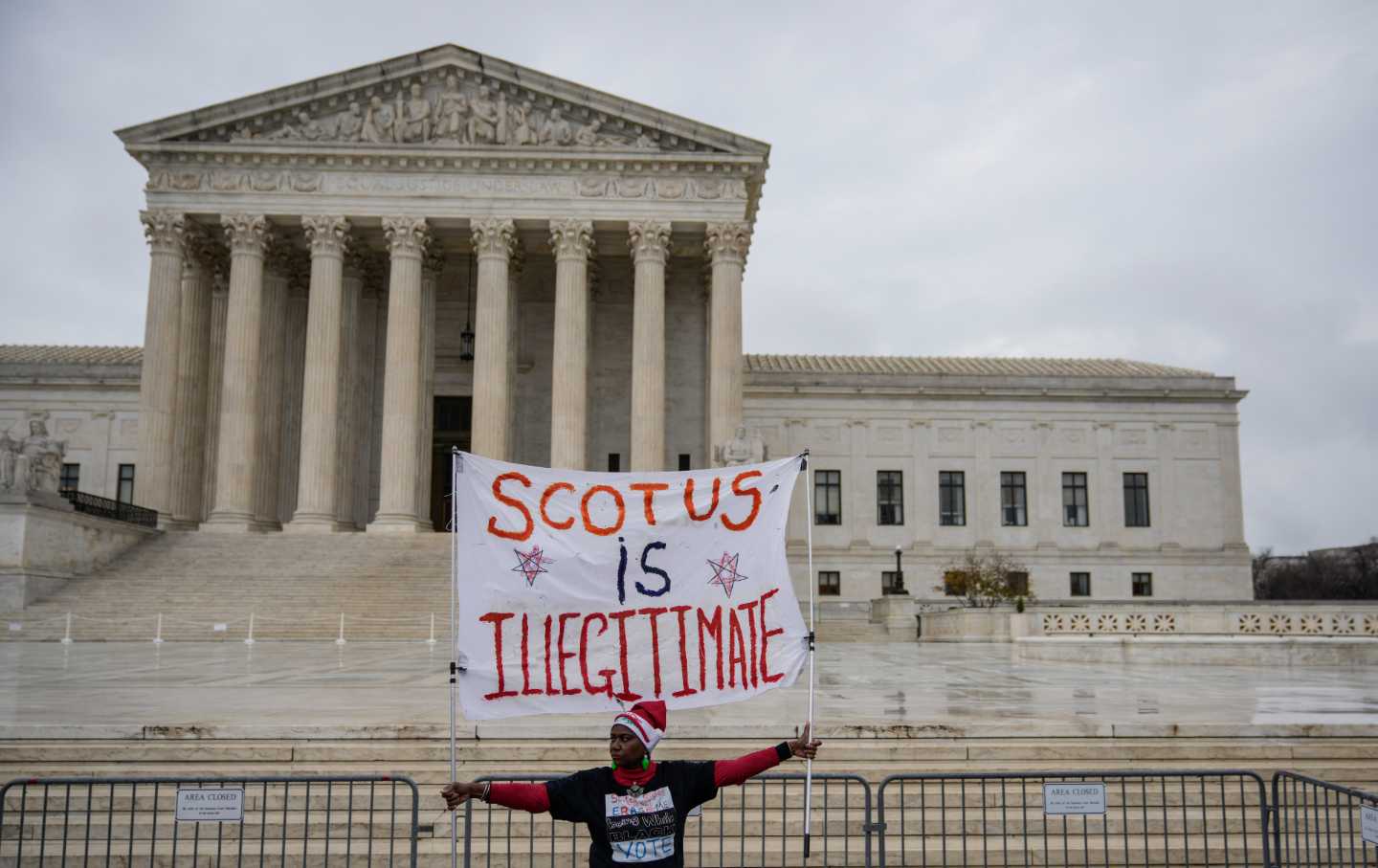
Demonstrators against the Immigration and Customs Enforcement (ICE) deployment during a protest in Minneapolis.
(Victor J. Blue/Bloomberg via Getty Images)On this episode of Start Making Sense, John Nichols discusses the Minneapolis groups preparing for Friday’s day of “no work, no school, no shopping”; plus Sasha Abramsky reports on the human toll of Elon Musk’s firing federal workers
The landscape of resistance in Minneapolis, John Nichols reports, includes surprisingly powerful and effective faith groups, plus unions, neighborhood networks for mutual aid and community safety, ICE observer teams, and direct action groups, plus the ACLU and its allies, as well as the outspoken mayor and state attorney general. All are working toward Friday’s day of “no work, no school, no shopping.”
Also: DOGE did NOT reduce spending – at all. But it did reduce federal employment; 271,000 people lost their jobs in the federal government, according to CATO. Sasha Abramsky set out to find out what it was like for some of those people — his new book reports on the experiences of eleven fired federal workers: American Carnage: How Trump, Musk, and DOGE butchered the US Government.
Subscribe to The Nation to support all of our podcasts: thenation.com/podcastsubscribe.
The Nation Podcasts
Here's where to find podcasts from The Nation. Political talk without the boring parts, featuring the writers, activists and artists who shape the news, from a progressive perspective.
The Supremes say ‘No” to Trump on Mail Voting, plus the Paramount-Warner Merger Fight / Start Making Sense
Only two Justices backed Trump in the Court’s ruling blocking his efforts to enlist the postal service in restricting voting by mail in the midterms. David Cole explains why this is a huge victory, but far from the end of Trump’s effforts to undermine Democratic voting.
Also: The blue state attorneys general have succeeded in blocking the efforts of Trump’s allies at Paramount-Skydance from taking over Warners-Discovery, at least for now, but their lawsuit followed months of protests organized by, among others, Jane Fonda’s Committee for the First Amendment. Rashad Robinson has our analysis – his new book is From Presence to Power: How to take on the Fights that Matter – and Win.
Advertising Inquiries: https://redcircle.com/brands
Privacy & Opt-Out: https://redcircle.com/privacy
Search Results placeholder
Jon Wiener: From The Nation magazine, this is Start Making Sense. I’m Jon Wiener. Later in the show: DOGE, Elon’s Musk’s effort at budget-cutting, did NOT reduce spending – at all. But it did reduce federal employment; 271,000 people lost their jobs in the federal government. Sasha Abramsky set out to find out what it was like for some of those people. His new book reports on the experiences of eleven fired federal workers. It’s called American Carnage: How Trump, Musk, and DOGE Butchered the US Government.
But first: “no work, no school, no shopping” in Minneapolis this Friday – John Nichols has our report — in a minute.
[BREAK]
Now it’s time for Your Minnesota Moment – that’s news from my hometown of St. Paul. Today: the landscape of resistance in Minneapolis. For that, we turn to John Nichols. He’s executive editor of The Nation. John, welcome back.
John Nichols: It’s great to be with you.
JW: The big news this week in Minneapolis is the planning for the citywide day of protest against ICE this Friday, January 23rd. The slogan is “No Work, No School, No Shopping.” Among the leaders of this effort, I’ve been especially impressed by the faith-based groups, especially one called ISAIAH and their political partner, Faith in Minnesota. I knew nothing about them just a couple of weeks ago.
ISAIAH describes itself as “a multifaith, multiracial, statewide, nonpartisan community organizing coalition working toward a multiracial democracy and a caring economy.””” They have 200 congregations and mosques as members and partners. They also have a rural organizing project and something they call a “barbershop and Black congregation cooperative.” The political arm Faith in Minnesota a couple of weeks ago did a training at the Minneapolis Convention Center. 5,000 people showed up to study know your rights and nonviolent community protection. And they are one of the groups taking the lead in setting up Friday’s day of “No Work, No School, No Shopping.” What do you know about the activist faith groups?
JN: Well, I know this is a function of the upper Midwest. Wisconsin has a similar grouping and Iowa has some similar projects going on. These coalitions, although they’ve gotten stronger in recent years, root back often to the Iraq war era and the aftermath of 9/11 where there was a lot of division and efforts were made by faith groups. Again, different roots in different states, different patterns. But to get Muslim communities speaking with the Lutheran folks, the Church of Christ speaking with the Jewish community, kind of getting everybody into a room where they could talk.
Now, Minnesota is especially interesting in this regard, especially in the Twin Cities, but also up in Duluth and some other areas where they have had such an incoming, were very welcoming when Hmong immigrants were coming after the Vietnam War. That was religious diversity as well as ethnic diversity. In Minnesota, to a much greater extent than any other state in the nation, a huge number of Somali folks coming.
The reason this becomes significant is that there have been wonderful efforts made by folks in various communities to build these coalitions. They didn’t just come together today. They didn’t just come into existence as a response to ICE, but they are there and they’re ready. And it makes something like Friday’s strike, for lack of a better term, much more possible.
JW: One of the key actions last weekend of the faith groups was the action against Target. Target is based in Minneapolis. And we saw over the weekend a protest by a couple of hundred ministers, mostly Protestants, picketing the Target headquarters downtown, demanding a meeting with the CEO. Then they had a sit-in inside the store and the CEO agreed finally to meet with them. Their argument was that Jesus said, “Love thy neighbor,” and that means Target should not cooperate with ICE.
JN: That’s right. It’s not a particularly out-there argument, it’s got roots in tradition. What you were seeing with that targeting of Target is a big deal. You’re also seeing, by the way, the hotels in Minneapolis getting similar messages. Are you going to cooperate with ICE? How are you going to deal with this?
JW: And the Love Thy Neighbor effort includes lots of mutual aid and community support, delivering groceries to people who are afraid to go to the grocery store, financial assistance to people facing financial hardship because they haven’t been able to go to work. There’s the group Minnesota ICE Watch, which did the observer training and runs the network that Renee Good was part of. And then there’s the unions. Minneapolis Regional Labor Federation of the FLCIO is one of the leaders organizing what you rightly call this strike this Friday. The Federation consists of 175 unions representing 80,000 people. They have endorsed this Friday action. The union locals I read that have been already most active in resistance to ICE. Of course, the teachers, there’s an AFT group, the Minneapolis Federation of Teachers. They’ve supported the school-based protection, guarding the schools that drop off at pickup times, working with parents and neighborhood groups.
The SEIU, which is the janitors and the security workers and the airport workers have organized street protests and are supporting the Friday strike. AFSME, the county workers have endorsed the shutdown. The postal workers have endorsed it. The Government Employees Union at the VA Medical Center will be participating in the protest.
Now, most of these, of course, are government employee groups.
JN: Public sector.
JW: Public sector employees, which is where most unions are these days. But the Teamsters in Minneapolis have also been active in endorsing this Friday organization. So the unions have been very impressive in Minneapolis in the last month or two.
JN: There’s simply no question of that. And Minneapolis is a union town. It has been a union town going all the way back to pre-New Deal era. The Teamsters are fascinating because Minneapolis was a place of one of the major breakthroughs, one of the major Teamster strikes in the history of the United States, and very militant, by the way. And so we shouldn’t be shocked that these unions are stepping up, but there’s another element of it that’s really significant, you were talking about the airport workers, you’re talking about some of these other folks. Many of these unions are multiracial, multi-ethnic, multi-religious unions. They are unions that have organized among people lived in Minnesota for generations, but also among the new communities that have come and formed. And I think there are few cities in the United States. I think Los Angeles is another example, but there are only a few cities in the United States where you’ve seen it really get to that level where “this is my brother, this is my sister, we are in solidarity, and we have duties to step up.” And I think you’re going to see on Friday, a massive union presence there.
Now, the final thing about it too is it has clearly been heightened. The energy, the intensity has been heightened by the abuses committed by ICE, and the role that ICE is playing in that city is so disruptive that working class people are having a hard time in many places doing their job. I think that has made the union commitment to this run deeper. And why does it matter when unions are a part of things? There’s a lot of different groups that can come out and bring people out to something. There are groups though that because of their traditions, because of their history, they know how to get the signs printed. They know how to get the buses rolling. I was talking the other day to Keith Ellison, who’s the Attorney General of Minnesota, and he was talking waxing poetic, for lack of a better term, on the role that so many of these unions play and the role that the faith communities play and the power that when you get them together, when you’ve got unions, angry people, scared people, and so you say, “Hey, there’s a day when we can come together and push back.”
JW: You mentioned Keith Ellison, the State Attorney General. I want to talk just for a minute about the role of the elected officials in addition to supporting the organizational basis of this thing. We have Mayor Jacob Frey in Minneapolis, the mayor of St. Paul, Kaohly Vang, and then we have the state attorney general. The three of them stood shoulder to shoulder last week, announced that they filed a lawsuit against ICE. I just want to note, the Minneapolis mayor is Jewish. The St. Paul mayor is Hmong and a woman. The city’s first on both of those. And the state attorney general is Muslim. So this is kind of the glory of Minnesota right there.
JN: It’s Minnesota. And it’s a state that often got a reputation as just being a bunch of Lutherans. And there’s parts of Minnesota where the Lutheran bake sale is still one of the major events in the community. But the fact of the matter is Minnesota is a multiracial, multi-ethnic state and the Minneapolis, St. Paul especially, and you do see that diversity.
Remember the Congresswoman from the Minneapolis area is Ilhan Omar who literally grew up in a refugee camp and came to America. These are people who understand the issues that are in play and know exactly what the struggle is about. Keith Ellison, I think, is at the center of that. He was breakthrough victory when he won his congressional seat, I think back in 2006. These are people who come from activist traditions.
Keith Ellison, before he was a state legislator and then a member of Congress, finally Attorney General, was an activist. He was out in the streets. And I think it was like two days before there was a rally of students at a high school not far from the state capitol, and Ellison jumped in his car and went and spoke at the rally. And it was a wonderful, if you see it on YouTube or video, there’s Keith Ellison out there, the top law enforcement officer in the state, guy who’s suing Trump. He’s in the front lines and very busy. And he’s out there with a bunch of high school students and he said, “I wanted to come here today to tell you I am your Attorney General. I represent you. I’m going into court on your behalf, and I want you to know that you’re not alone. You’ve got a top lawyer who has got a bunch of other lawyers and we’re fighting for you.” Saying this to high school students. Imagine empowerment of that. Imagine the energy of that.
JW: I want to talk a little bit about that lawsuit. The mayors of St. Paul, Minneapolis, and the State Attorney General filed a lawsuit with a new theory that ICE operations violate Minnesota’s state sovereignty under the 10th Amendment. They say “the federal government’s actions appear designed to provoke community outrage, so fear, and inflict emotional distress, and they are interfering with the ability of state and local officials to protect and care for the residents.” This is really a new approach to going up against ICE. It’s being argued in federal court right now. We don’t know what the courts are going to say about that.
And there’s another lawsuit, a separate lawsuit, which has also been in the news, not a government lawsuit. It’s brought by the Minnesota ACLU and its allies on behalf of several individuals who won in federal court last Friday, a ruling, an order limiting ICE actions and tactics, this was Friday night. Federal Judge Katherine Menendez ruled that federal agents cannot arrest or pepper spray peaceful demonstrators, including those who are observing and monitoring ICE agents. That is a big win. Of course, the Trump people are appealing it because this would end their rule of terror in the streets. So we have two different legal tracks here. We have the Keith Ellison and the mayors suing on the basis of the 10th Amendment. And then we have the private citizens suing with the support of Minnesota ACLU. So the legal front is kind of the final piece in this battle against ICE.
JN: Well, it’s also been the final piece in all of our battles over the last year. What we’ve seen, we’ve seen a lot of pushback from the federal courts against the Trump administration, some pushback as well as state courts. There’s too much coverage of the Supreme Court, not enough of what’s happening down in the federal court.
JW: Absolutely. Absolutely. We added it up at one point with David Cole, former legal director of the ACLU. There’s something like 150 federal court rulings against Trump, and only 20 of those have been reversed by the Supreme Court. So the vast majority are still in effect.
JN: We don’t deny the problems with the Supreme Court, but we recognize that there’s more going on here. One of the things is that ACLU suit is – there’s also a real examination of ICE agents acting in retaliation to someone who criticizes them, to someone who challenges them. Law enforcement officers have a responsibility to protect the right to dissent. You can’t shut someone down just because they’re criticizing you or because they disagree with you. And so there’s a lot of important stuff going on there with that ruling. But the second thing is Keith Ellison runs one of the best AG’s offices, Attorney General office in the country, and they are developing the arguments in Minnesota that will be relevant for Attorneys General in other states around the country in the year to come, potentially arguments that will go all the way to the Supreme Court, or at least into the appeals courts, and using those 10th Amendment rights as well as First Amendment rights.
When I talked to Keith Ellison the other day, and we’re going to have a piece from him in The Nation, when I talked to him the other day, he said a really interesting thing, which was, “Why did they write the Constitution the way they did? Why did they write the Bill of Rights the way they did? They wrote it that way so that this doesn’t happen in this new Republic,” Keith Ellison is saying, “I’m looking for avenues to push back against ICE in Minneapolis.” And the more success he has, frankly, the more likely is that the national pushback will be successful.
JW: And of course, for the last few days, Trump has been threatening to invoke the Insurrection Act in Minnesota if he loses on all these other fronts. And right now, apparently the plan is he’s got 1,500 active-duty soldiers, part of the 11th Airborne Division on standby in Alaska, getting ready for winter in Minnesota, I guess, for what they call “possible deployment to Minneapolis.” Of course, we think there’s a difference between insurrection and protest.
JN: That’s right. I mean, look, people have a right to protest. They have a right to assemble and petition for the redress of grievances.
JW: Where did you find that idea?
JN: Well, it’s in the First Amendment, my friend. Yes, it is. And James Madison spoke a lot about why this was so important. The founders were imperfect men on a lot of levels. And you know what? The best of them understood they were imperfect, and they understood they were going to need to be protested against. And so, they established a right to protest and they knew it would evolve over time. They knew we’d come to understand it better. And it has been defined in the 20th century by the courts, Brandeis, Holmes and others gave it much more clarity into the Warren Court.
We are now in a point in America where we have an understanding of that right to dissent, and it is always something power doesn’t like. It’s always something the elites don’t want, whether it’s in a labor struggle, whether it’s in a struggle over a war, whether it’s in struggle over civil rights, there’s always going to be pushback, there’s always going to be challenges, but the people who are organizing to protest in Minneapolis and St. Paul and in Minnesota are people from Minneapolis, St. Paul, and Minnesota. They’re not looking for violence. What they’re looking for is a way to express their deep dissent against what the federal government is doing at this point. And these are labor unions, these are religious groups, these are community groups. And as the mayor of Minneapolis, mayor of St. Paul, the Attorney General of Minnesota, the local elected officials, the local prosecutors are all saying is “if ICE would just leave, we could actually get back to functioning quite well.” And so, this is exactly what the right to dissent is about. Minneapolis and St. Paul are functional communities, and the dysfunction has come from outside, not from inside.
JW: John Nichols is executive editor of The Nation. John, thanks for talking with us today.
JN: It’s an honor to be with you, my friend.
[BREAK]
Jon Wiener: 2025 was the most consequential year in American politics since the early days of the New Deal – that’s what Sasha Abramsky says. And one of Trump’s first acts after taking the oath of office in January 2025 was to appoint Elon Musk head of what they called “DOGE,” the Department of Government Efficiency. Musk initially said DOGE would make cuts that would save the government $2 trillion.
The Conservative Cato Institute studied DOGE’s work and concluded in December that Musk did not save the government $2 trillion. In fact, DOGE did not reduce spending at all, the Cato Institute found, but it did reduce federal employment. Their calculation was that 271,000 people lost their jobs in the federal government – something unprecedented except for the demobilization of the army after the Korean War and World War II.
Sasha Abramsky set out to find out what that was like for some of those people. And now we have his book, which reports on the experiences of 11 fired federal workers. Of course, Sasha writes regularly for The Nation. His work has also appeared in The Atlantic, The Village Voice, Rolling Stone, and he has written many books, including The American Way of Poverty and The House of 20,000 Books. And his new book is out now: it’s called American Carnage: How Trump, Musk and DOGE Butchered the US Government. Sasha, welcome back.
Sasha Abramsky: Jon, it’s such a good pleasure to be on again.
JW: Mostly what we know about the destruction brought by DOGE is about the programs that were canceled, especially USAID, which stopped providing lifesaving care in poor countries around the world. But you decided to focus not on the programs, but on the people who were cut. How come?
SA: Well, because at the beginning of the Trump administration, it was very, very clear that they were going to literally wage war on their own workforce. And there was no mystery to this. Project 2025’s Russell Vought was caught on tape in October before the election saying, “If we win the election, our job is to put government workers into trauma, to make every day of their working life a living hell so that they decide to go off to the private sector.” And that was their way of shrinking, not the whole government, but the parts of government that they didn’t like.
So the parts that provided economic interventions, the parts that provided environmental policy, overseas aid, public health, all of the parts of the government that the hard right was increasingly suspicious of, they decided they would just bulldoze and they would bring the DOGE workers in with scant, if any, understanding of how the Constitution worked, of the fact that these were congressionally funded agencies and that these employers could not be fired without cause. And they just wholesale began going through sending out letters saying, “As of five o’clock today, you’re gone.”
And it seemed to me, right from the get-go, that the story here, obviously part of it was the breakdown of the social compact. What happens when the government no longer provides basic, basic public services to 330 million residents in the United States? But the other part of the story was, what happens to the lives of these federal workers when they’re turned upside down? What happens when they become the enemy within and the full might of the state and the full propaganda machine of Donald Trump, of Elon Musk, of all the others, is turned against these ordinary men and women, these men and women who have never been paid huge amounts of money despite all the propaganda that they’re extremely wealthy. They’re basically middle-class public servants and suddenly they are being eviscerated.
And that to me was an extraordinary story. And I think my reporting bore it out that when you actually look at what happened to these people, it’s shameful. And anybody of good conscience, they can be left wing, they can be right wing, they can be no wing at all. Anybody of good conscience who reads what happened to these men and women should just feel horrified that this was done in our name.
JW: Your book focuses on 11 people who were fired by DOGE. I want to talk about a few of them in the time we have here. You start with Taly Lind. She worked at USAID. In fact, she had worked there under the first Trump regime. And for those four years, Trump left them alone. USAID continued its work promoting democracy and health around the world.
SA: Yeah. I mean, Taly Lind is a fascinating woman, she spent 30 years in public service, she’s lived in many countries around the world. Her specialty is promoting democracy. She’s worked on women’s rights. She also knows the entire USAID infrastructure. She knows how it distributed vaccines, how it distributed anti-starvation interventions. She knows that it distributed vital medications for HIV/AIDS and so on. And she knows exactly what happens when you destroy an agency like that and the web of relationships around the world that kept it going. So she was put on administrative leave on day one. Even before USAID as a whole was destroyed, because her job had the title “diversity” in it, it was a sort of red flag to the Trump bull. The very day that Trump comes in, she was told to sit in her hands to receive her paycheck. But then over the coming months, the entire USAID operation was destroyed.
JW: Let me, just explain – what do you mean she was told to sit on her hands and still receive her paycheck?
SA: So there were various ways that those tried to get rid of people. If they were quote unquote probationary employees, which meant they’d been in their job for less than two years, they could just be fired outright. That was the theory that you could just send a letter and that afternoon they were gone. If they weren’t probationary employees, it was a little bit harder because people had job protection. So one thing they did, they sent these fork-in-the-road emails, these very intimidating emails, basically trying to scare people into resigning and going back into the private sector, or they encouraged them to take early retirement. That was one way they got rid of the workforce. But the other thing they did, they put people like Taly Lind on administrative leave. And what that meant was they were going to be fired down the road, but they couldn’t be fired for a certain number of months. While they couldn’t be fired, they were going to be paid, but they were only going to be paid if they didn’t work, which made literally no sense. So they were shut out of their government accounts, they were locked out of their government offices. All of the vital information that they had, all of the relationships they had with contractors, all of that was put to one side. And in Taly Lind’s case, she literally was told, “Go back to your house in Hawaii and just sit there and wait till we can formally fire you. “
Same thing happened. I interviewed a very lowly level employee at the IRS. He was answering telephone calls from the public, dealing with complaints, dealing with problems and questions. That kind of stuff is vital because if you don’t have people operating telephones at the IRS, you have a whole bunch of people who are very unhappy about their tax situation.
But again, he was also told, “We can’t fire you immediately, but you’re not allowed to work.” Well, that’s absurd. If you’re the Department of Government Efficiency, there is nothing more inefficient than telling hundreds of thousands of federal workers, “yes, we’re going to pay you for many, many months, but you’re not allowed to work, and you are allowed to take a second job in the private sector while you’re not allowed to work for the government.” It just literally makes no sense, but that’s how those operated.
JW: Then I want to talk about another fascinating figure in your book, Hannah Echt, E-C-H-T. She worked at NIOSH, the National Institute for Occupational Safety and Health. She had always wanted to work there ever since she was a kid. This is kind of an unusual ambition.
SA: Yeah. So her father worked for NIOSH and she’d gone into work with him as a kid. He’d seen what he did. And what NIOSH does basically is workplace investigations. If they receive a report, there’s toxic problems at a workplace or there’s not enough ventilation or whatever the unsafe issue is, they go in and they try and sort it out. They’re not punitive. They can’t impose fines. They can’t send people to prison. What they do is they try and sit down with employers and employees and work out how to save lives. And some of their best work has been with coal miners in places like West Virginia where they set up registries of all the sicknesses that coal miners get. Another thing they did was they set up a cancer registrar for survivors of the 911 attacks, the rescue workers at the World Trade Center and the Pentagon.
This stuff is vital, but the Trump administration basically declared war on NIOSH and tried to shut it down. Now, it’s one of the rare cases they utterly failed because the NIOSH employees organized extremely effectively, and they pushed back again and again and again. And it turned out they had bipartisan support because for example, in West Virginia, senators may be Republican, but they know exactly the health impact if you get rid of workplace safety inspectors and all the workplace safety infrastructure for their coal miners. And so in NIOSH’s case, drip, drip, drip a little bit each month, but gradually over the last six months, the NIOSH workers, including Hannah Echt, have been returned to their jobs. And there’s more bureaucracy now and there’s more red tape, which again sort of flies in the face of the whole thing about efficiency. And they have to get pre-approvals that they didn’t have to get pre-approvals for when they spend money to go off and do workplace safety inspections, but at least they’re back in their jobs.
And I actually got a note yesterday from Hannah saying they were hearing that all of the reduction in force letters from NIOSH were being reversed this week. So this is like a stunningly good outcome. The government tried to eviscerate a program, they had no business eviscerating, and the work has successfully pushed back.
JW: And then you write about a research scientist named Natasha Miles. She had been on the faculty at Penn State, and she worked on carbon dioxide and methane emissions in cities. She started out as a professor who got grants from NOAA, the National Oceanic and Atmospheric Administration. I want to make sure I’ve got that right.
SA: Awful lot of alphabet city letters in this story.
JW: So she got grants from NOAA at first to do this research and eventually she left academia and went to work full time there. And she told you “the job was perfect for me.”
SA: Yeah. So I mean, this is a woman who spent 30 years working in really, really esoteric climate emissions data gathering. And there are very few people on earth with the specific skillset she has and it’s really important work that she was doing. Now you’re right, she transitioned. She was working for the university. She decided after a while that it made more sense for her to work at NOAA and NOAA was glad to have her because she was an absolute expert in a field. So she starts that process of transitioning over to NOAA, but she’s a probationary worker. She’s one of those workers who, because he’s new to the federal job, doesn’t have worker protections.
JW: Even though this is a top-level PhD research position.
SA: Absolutely. But the thing about the probationary employers, it didn’t matter how senior you were. You could have worked in an organization for 30 years, but you changed jobs a year ago. So even though it’s the same organization, it’s a new job, you were considered a probationary employee with no protections. You could be a veteran and thousands and thousands of veterans each year go off into civilian employment in the government, but you don’t have any workplace protection in the civilian government because again, if you’re new to that job, you’re a probationary hire.
So these are the guys that DOGE ended up firing. Oftentimes they were very senior, but they just moved to a new job, or they were veterans coming into civilian employment. And DOGE goes in, and it fires them almost at random to meet quotas. So Natasha Miles is moving across countries. She’s got this new job, it’s in Boulder, Colorado. She packs up her car. She puts her dog in the back of the car in a cage. She goes off on a one-week road trip through the country to get to Boulder where she’s rented a small Airbnb for a few months while she sorts out her new life out west. And she’s one hour outside Boulder and her phone rings and it’s her boss on the other end of the line. And her boss says, “You need to look at your email.” And she pulls over, she looks at her email and it says, as of five o’clock that day, and this is 2:30 in the afternoon, as of five o’clock that day, Natasha Miles was being terminated.
Now, if you read my book, what you’ll see is the story of how her life emerged, evolves over the next six months. And all of the people I’m talking about, I’m sort of giving you a taster now in the interview, but really the book itself follows them over six months as they get fired, they get rehired because of court actions, they get fired again, just this back and forth that makes stability impossible.
Natasha Miles, she’s somebody in her mid- 50s. She has some health issues like many people in their mid- 50s. She had her health insurance terminated when her job was terminated. I mean, the way that people were being treated by the government was so extraordinary and they weren’t given proper paperwork, so they couldn’t even file for COBRA or any of the coverage that would tie them over when they lost health insurance because the government couldn’t be bothered to give them the paperwork they needed. They literally refused to put stuff in the mail. They literally refused to send the needed emails. I mean, this was gratuitous. This was being done as part of a sort of beat down to show federal workers that they were worthless and to show federal workers that they could be humiliated at will by the new boss in town in DC.
And let’s be clear, this is Trump’s modus operandi, and this is Elon Musk’ modus operandi. Trump repeatedly in the private sector refused to pay his workers. Carpenters would come in and do jobs or plumbers would come in, electricians would come in, and then he just wouldn’t honor contracts. The same with Elon Musk, when he took over Twitter, he went out of his way to make working conditions unendurable so that a vast part of his workforce would decide to leave. Well, if that’s how you sort of view your interactions with the rest of the world, it’s no surprise that when Trump and Musk came in with this vast amount of power and a completely quiescent Congress letting them do whatever they liked, it’s no surprise that the result was a beat down of hundreds of thousands of federal workers, and that’s the story in American carnage.
JW: I want to talk about one more person featured in your book, Kelsey Hendricks. She also worked at NOAA like Natasha Miles, but she wasn’t a top-level scientist. She was a kind of administrator, but she told you, “I loved NOAA and I loved the people I worked with. ” And there’s one other thing, Kelsey Hendricks had been mostly blind since birth, and she had severe rheumatoid arthritis for which she took one of the new biologic drugs that we all see advertised on TV. Hers cost $9,000 a month, but it was covered by her government health plan.
SA: That’s right. So Hendricks is, she’s a lovely young woman. She’s in her late 20s or early 30s. She’s very enthusiastic, very full of life. She’d always wanted to work in some capacity for an organization like NOAA, because even though she wasn’t the scientist, she was fascinated by science. She liked being surrounded by science. And you’re right, she’s blind, so, she’s had obstacles to overcome in her life and she managed to overcome those obstacles. And she ends up in her dream job. She ends up in a job working, as you said, on the administrative side at NOAA, basically doing the paperwork that brings contractors into the system. And she was also just fired with almost no notice and her health insurance was canceled again with almost no notice.
Now, none of this was because she was a bad employee. It was because all of these young DOGE operators, these guys who sort of were fast chargers, they were fresh out of college, they were tech bros, they wanted to impress Elon Musk. They didn’t know the first thing about how government worked. They didn’t know the first thing about the congressional laws that had been passed that made agencies function. All they knew was they were being told by Elon Musk to cut, cut, cut. And they knew they had the US marshals who were willing to literally frog march people out of their offices on their orders.
And so these young men, and they were almost all young men, came in with their laptops, they hacked into the government systems, they worked out who were the vulnerable employees because they were new to the job, and they sent out these sort of mass produced letters that looked like spam emails, but they weren’t. They were real letters terminating people from government employment. And as you said, Hendricks is blind. I mean, who treats somebody that way? Who treats a young, blind woman with that kind of callousness and that kind of contempt?
And the more I reported this book, the more it became a real passion for me to write it. You don’t write nonfiction books in 21st century America because you want to get wealthy, you write nonfiction books because you have a compelling reason to tell a story. And I was talking to people at Kelsey Hendricks and Natasha Miles and Taly Lind, and I felt so bad for them. But more importantly, I thought this is a disastrous thing that is befalling the US government because all of this talent is being driven out.
And when you break systems that much, when you fracture them beyond repair, you can’t cobble them back together again at the back end because all that talent’s gone elsewhere. Those people will eventually be taken up by the private sector or by state and local governments or by governments overseas in many cases, which are desperate for the kind of talent that America is now shedding.
And so to me, this is the story that in 2025, Trump and his minions basically made a bet against the American people and they made a bet that they could destroy public services, that they could render government systems shabby and ineffective, and that the public would just sit back and let that happen, let the lines for Social Security service get longer, let the lines for the IRS services get longer, let all the public health information that the CDC and the NIH generate disappear into the void, let worker protections go by the wayside. All of that stuff has happened in one year, which is why I say it’s the most significant year in American politics since the early New Deal. But the early new deal was building things. These guys are destroyers with a wrecking ball.
JW: One last thing, anybody who reads this book gets so involved with the people you want to know how are they doing now? How are they dealing with the anger, with the depression, with their futures, with are they engaging in politics? Are they trying to – what are they doing? You said Hannah Echt got ordered to go back to work at NIOSH. The other ones didn’t.
SA: Well, it’s hit and miss. Some of them did because of court orders. Most of them didn’t. Most of them are now doing other things. Some of them have moved on. Some of them are still firmly depressed, anxious, and angry. So there’s no one-size-fits-all answer there. But I will say the 11 people I focused on, they’re all very different. Some are senior, some are junior, some are older, some are younger, and they live in different parts of the country. I wanted to make sure that this was not just a book about DC and DC denizens. And I found all 11 of them fascinating. And I was humbled that they were willing to trust me with their stories. And I really urge readers to read this book. I mean, obviously I like it when I sell lots of books, but much, much, much more importantly, this is a book that tells a story of what happens when government is taken over by people who are both ideologues and also really, really cruel. And this is what happens when you sort of put that cruelty on steroids. And it’s an eye-opener, it’s an eye-opener for what America can become if we don’t push back against the authoritarian moment.
JW: Sasha Abramsky — his new book is American Carnage: How Trump, Musk and DOGE Butchered the US Government. It’s “a blend of empathic reporting and scathing analysis that will tug at your heart and focus your will to fight for all of us.” Sasha, thank you for this book, and thanks for talking with us today.
SA: Jon, it’s always a joy. Thank you very much.
Subscribe to The Nation to Support all of our podcasts
Become a Sustaining Donor This September
Between the reemergence of right-wing red-baiting and Donald Trump’s use of the chilling National Security Presidential Memorandum–7 to criminalize left political organizing, we’re seeing McCarthyism reborn before our eyes.
This assault on democracy cannot be ignored or wished away. Resisting it requires bravery in the face of threats and repression, a steadfast commitment to the truth, and the unwavering belief that we can—and will—overcome this darkness.
We must have an independent media that sets the record straight, unearths corruption and abuses of power, and advances a politics of justice and dignity for all if we’re to win this fight.
That’s why I’m writing to you today. This September, The Nation needs to add 100 monthly donors to sustain our progressive journalism. Your contribution makes the next investigative report, the next truth-speaking column, and the next pathbreaking essay all possible.
I hope you’ll support our work with a recurring donation today. If you donate $10 or more a month, we’ll send you a brand new “Hands Off the Free Press!” sticker to recognise your commitment to our cause. Please, donate today.
Onward,
Katrina vanden Heuvel
Editor and Publisher, The Nation