The Queer State, With Samuel Huneke
On this episode of American Prestige, a discussion on how queer politics and activism can engage in state power.

The Nation Podcasts
Here's where to find podcasts from The Nation. Political talk without the boring parts, featuring the writers, activists and artists who shape the news, from a progressive perspective.
The Queer State w/ Samuel Huneke | American Prestige
On this episode of the American Prestige, podcast, hosts Danny and Derek welcome back Samuel Huneke, assistant professor of history at George Mason University, to talk about his new book, A Queer Theory of the State.
The group discusses the various notions of queer theory and the state, how queer politics and activism can engage in state power, the neoliberal contingent of the queer community, where thinkers from Michel Foucault to Judith Sklar fit into this, and Huneke’s vision of what a queer state might look like.
Be sure to check out Sam’s past AP appearances in Queer Theory and the Queer Germany series.
Advertising Inquiries: https://redcircle.com/brands
Privacy & Opt-Out: https://redcircle.com/privacy
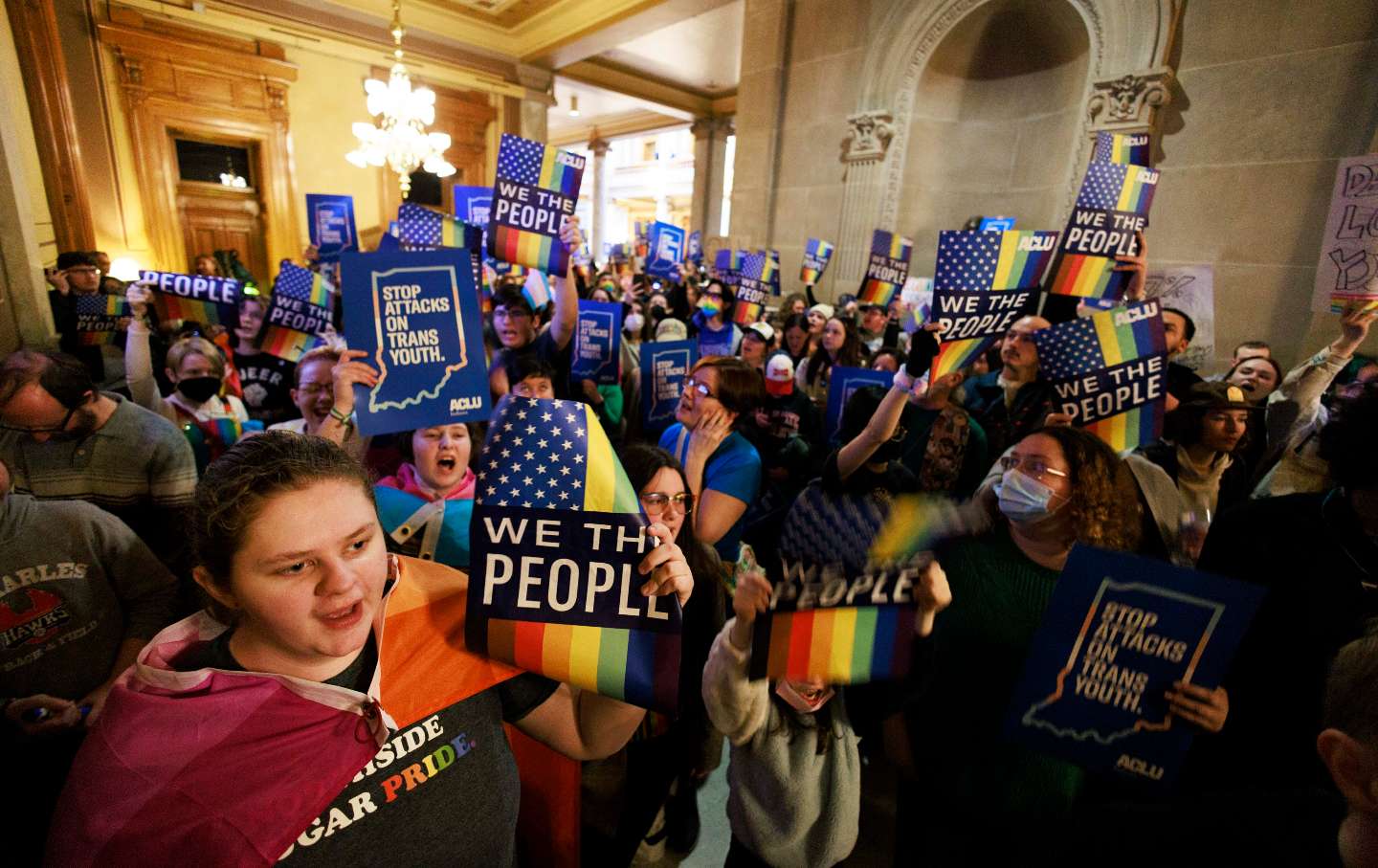
Protesters outside the Indiana House of Representatives during the education committee’s hearing on HB 1608, also known as the “Don’t Say Gay” bill, in Indianapolis.
(Jeremy Hogan / Getty)On this episode of the American Prestige, podcast, hosts Danny and Derek welcome back Samuel Huneke, assistant professor of history at George Mason University, to talk about his new book, A Queer Theory of the State.
The group discusses the various notions of queer theory and the state, how queer politics and activism can engage in state power, the neoliberal contingent of the queer community, where thinkers from Michel Foucault to Judith Sklar fit into this, and Huneke’s vision of what a queer state might look like.
Be sure to check out Sam’s past AP appearances in the Queer Theory and the Queer Germany series.
The Nation Podcasts
Here's where to find podcasts from The Nation. Political talk without the boring parts, featuring the writers, activists and artists who shape the news, from a progressive perspective.
The Biden Administration’s Complicity in Gaza w/ Akbar Shahid Ahmed / American Prestige
Danny and Derek welcome back Akbar Shahid Ahmed, Diplomatic correspondent for The Washington Sun and author of Crossing the Red Line: Biden, His Advisors, and Israel’s War on Gaza, to talk about the Biden administration’s role in enabling the genocide in Gaza. They discuss the conditions in the Strip as of the current day; Biden’s small inner circle of Antony Blinken, Jake Sullivan, and Brett McGurk; Jack Lew’s role of ambassador and the dubious war crime review process he implemented; the Rafah red line and its immediate collapse after Israel invaded; and the Democratic Party’s domestic political miscalculations heading into 2024 and 2028.
Advertising Inquiries: https://redcircle.com/brands
Privacy & Opt-Out: https://redcircle.com/privacy
Search Results placeholder
Subscribe to The Nation to Support all of our podcasts
Become a Sustaining Donor This September
Between the reemergence of right-wing red-baiting and Donald Trump’s use of the chilling National Security Presidential Memorandum–7 to criminalize left political organizing, we’re seeing McCarthyism reborn before our eyes.
This assault on democracy cannot be ignored or wished away. Resisting it requires bravery in the face of threats and repression, a steadfast commitment to the truth, and the unwavering belief that we can—and will—overcome this darkness.
We must have an independent media that sets the record straight, unearths corruption and abuses of power, and advances a politics of justice and dignity for all if we’re to win this fight.
That’s why I’m writing to you today. This September, The Nation needs to add 100 monthly donors to sustain our progressive journalism. Your contribution makes the next investigative report, the next truth-speaking column, and the next pathbreaking essay all possible.
I hope you’ll support our work with a recurring donation today. If you donate $10 or more a month, we’ll send you a brand new “Hands Off the Free Press!” sticker to recognise your commitment to our cause. Please, donate today.
Onward,
Katrina vanden Heuvel
Editor and Publisher, The Nation