How Abdul El-Sayed Can Win Michigan, Plus an Election Protection Test Case
The Michigan Democratic Senate primary provided a test of the power of AIPAC and big money. John Nichols has our analysis.

The Nation Podcasts
Here's where to find podcasts from The Nation. Political talk without the boring parts, featuring the writers, activists and artists who shape the news, from a progressive perspective.
How Abdul El-Sayed Can Win Michigan, Plus an Election Protection Test Case / Start Making Sense
The Michigan Democratic senate primary provided a test of the power of AIPAC and big money. John Nichols has our analysis.
Also: a rehearsal for the election protection groups: the California sherriff who seized 650,000 ballots from November’s referendum, claiming he needed to recount them. Zach Roth of Democracy Docket will explain how the Chad Bianco case provides a test of one key Republican strategy for holding on to the House after the midterms.
Advertising Inquiries: https://redcircle.com/brands
Privacy & Opt-Out: https://redcircle.com/privacy
Democratic candidate for US Senate Abdul El-Sayed speaks to supporters at an election-night rally on August 04, 2026, in Detroit, Michigan.
(Scott Olson / Getty Images)FThe Michigan Democratic senate primary provided a test of the power of AIPAC and big money. John Nichols has our analysis.
Also: a rehearsal for the election protection groups: the California sheriff who seized 650,000 ballots from November’s referendum, claiming he needed to recount them. Zach Roth of Democracy Docket will explain how the Chad Bianco case provides a test of one key Republican strategy for holding on to the House after the midterms.
Subscribe to The Nation to support all of our podcasts: thenation.com/subscribe.
The Nation Podcasts
Here's where to find podcasts from The Nation. Political talk without the boring parts, featuring the writers, activists and artists who shape the news, from a progressive perspective.
The Supremes say ‘No” to Trump on Mail Voting, plus the Paramount-Warner Merger Fight / Start Making Sense
Only two Justices backed Trump in the Court’s ruling blocking his efforts to enlist the postal service in restricting voting by mail in the midterms. David Cole explains why this is a huge victory, but far from the end of Trump’s effforts to undermine Democratic voting.
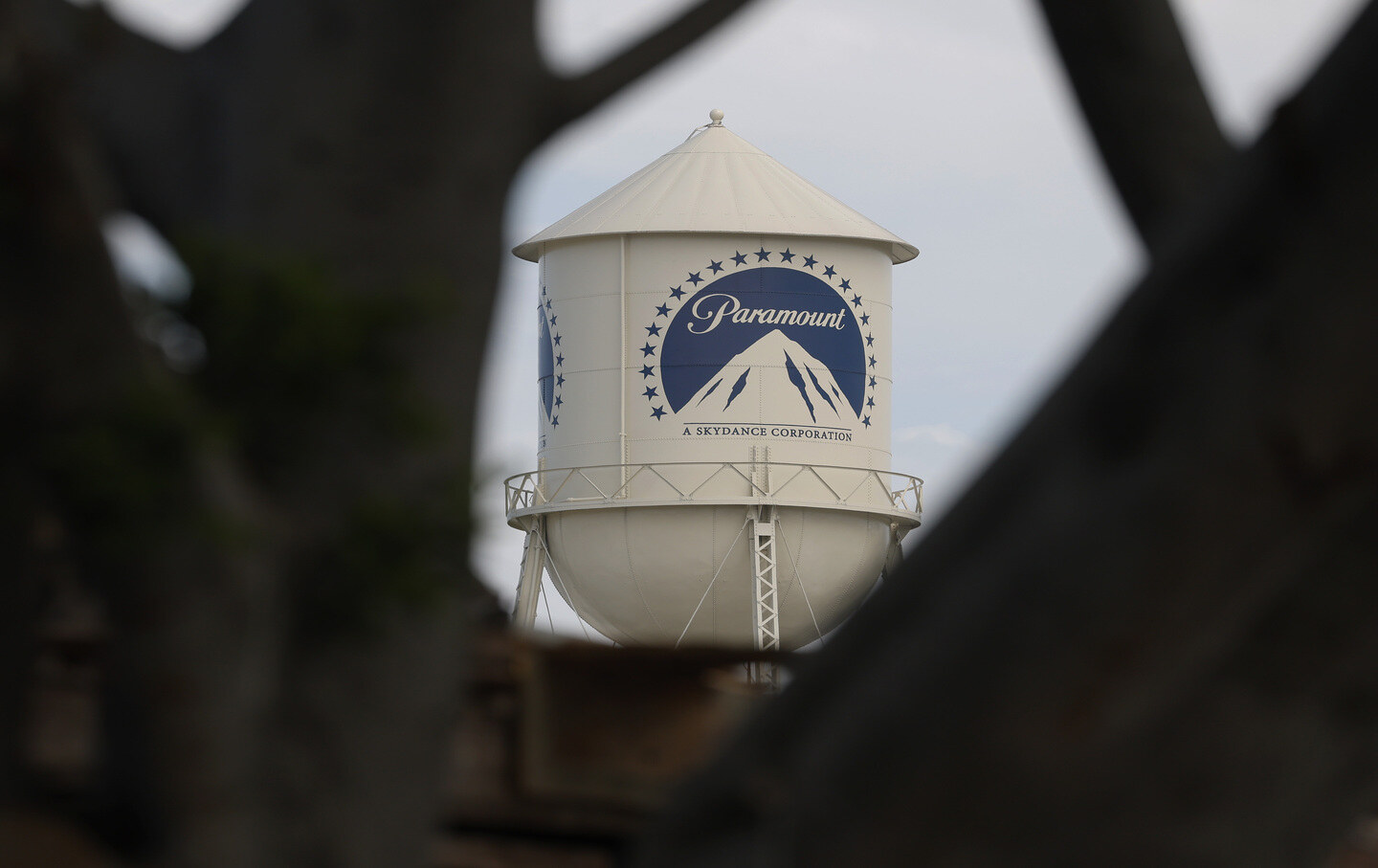
Also: The blue state attorneys general have succeeded in blocking the efforts of Trump’s allies at Paramount-Skydance from taking over Warners-Discovery, at least for now, but their lawsuit followed months of protests organized by, among others, Jane Fonda’s Committee for the First Amendment. Rashad Robinson has our analysis – his new book is From Presence to Power: How to take on the Fights that Matter – and Win.
Advertising Inquiries: https://redcircle.com/brands
Privacy & Opt-Out: https://redcircle.com/privacy
Search Results placeholder
Subscribe to The Nation to Support all of our podcasts
SMS Transcript 8-5-2025
Jon Wiener: From The Nation magazine, this is Start Making Sense. I’m Jon Wiener. Later in the show: a rehearsal for the election protection groups: the California sherriff who seized 650,000 ballots from November’s referendum, claiming he needed to recount them. Zach Roth of Democracy Docket will explain. But first: in Tuesday’s big primary in Michigan a progressive won the Democratic nomination for the Senate. John Nichols has our analysis–in a minute.
[BREAK]
JW:Abdul El-Sayed won Michigan’s Democratic Senate primary on Tuesday, defeating the establishment candidate Haley Stevens by one percentage point 49 to 48%. Here with our analysis is John Nichols. Of course, he’s executive editor of The Nation. John welcome back.
JN: It’s good to be with you, my friend.
JW: First of all, it strikes me that this was important as the most expensive Democratic primary in American history: $80 million, spent on a Democratic primary. That that is not good. More than 60 million was spent on ads supporting the Stevens campaign. 97% of that money came from superPACs. More than 40 million came from AIPAC alone. The Stevens side outspent El-Sayed by more than 10 to 1, and that did not work. Money did not decide this one. How did El-Sayed defeat all that money?
JN: By working very hard. And I think that’s one of the things that a lot of our national media struggles to figure out how to report on how to cover because hard work, the old fashioned model of campaigning, where you often get in a car and drive a long way to get to a small town to talk to five people. Is, is not what most of our media covers these days. It tends to focus very much on fundraising, on so-called call time, how much time a candidate spends on phone calls and things of that nature. And still in, in Michigan, a state where there are Democrats all over, including way up in the Upper Peninsula. Abdul Alsayyad actually went out and found them and talked to them. And when you look at the map from the primary, what is fascinating is that yes, Abdul Alsaad did very, very well in college towns like Ann Arbor and Lansing. He did very well in communities with large Arab American population. He did very well in areas with where the UAW, in some areas where the UAW, which had backed him, was very strong. Okay. All that there. But then go up on that Upper Peninsula and look at all those counties he won up there and or in the the cherry growing regions along Lake Michigan. Which one doesn’t necessarily think of as the, you know, the cutting edge of progressive politics in America. And yet they voted for him. And so it was a very, very close race. There’s no question of that. Don’t underestimate that. Haley Stevens did a lot better than a lot of the polls suggested that she would do. But at the end of the day, what Abdullah, I’ll say it had was a base of voters, many of whom he had been talking to not once, but again and again over many months. And I think that came through for him in a big way.
JW: Second big thing here is this this was a defeat for the party establishment, the moderates, the middle, the mainstream, and a progressive victory. Stevens had been endorsed by Chuck Schumer, Nancy Pelosi, Governor Gretchen Whitmer, retiring Democratic Senator Gary Peters. El-Sayed had been endorsed by Bernie Sanders, AOC, Elizabeth Warren, a lot of the House progressives. This was a progressive victory over the establishment, and it shows, let us say, a certain weakness on Chuck Schumer’s part.
JN: It frankly shows a certain weakness on the part of a lot of folks who spend a good deal of time in, in D.C. or maybe in, in a few other places, but not in Michigan. Look, here’s where the problem came in. I think that that Schumer in this case and many of the people around him always like to fight the last fight, right? And they look at models that they think will do well. And, you know, don’t underestimate this in the upper Midwest, if you look around the various states, you’ve seen that nominating women who’ve served in the House of Representatives for the US Senate has worked very well for them. Right. Tammy Baldwin and Wisconsin Duckworth in Illinois you know, other and in Michigan even have examples there, right. So, so at the end of the day, I think they thought, okay, we’ve got a plan here. We know, we know what will work.
Two things kind of tripped him up on that. Number one is that Abdul El-Sayed is an incredibly capable, very exceptionally talented communicator and candidate in any state in the country. He would stand out because he’s, he’s just very good at it. And that helped him. The other thing is the mood of the year. And the fact is that being a candidate who can fundraise very, very well from out-of-state sources build up a big pool of money, be it from groups aligned with APAC or from groups aligned with corporate interests or billionaires, whatever.
That is not necessarily a benefit. In fact, I’ll say in this race made the fact that Stevens was so strongly supported by leadership, by the establishment, by a lot of money, a a liability. He actually talked about it at length in the debate. And it was fascinating because he, he had a strong line on this, which I think applies both in the primary and potentially the general election, and that is being able to raise tens of millions of dollars. And using that to prop your campaign up is not a show of strength. It’s actually a weakness. What it means is that you’re not as good at that traditional grassroots politics that’s going out and, you know, doing, you know, face to face, people based politics as you should be. And what his argument, of course, was that he was better at it and that as a result, that actually made him more electable in November. Fascinating. Fascinating kind of twist on how a lot of the media covers politics and whether that’s fair to Haley Stevens or not. When you when you begin to frame things that way or when he begins to frame things that way against Mike Rogers, the event, the Republican nominee, he’ll run against I think it makes people think anew and they start to see fundraising prowess, ties to the establishment, ties to leadership, things like that as potentially something that they don’t want.
JW: For a lot of pundits, and for some voters, this was a proxy battle over Israel, Palestine, Gaza, and the power of AIPAC. It was certainly AIPAC’s most significant defeat since it started supporting candidates– what was it, six years ago? And it suggests that AIPAC has become a kind of electoral liability, at least among a certain group of Democratic voters. This is not as an important an issue to ordinary voters as affordability, but it matters a lot to pundits. It matters a lot to the to the big money people. And it matters a lot to Arab Americans and Jewish Americans.
JN: Of course. And this morning, in his remarks Wednesday morning and his remarks after the primary it was notable that Abdul Abdullah Al Sayed spoke specifically to Jewish American voters and to Jewish voters in Michigan in an extended message of solidarity and, you know, attempt, I think, a strong attempt to reach out. And, and obviously, he has spoken to Arab American voters. And, and so, yeah, that is, that’s a part of this. I do think you hit on something though, John, when you said that this is something the media is really interested in, right? And I do think that that a lot of media tries to reduce races to, you know, a shorthand, right? And, and, and I understand that, and I’m sure not saying this isn’t a factor, right? I think it’s a huge factor. And I think there’s been a shift in the view of AIPAC over the last, you know, actually better part of ten years that has really come into focus at this point. But I will tell you something else, and it’s beyond AIPAC. It’s it’s in the broader sense of raising a lot of money. When a candidate relies on big money, huge amounts of money coming in to help buy ads or to pay for negative messaging, things like that, that candidate spends an immense amount of time talking to the people who write the checks, who give that money. They they know a lot about where the donors are focused, where their heads are at. And, and I think, you know, that that has an impact on where that candidate may, you know, ultimately focus their message. On the other hand, if you don’t rely as much on big donors, be it AIPAC or utility companies or Wall Street corporations, whatever, wherever that money is coming from, and you have a smaller amount of money in your campaign treasury, but a lot more time to go out and talk to real people.
You sometimes get ahead of the curve on the issues that people are talking about. You know, grassroots voters, you know, the the actual participants in the, in the process. And and so this is where it gets interesting because I guess I should, shouldn’t use the term real people, right? Everybody’s a real person. Good point. But, but what I’m saying about that is that people who are on the ground in Michigan, the people who will actually cast the ballots. And I think that that when Abdullah El-Sayed and some of the other candidates in Michigan, people like Will Lawrence who won a congressional primary. When they went out and talked to the voters, they heard a lot about AI data centers. Now, the consultants in Washington at the start of this campaign were not saying run on AI data centers. Talk about, you know, about this issue. But it was very notable during the campaign that al said will Lawrence, like candidates in a number of other states, picked up these issues. And what has what happened was I think it put him ahead of the curve on talking about not just the issues that that national pundits talk about and that that sincere people on the ground talk about because they’re very personally concerned with it, but with a broader set of issues, including issues that are sort of new to the discourse. And I think that both Will Lawrence and Al Saeed benefited tremendously by being, you know, out front and there in a big way as regards data centers.
JW: We’ve been talking about how we got to this point. We also need to talk about where we go from here. This is the issue that’s generally called “electability.” And one of the big criticisms of El-Sayed is that he’s “too far left.” And there are some polls, the the latest poll on the November election, the EPIC-MRA poll, which was conducted just a couple of days ago, showed that Haley Stevens was ahead of the Republican candidate, Mike Rogers, 44 to 42. El-Sayed was behind the Republican candidate. He had 43 in this poll. The Republican had 46. And, of course, the conventional wisdom is that progressive candidates can win in deep blue districts like Manhattan or Los Angeles. But if you’re going to run statewide in Mid America, you better be a moderate. And now we are going to get a test of the conventional wisdom. Let’s note El-Sayed is not a democratic socialist. He’s not a member of DSA, hasn’t been endorsed by DSA. He has an economic populist message. What do you see as the status of the conventional wisdom here — that you can’t win as a progressive in middle America?
JN: Well, you can win as a progressive in Middle America, and people have done it in the past and in the current moment. We’ve seen it in many states, including Michigan over the years where they’ve sent over the years, they’ve sent some very progressive people to Congress and the US Senate. So here’s the dynamic on it, or at least kind of where, where I think we’re at first and foremost, these polls that set you up for a test of November. They’re very significant if they show like a ten point difference, right? That one candidate is way ahead. Another candidate is way behind. That’s, that is something you should pay attention to. And, you know, if, if you’re voting on electability, that’s, that’s, that’s real. When you’re talking about two points this way, or three points that way, that’s your margin of error, Right. And politics is all about the margin of error. It’s what you do with it. I’ll note in both of those matchups you seem to have a lot of undecided still. And so I, I think that that, that there is plenty of evidence that Al Sayed can be as competitive a candidate as Haley Stevens would have been. There are different candidates. They would have brought different things to the race. And my sense is that both of them could have beat Mike Rogers. I think that Al Sayed can indeed do so. And let me give you a quick example from another place just across Lake Michigan, my state of Wisconsin Tammy Baldwin has been the United States senator from Wisconsin the ultimate swing state, a state that also sends a very conservative senator to the Senate that has had Republican Democratic governors, that Trump is one that Biden, you know, the whole divide politically.
Well, Tammy Baldwin has for a very long, throughout her career been a progressive and quite progressive on a host of issues and continues to be. So right now, she’s one of the most outspoken critics of Trump’s war in Iran. And on a host of other things that Trump does in a very pointed, again, very progressive way. At the same time, she keeps winning. Right. She won when when Trump won Wisconsin in 2024, narrowly, she won reelection. How did she do it? Well, it is who you go talk to and how you talk to him. It isn’t about being a progressive or not being a progressive. It’s that you make sure that a lot of people hear you. And Tammy Baldwin, throughout her career in Wisconsin, has been out there in small industrial cities, in farm towns, speaking to veterans, speaking to people who, frankly, often feel let down by the federal government. Right. And she’s given them a connection. She’s shown them that that as a progressive, she cares about them, and she’s got ideas for how to make their lives better. If Al Saeed runs that same kind of campaign in Michigan, right across the right across the lake, which I think he will go into those small industrial towns, emphasizing that UAW endorsement, talking to people where they’re at about the issues they care about. I think that, yes, a progressive can win in Michigan and perhaps win quite well, just as I think a progressive can win in Minnesota. You know, despite the loss of, of Jon Wiener as one of their residents.
JW: And let’s not forget there’s another candidate on the ballot in November, Mike Rogers, a Republican Trump supporter who voted for the slush fund. What kind of candidate is Mike Rogers going to going to be?
JN: Well, Mike Rogers is a is a very interesting candidate, and a lot of in a lot of regards, he is he was a Republican who didn’t have any enthusiasm for Trump initially. He was one of those he’s a neocon. Right. And so, you know, he, he didn’t like Trump on on so many levels, right. And was outspoken about it, or at least clear about it in many ways. And then he figured out, well, you know, you got to be for Trump, right? In the Republican Party, that’s where you are. So now he’s ended up as this candidate who’s very aligned with Trump. And it couldn’t be at a worse time, right? Because Donald Trump’s approval ratings are now, you know, literally in, in historic low levels. And more than that, they’re low on the issues that once were strong for Republicans like Trump and Mike Rogers. Right. That historically there was a sense that Republicans could do better with the economy. I never believed it. But, you know, that was that was there historically the sense they could do better on on immigration issues. Never agreed with that. But that was a reality in the polls. Now on those issues, it’s gone awry for Trump and for Republicans like Rogers. And so if you look at the dynamic in Michigan there’s two things that are that are very notable. Number one Rogers has run before right now, finds himself in a much tougher political playing field because of Trump’s decline in popularity.
JW: And let me just add, the last time he did run for the Senate, two years ago, he lost.
JN: Yeah, very narrowly, but he lost. And and then there’s another subtlety which El-saeed loves talking about, and that is that Mike Rogers seems to have spent an immense amount of time in Florida since the the last election. And as in Michigan, if you know Michigan, it’s a state with a lot of pride in itself and a lot of pride in the fact that they have winter there. And even this morning, as he was talking about Mike Rogers, El-Sayed was saying, now I understand why he goes to Florida. He doesn’t like the cold. Some of us do. And it’s just, you know, at the end of the day I think that that El-Sayed is sort of ready to take on Mike Rogers. And Mike Rogers has vulnerabilities at the final end, though, if we keep sorting through all of this, what we should come to a conclusion of, I think, is that Michigan’s going to be right at the front of our attention through November. It’s going to be one of those battleground states where Democrats have to win in order to take the Senate. And so, yeah, we’ll be watching it just as we’ll be watching Maine and Ohio and a whole bunch of other states because against expectations, there’s a genuine fight for control of the Senate going on.
JW: So how can Abdul El-Sayed defeat Mike Rogers in November? He can do it because he’s a talented candidate. He’s a masterful communicator. He’s a relentless campaigner, and he knows the right issues: the democratic issues are the ones that are winners this year: affordability, health care, opposition to Trump’s corruption. He’s the kind of candidate people get excited about.
John Nichols; read [email protected]. John, thanks for talking with us today.
JN: Honored to be with you, my friend.
[BREAK]
JW: One of the most ominous threats to free and fair elections came in February when Chad Bianco, the sheriff of Riverside County, east of Los Angeles, seized 650,000 ballots that had been cast in the November 2020 election. That was the referendum on California Prop 50, where Californians voted to reapportion the state, creating five more Democratic congressional seats, in response to Texas creating five more Republican seats. Sheriff Bianco claimed he was investigating vote counting discrepancies. At the time he seized the ballots, he was also running for governor in the Republican primary, hoping that stunt would get him Trump’s endorsement. That didn’t work, and he went on to lose the election badly.
But five months later today, he still has possession of the ballots, despite being sued by the state attorney general, Rob Bonta, and that case, goes to the California Supreme Court later this month. For comment, we turn to Zachary Roth. He’s managing editor at Democracy Docket, the voting rights news organization headed by Marc Elias. Zach has also worked as a national reporter at MSNBC and as editorial director at the Brennan Center. He’s also the author of the book The Great Suppression: Voting Rights, Corporate Cash and the Conservative Assault on Democracy. Zach Roth, welcome to the program.
Zach Roth: Thanks for having me.
JW: No sheriff or police chief has ever tried to do what Chad Bianco did – seize ballots in a recent election and claim to investigate vote counting discrepancies. Of course, there are well-established procedures for recounts in all the states. Does any state give the power to recount ballots to sheriffs?
ZR: No, I don’t believe so. One thing to understand about this action that Chad Bianco took in Riverside County – it wasn’t just a spur of the moment thing. This came out of about two years of efforts by anti-voting activists in Riverside County. A group called the Riverside Election Integrity Team who had been trained as part of a, by a larger national group that has worked to sort of sow fear and confusion about illegal voting. And they had been working for that time to try to convince Chad Bianco’s office to do this and other groups around the country had been exerting similar pressure on their local sheriffs to say there’s these discrepancies that we’ve found between the number of ballots cast and the number counted. And we think you need to go ahead and seize the ballots. And eventually this local group in Riverside County found a sheriff that was willing to do this, probably, as you say with his political considerations in mind. So, that’s where that came out of it’s a group that one of the members of the group was also active in the far-right movement to secede from California. Just so you understand kind of where these people are coming from.
JW: Now in this case, the election challenge is long gone. The election has been decided. Democrats won overwhelmingly, including in Riverside County. And Bianco’s purpose, as you said, was basically to win Trump’s endorsement. And that didn’t happen.
But the case is immensely significant today as a possible precedent. It’s kind of a nightmare scenario for the election protection groups of the Democratic Party. Right-wing sheriffs seize ballots in swing districts won by Democrats, claim to recount the votes and then declare Republicans the winners, and Republican governors certify those results and send that information to the House in Washington. And thereby, they could preserve Republican domination of the new House when it meets on January 3rd, 2027.
I know that attorneys like Marc Elias, the founder of Democracy Docket, and his colleagues are preparing for this possibility. And that’s one of the things we want to talk about here. But I want to start with this case, since it’s kind of opening the door to this possibility and to the measure, the countermeasures that Democrats are planning. What was Bianco’s evidence that he got from this local citizens’ group? You talked about that there was a discrepancy in the voting. What evidence did he submit.
ZR: The numbers that they passed on to him were pretty vague, and ‘evidence’ would be a misleading term to use to describe them. A number of election administration experts have looked at those numbers put out by that group, because they had presented them previously to the Riverside County election administrators. And a number of experts have looked at that and said, “this is simply a misunderstanding of how elections work and how votes are counted.”
JW: Sheriffs are supposed to enforce criminal law. What was the crime that Chad Bianco claimed to be investigating when he went to court to get a warrant to seize these ballots?
ZR: He said that it wasn’t clear that a crime had been committed, but that he was acting on this tip and was simply gathering information. The warrant was issued by a judge who he had endorsed when the judge was running, and who had endorsed him in his own campaign for governor. Never was any solid evidence put forward either that any crime had been committed, or that any miscount or errors had been committed in the count.
And there’s been a lot of questions raised, as you likely know, about the role of the registrar in Riverside County in acceding to the demand that these ballots be handed over, which he seemed to do without insisting on his right to maintain possession of the ballots, which in fact part of California law.
JW: So, Bianco did not claim that there was any voter fraud that he had evidence of. It’s interesting that Trump did claim there was voter fraud in that election in California. That day, Trump tweeted, “the redistricting vote in California is a giant scam. The voting itself is rigged. The mail in ballots where the Republicans in that state are shut out is under very serious legal and criminal review.” That was November 4th, election day. But Bianco didn’t say that. He just said he had reports that there were discrepancies.
ZR: That’s right. And Trump also said a very similar thing about the California primaries from June. He has particular feelings about California elections, in large part because they are very pro voting laws that allow voters to return to mail their ballots and not come in until seven days after and give voters a lot of time to cure their ballots.
JW: Just one note here. I think we should explain for people who aren’t sure about this, what curing ballots means.
ZR: Meaning if you mail in your ballot and there’s a discrepancy that’s flagged by election officials, this they can’t tell if the signature is the same as the signature on your voter registration card, for instance, or it’s missing a piece of information. Different states have different rules, but in most states there’s a period of a week or two after the election where voters will be contacted and then can come in and fix whatever the problem is on their ballot so that it will be counted.
JW: And you have recently reported that in California, there are hundreds of thousands of ballots that have identified problems that could be perhaps cured.
ZR: Yes. And that’s another piece of this. It was reported, well, based on data that California put out in the last two weeks they rejected around 150,000 ballots from the primary, which was a much larger number than in previous years. And those rejections, they list the reasons why most of them were because of lateness. But in those cases, experts and advocates believe that in many of those cases that were rejected for lateness, the ballot was mailed on time, in other words, by Election Day or on Election Day. But because of delays in the way that USPS does its postmarking where they have made some changes in that process. The postmark didn’t get put on until after Election Day, and therefore the ballot gets rejected as late through no fault of the voter who put it in the mail on time. So that’s a huge number of voters in that category being disenfranchised. You then had about 40,000, I think, that were rejected for signature reasons, meaning the signature didn’t quite match up with the signature on the voter registration card. Nobody believes that any significant number of those ballots were illegitimate, were fraudulent, or were not by the voter who claimed to be voting. People’s signatures differ at different times. So again, that’s a huge number of voters being disenfranchised.
JW: Let’s talk about the litigation here. The state attorney general, Rob Bonta, argued that Bianco’s search warrant, granted by this friendly judge, lacked probable cause, and that in any case the sheriff had no jurisdiction over ballots. So he asked the courts to do two things: halt the recount Bianco said he was conducting, and return the ballots to the Riverside County Registrar of Voters. The state Supreme Court heard this case on April 8th, and they did the first. They ordered Bianco to stop the recount. But they did not order him to return the ballots. And that’s what’s at issue in this month’s hearing. Why not?
ZR: As for stopping the recount, it’s just worth pausing to point out, Bianco had said that his own office and his deputies, who, of course, have no training whatsoever in election administration procedures or in counting ballots, we’re going to be doing their own count. And this seems to have begun before it was halted by the court. But yes, the judge did not do the second thing that was requested and return the ballots. By this point, it’s a moot point. The redistricting vote, as you said, has taken place and been certified and gone into law. But the important point is, is the precedent it sets. And that’s one reason, I think, why California has since passed a new law and been signed into law by the governor, clarifying that ballots cannot be taken out of the chain of custody of election officials and administrators. And law enforcement does not have the authority to seize ballots. But then, of course, we’ve seen in other states, we’ve seen the Trump administration do versions of the same thing.
JW: I just want to stick for one more minute with the California Supreme Court hearing. There are actually two plaintiffs in two different lawsuits. There’s the one brought by the state of California, attorney general Rob Bonta. There’s a second one brought by the UCLA Voting Rights Project on behalf of four individual Riverside County voters. They’re both seeking the same thing return of ballots to the registrar, but they make very different kind of claims and represent different kind of challenges. Tell us about the difference.
ZR: Yeah. The voters in Riverside County who are represented by the UCLA Voting Rights Project are really, I think, seeking a ruling that would establish a very clear precedent that law enforcement does not have the authority to seize ballots. We’ve spoken to election administrators in other counties and state level in California who say that there is still some uncertainty and confusion about what election administrators are supposed to do if that scenario arises. Again, if there’s another sheriff who says they’re doing an investigation is looking to obtain ballots.
JW: This argument is about the rights of voters. The voters have a right to have their ballots protected from being seized by the sheriffs.
ZR: Correct. And that’s different, of course, from the attorney general’s lawsuit, which I think really has to do with the balance of power between the attorney general and sheriffs. Bonta’s lawsuit is focused in large part on establishing the authority of the attorney general in those situations. The most important point in either of these is the effort to get a ruling from the Supreme Court, which makes absolutely clear that law enforcement does not have this right, and that ballots need to remain within the chain of custody of election administrators and election officials.
JW: Now, let’s talk about the implications for seating the new Congress on January 3rd and the nightmare scenario for the midterms. Let’s imagine Democrats win on November 3rd in the midterms, a ten-seat majority. Republicans then claim that 11 seats were subject to fraudulent voting or erroneous counts and get their officials to declare that Republicans won enough seats so that Republicans will control the new House. The House is the final judge of its own membership. So, this could all happen on January 3rd. So, Democrats are planning what to do before January 3rd to prevent this. What’s your understanding about Marc Elias and his colleagues and what they’re thinking about how to protect against this possibility?
ZR: I’m not really part of those internal discussions in Marc’s law firm or in other Democratic leaning organizations that are doing the planning on this, but I know that work is underway. Obviously, California is sort of a hot spot for this and perhaps the most likely place where it may happen. And that’s in part because, as you know, I think there’s 4 or 5 swing seats in California, which is as many or more than any other state. So, you really could have a situation where control of the House comes down to California. And then, as we talked about a little bit before, California has really been the epicenter of what the Trump administration, and Trump himself, claims about illegal voting. For a long time, it didn’t get as much focus in the voting in elections world because it was such a solidly blue state. And I think Republicans kind of left it alone. But because California has such pro-voter rules in terms of when mail ballots can arrive and in terms of the deadline given to voters to cure their ballots because the state wants to do everything possible to avoid disenfranchising voters. That has led Trump and his allies, both in that redistricting vote we’ve been talking about and in the primaries to claim that this is a rigged election and that as votes get counted in the days and weeks after Election Day and they change the totals, that that represents fraud.
JW: And of course, there’s the other possibility of red states that have Republican governors and Republican secretaries of state who have the power to certify the winner and report that to the House. Texas, Florida and so on also have swing districts.
ZR: Yeah, yeah. That’s right. In those cases, we’d obviously see litigation in the same way that that we’ve seen in the past. It’s hard to feel totally confident that the Supreme Court, under its current makeup, would stand up for voters and for democracy in that situation. The other part of this I should have mentioned is the Republicans have been trying for years, but especially in the last year or two, to ban these, what they call late arriving mail ballots. So, ballots that come in that are postmarked on or before Election Day, but that come in afterward, it wouldn’t be surprising at all to see that issue be at the center of an attempt in California or elsewhere to subvert election results.
JW: Zack Roth of Democracy Docket. Zach, thanks for talking with us today.
ZR: Thanks for having me.
Become a Sustaining Donor This September
Between the reemergence of right-wing red-baiting and Donald Trump’s use of the chilling National Security Presidential Memorandum–7 to criminalize left political organizing, we’re seeing McCarthyism reborn before our eyes.
This assault on democracy cannot be ignored or wished away. Resisting it requires bravery in the face of threats and repression, a steadfast commitment to the truth, and the unwavering belief that we can—and will—overcome this darkness.
We must have an independent media that sets the record straight, unearths corruption and abuses of power, and advances a politics of justice and dignity for all if we’re to win this fight.
That’s why I’m writing to you today. This September, The Nation needs to add 100 monthly donors to sustain our progressive journalism. Your contribution makes the next investigative report, the next truth-speaking column, and the next pathbreaking essay all possible.
I hope you’ll support our work with a recurring donation today. If you donate $10 or more a month, we’ll send you a brand new “Hands Off the Free Press!” sticker to recognise your commitment to our cause. Please, donate today.
Onward,
Katrina vanden Heuvel
Editor and Publisher, The Nation