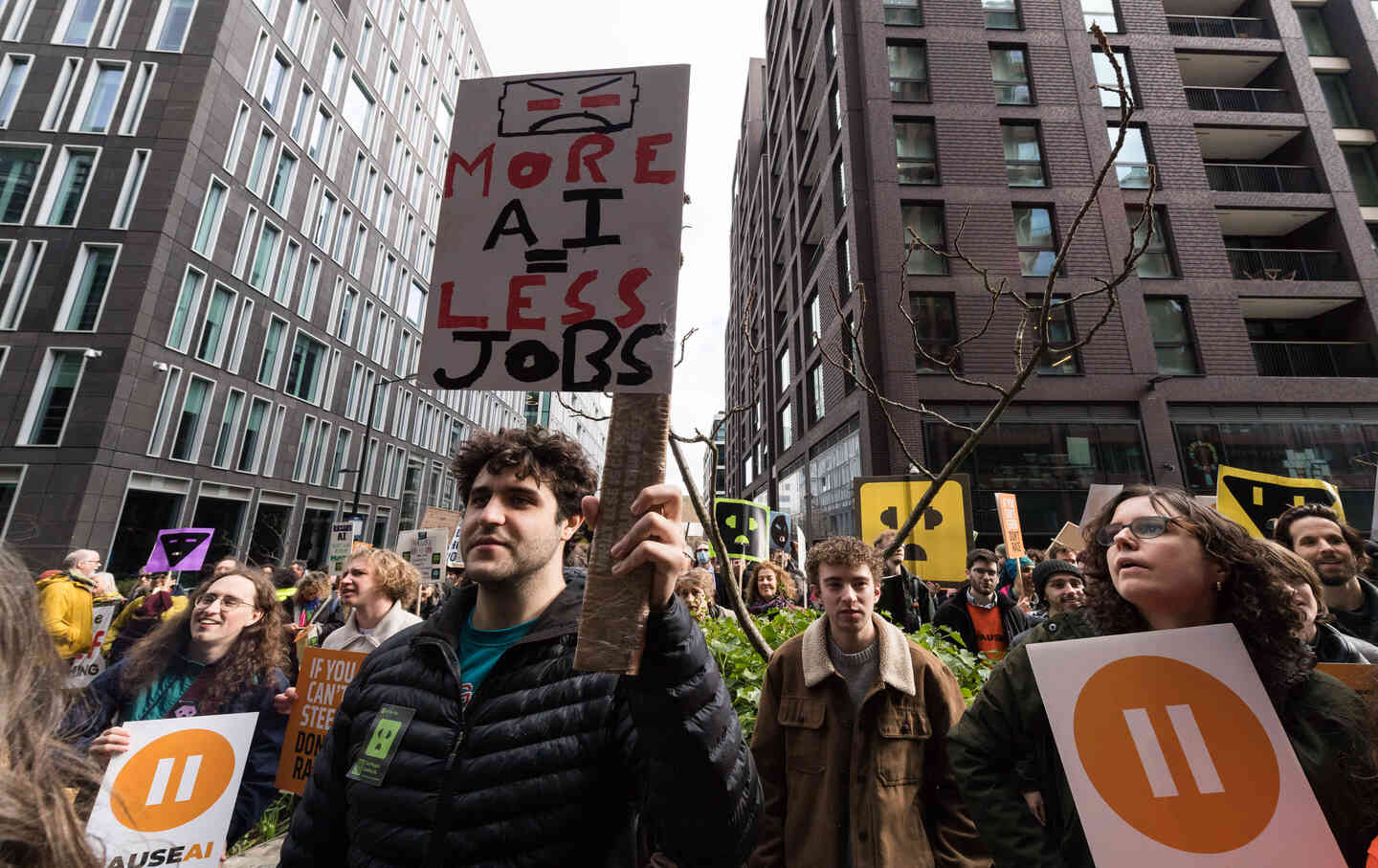
Mutiny of the College-Educated Worker—With Noam Scheiber
Noam Scheiber joins Danny and Derek to discuss the rise of the college-educated working class, from underemployment and AI to union organizing and the collapse of meritocracy.

The Nation Podcasts
Here's where to find podcasts from The Nation. Political talk without the boring parts, featuring the writers, activists and artists who shape the news, from a progressive perspective.
Mutiny of the College-Educated Worker w/ Noam Scheiber / American Prestige
Danny and Derek talk with Noam Scheiber, New York Times reporter and author, about the radicalization of American college graduates. They discuss a Starbucks union campaign, underemployment among recent grads, the Taylorization of white-collar jobs, AI, corporate fixation on labor costs, the “con” of college for millennials, and the collapse of meritocracy.
Buy your copy of Noam’s book on the subject, Mutiny: The Rise and Revolt of the College-Educated Working Class.
Advertising Inquiries: https://redcircle.com/brands
Privacy & Opt-Out: https://redcircle.com/privacy
Starbucks SBWorkers United baristas and supporters on November 19, 2025, in York, Pennsylvania.
(Lisa Lake / Getty Images for Starbucks Workers United)Danny and Derek talk with Noam Scheiber, author and New York Times reporter, about the radicalization of American college graduates. They discuss a Starbucks union campaign, underemployment among recent grads, the Taylorization of white-collar jobs, AI, corporate fixation on labor costs, the “con” of college for millennials, and the collapse of meritocracy.
Buy your copy of Noam’s book on the subject, Mutiny: The Rise and Revolt of the College-Educated Working Class.
Subscribe to The Nation to support all of our podcasts: thenation.com/subscribe.
The Nation Podcasts
Here's where to find podcasts from The Nation. Political talk without the boring parts, featuring the writers, activists and artists who shape the news, from a progressive perspective.
The Political Power of Police Unions w/ Stuart Schrader / American Prestige
Danny and Derek speak with historian Stuart Schrader about the history and political power of police unions in the US. They discuss the rise of police unions in the 1960s, their relationship with organized labor, resistance to the civil rights movement and affirmative action, the role of race in policing, bipartisan support for policing and the 1990s crime bills, the growing political influence of the Border Patrol union, and the future of police reform and abolition.
Get your copy of Stuart’s book Blue Power: How Police Organize to Protect and Serve Themselves.
Advertising Inquiries: https://redcircle.com/brands
Privacy & Opt-Out: https://redcircle.com/privacy
Search Results placeholder