Our Historic Victories and How We Won
John Nichols examines Tuesday’s election victories and the candidates behind them, while Harold Meyerson analyzes the voters and the significance of Democratic gains in the South.

The Nation Podcasts
Here's where to find podcasts from The Nation. Political talk without the boring parts, featuring the writers, activists and artists who shape the news, from a progressive perspective.
Our Historic Victories and How We Won / Start Making Sense
What we won this week, starting with Abdul El-Sayed in Michigan and James Talarico in Texas – John Nichols comments on the candidates and the issues. He’s The Nation’s Executive Editor.
Also: Why victories in the South are especially historic and transformational – Harold Meyerson explains. He’s editor at large of The American Prospect.
Advertising Inquiries: https://redcircle.com/brands
Privacy & Opt-Out: https://redcircle.com/privacy
James Talarico and Gina Hinojosa at a Whataburger after an election-night watch party on November 3, 2026, in Austin, Texas.
(Brandon Bell / Getty Images)On this episode of Start Making Sense, John Nichols talks about what we won and how we won on Tuesday, and Harold Meyerson analyzes the voters and the votes.
What we won this week, starting with Abdul El-Sayed in Michigan and James Talarico in Texas—John Nichols comments on the candidates and the issues. He’s The Nation’s executive editor.
Also: Why victories in the South are historic and transformational—Harold Meyerson explains. He’s editor at large of The American Prospect.
Subscribe to The Nation to support all of our podcasts: thenation.com/subscribe.
The Nation Podcasts
Here's where to find podcasts from The Nation. Political talk without the boring parts, featuring the writers, activists and artists who shape the news, from a progressive perspective.
Our Historic Victories and How We Won / Start Making Sense
What we won this week, starting with Abdul El-Sayed in Michigan and James Talarico in Texas – John Nichols comments on the candidates and the issues. He’s The Nation’s Executive Editor.
Also: Why victories in the South are especially historic and transformational – Harold Meyerson explains. He’s editor at large of The American Prospect.
Advertising Inquiries: https://redcircle.com/brands
Privacy & Opt-Out: https://redcircle.com/privacy
Search Results placeholder
JW: From The Nation magazine, this is Start Making Sense. I’m Jon Wiener. Later in the hour, the historic transformations brought by this week’s election, starting with the South. Harold Meyerson will analyze Democratic victories in Texas and then the sweeping wins in the industrial Midwest. But first, John Nichols on what we won this week. That’s coming up — in a minute.
[BREAK]
For election analysis, we turn to John Nichols. Of course he’s executive editor of The Nation. John, welcome back.
JN: It’s an honor to be with you, Jon.
JW: I’d like to start with all the things that did not happen on Election Day: Trump did not cancel the midterms. Trump did not send ICE or the military to polling places in blue districts. Elon Musk’s $474 million spent on Republican candidates did not seem to change any any of the voting. What do you think about the things that didn’t happen?
JN: That’s a very good question. Don’t underestimate Elon Musk’s money, his money and that of a lot of other billionaires. That money may well have prevented another group of progressives from winning. People like Angie Nixon in Florida David Jolly, who was running for governor down there. If we had a functional campaign finance system, I think Democrats might have won even bigger.
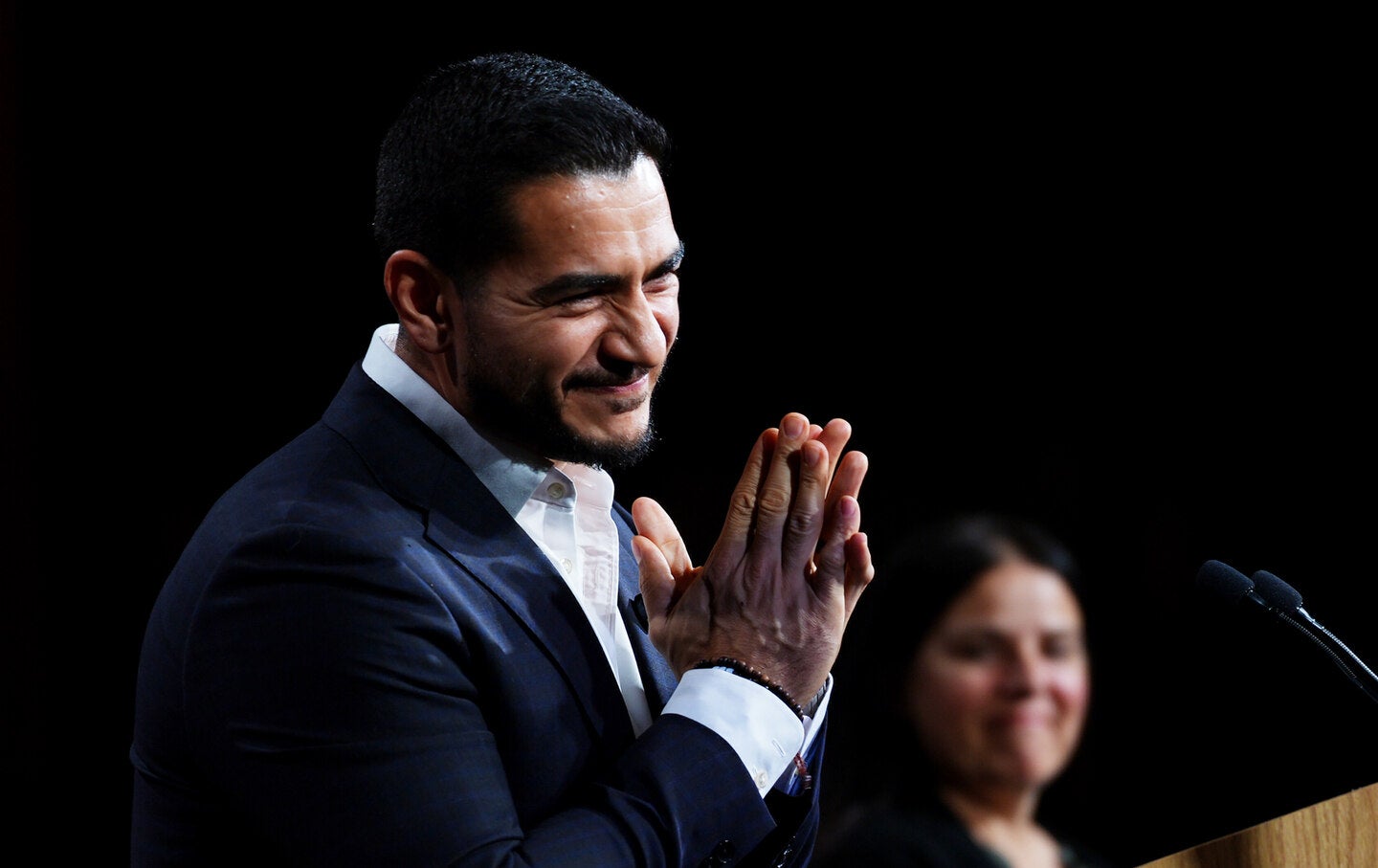
JW: We made history in many ways. Democrats are sending at least one native woman to the Senate, Minnesota’s Peggy Flanagan, maybe also Mary Peltola from Alaska. In Georgia, Keisha Lance bottoms became the nation’s first black woman governor ever in Texas, Gina Hinojosa became the first Latina governor. And in Michigan, Abdul Al Sayed will become the nation’s first Muslim senator. Her. That is huge. His victory was especially significant. Let’s talk about why.
JN: It is very relevant to mention he will be the first Muslim U.S. senator because of two things. Number one, the Republicans tried to make that such an issue. We saw Islamophobia and, and, you know, kind of crude anti Arab sentiments just writ large across the, the campaign season, calling Abdullah al-Assad every name under the book, suggesting he would have to go through a metal detector to walk into the Senate while other senators would not. That was from the president of the United States. So they made a huge issue of his religion. They made a huge issue of his background as a child of immigrants from Egypt. And the flip side of that is he was comfortable talking about his faith. And that also is distinct usually in our politics. When somebody is under attack. They often pull back. They often get more cautious, or they become kind of shy about discussing who they are and where they’re coming from. That was not the case with Abdullah Al Sayed. He regularly referenced his religion, basically gave people a lesson, a tutoring on Islamic faith. And he put on what I will argue was the best ad of the 2026 election cycle, where he was at home in a room and talking about his faith, saying that he was a man of faith and that many, many Michiganders were as well.
JN: And he talked about their Christian and Jewish and and other faith traditions. But what he said was that it was important to talk about this, because it is valid to make a part of our discussion. How you think about the world, how you express your values and and yes, how you pray. Great. And so in many ways, he and James Talarico in Texas, I think, changed our discourse about how we talk about religion and politics. And he did so in ways that really do expand and improve the discourse. And the fact that he won is a is a very, very significant statement for Michigan in the whole country. Because while we are talking about his faith and his background here, it is also important to recognize he will, with Bernie Sanders, become the absolute leader in the fight for Medicare for all and a host of other issues. So his wins a very big deal for progressives.
JW: And of course, the the other earthquake in this election is Texas. As you say, James Talarico will be the Democratic senator from Texas. Gina Hinojosa will be the Democratic governor of Texas. Texas will have a Democratic attorney general instead of Ken Paxton. You have spent a lot of time reporting on Texas over the years. I went into the archives of the nation. You had a cover story called Building a Blue Texas in 2017. What does it mean to turn Texas blue? Something you’ve been thinking about for a long time?
JN: Yeah, maybe. Maybe some people would have said too early, but no. You know what? I, I am under the tutelage, if you will of, of Jim Hightower, somebody I have known since I was very young journalist. And Jim Hightower obviously is a great writer and thinker. He’s also somebody who was elected twice statewide in Texas as Secretary of Agriculture. Long ago, he caused me to sort of adopt the view that you should never give up on Texas, that even if it starts electing a lot of bushes and starts moving to the right on a host of issues that ultimately the state of Texas, it’s so big, it’s so influential. And also it is so diverse that you can’t write it off. You can’t really have an American politics that doesn’t pay attention to it. And that made Texas very frustrating for a lot of progressives. A lot of a lot of Democrats over the years. Because even when they came close with a candidate like Beto O’Rourke, it remained a Republican state and not just a Republican state, an outsized conservative state that that so influenced a lot of our politics and, frankly, our law.
JW: Well, now it’s time for your Minnesota moment. Of course, that’s news from my hometown of Saint Paul that you won’t get from Sean Hannity. John Nichols, you went to Duluth, where Bernie was campaigning for Peggy Flanagan and Keith Ellison. I was so jealous that you got to do that. Tell us about your visit to Duluth.
JN: It was amazing. Bernie Sanders is roughly the same age as Bob Dylan. And and Bob Dylan is, of course, from just up the road from Duluth and Hibbing. You know, you were up in that you’re up at the end of highway 61 there and it has a labor progressive, often radical political tradition that’s been pretty battered and beaten on over the years. But boy, when I was up there with Bernie Sanders and Peggy Flanagan and Keith Ellison for that amazing rally that they did in a school gymnasium that was just packed to the rafters and where, you know, Minnesotans belied their their quiet nature by literally applauding every sentence from all three of these, one after another one, a standing ovation after standing ovation. And it was just it was celebratory. It was a celebration of a rising left without apology in the Democratic Party. That which made it pretty pretty amazing. The most compelling thing was not Senator Sanders, although his speech there was, I think, one of his best. It was Peggy Flanagan. She was about three quarters of the way through her speech. And she paused. And the crowd, I think, thought for a second that she was. She’d lost her place or something. People were saying, oh, we got your back and stuff like that. And then she took a deep breath and she said, tomorrow will be the 21st anniversary of the death of Paul Wellstone. The great progressive senator from Minnesota died.
JW: In a plane crash not that far from Duluth.
JN: And she said yesterday, I went to the marker in Eveleth that that recalls the deaths of Paul Wellstone and his wife, Sheila. She actually choked up a little bit as she talked about it. And then she said, you know, when I was a very young woman, still college age around there, I walked into a Paul Wellstone for Senate office because I just wanted to check it out. I didn’t know too much about him or about what was going on. And she said, that day changed my life fundamentally. I am here before you today because of that, because of Paul Wellstone, And I will if things turn out right in about a week. Take his seat in the United States Senate. But it was just so chilling and so powerful to hear. I came out of Minnesota feeling pretty high on that state.
JW: You know, I do not understand Kansas. I thought for decades that there was something the matter with Kansas. And then out of nowhere, Adam Hamilton comes along and wins the election to the Senate. First time, of course, since 1932. Do you understand what happened in Kansas?
JN: Yes, I do. As somebody who spent a lot of time in Kansas. Yeah. Kansas is a it’s never been as red a state as people imagined. It has its own populist traditions. And I frankly think there’s a lot of Kansans who aren’t big fans of Washington, whoever’s in charge there. But there’s also something else. There there has for a very long time been a battle for the soul of the Kansas Republican Party. When the Republican Party in Kansas, because it does toward the Republicans, when the Republican Party in Kansas becomes too cruel to self-dealing or greedy, too out of touch with what I think a lot of people believe are kind of core Kansas values. The, the voters will cross lines of partizanship and, and you know, electoral division to vote for somebody who they think is kind of more Kansas and the incumbent senator there, Roger Marshall he just wasn’t, he wasn’t, he didn’t feel like a very good Kansan, to be quite honest. He was, he literally ended his campaign, if you can imagine this, defending sending lawyers and and other folks after people who owed medical debts. Yeah.
JW: Yeah, this is the doc. This is the doctor who sued more than 700 of his patients for not paying their debts. And more than 100 went to jail as a result. And the guy has $10 million of his own money anyway, family money.
JN: But also the pastor who won the race, Hamilton. He too brought something quite remarkable. And I don’t say this very often on your podcast, John. But, you know, credit to the, the Democratic Party folks, the strategists and the, and the, you know, planners who get so many things wrong. They bet on Adam Hamilton a pastor who had not been involved in politics. And they bet he could that he could reach people. And the results show that he did in a profound way. Part of a you know, we were just talking about Talarico and Abdullah Al Sayed in their faith. This is another individual who, who came forward and spoke in moral terms and faith based terms about a better politics. He’s not some big lefty. I think he’s actually pretty centrist, but it came through with a resonance and I think he kind of touched something there that was very powerful. Yeah.
JW: I started out by pointing out that we did not have ICE anywhere in the United States at the polls, as far as I can tell. But I want to close here by saying the reason that we had a peaceful and smooth election day this year, when a lot of us were worried that it might not be, is not because Trump decided to follow the law. Credit goes, first of all, to the massive effort of the Democratic Election Protection Coalition. These people, we owe them a big debt of thanks. Led first by the blue State Attorneys General, Rob Bonta in California, Tish James in New York, Keith Ellison in Minnesota; then the Democratic Party lawyers, led by Marc Elias at Elias Law Group.
And the Lawyers Committee for Civil Rights Under Law. They formed an election protection coalition, which was the Election Day backbone. Over 300 organizations standing by ready to call 866-OUR-VOTE, the hotline in case the trouble broke out anywhere.
And then the the allied election protection groups, the Brennan Center, the ACLU, nor. Mycin and democracy defenders. Ian Bastion and protect democracy, Common Cause, the NAACP. And then in some ways, the most impressive of all — the grassroots work by Indivisible, led by Leah Greenberg and Ezra Levin. They signed up over 50,000 volunteers to work as election defenders. So election protection was in some ways the most important winner on Tuesday. We weren’t sure this was going to go okay, but it did in large part, I think, because of all of them.
JN: Right. I mean, you prepare for something and if it doesn’t happen, people often forget all the preparation and all the efforts that went in.
But we should not rest too comfortably just now. One of the races that is still in play is down in Mississippi, and that’s where Scott Colom, who’s an amazing candidate, I was in Mississippi and saw him campaigning and got to interview him a little bit. He’ll make a remarkable senator, and I think he is going to come out on top, which is astounding. Right? The progress that has been made there. But it will be a very, very close result.
And I also think you have a chance of a very, very close result out of Alaska. And so while there is no question, you are right to hugely celebrate the election protection folks, my sense is that there could still be a few fights along the way. When you’ve got good election officials, when you’ve got good lawyers who step up to make sure that the processes are protected and that they operate appropriately with respect for not just state laws, but our Constitution, this country can work pretty well. And so I’m glad we’re ending on this note, which is one of celebration, but also one of maybe a little lingering wariness about the last few races.
JW: John Nichols — executive editor of The Nation, read him at thenation.com. John, thanks for all your work, over all the years, on all our elections — And special thanks for this one.
JN: It’s an honor to be with you, Jon. We’ve been together on days that weren’t as celebratory. It’s good to be in the spirit of this day.
[BREAK]
JW: Now we turn to Harold Meyerson. Of course, he’s editor at large of the American Prospect. Harold. Welcome back.
HM: Great to be here, particularly today, Jon.
JW: We’re speaking on Wednesday, the day after the election. When James Talarico kicked off his Senate campaign in Round Rock, Texas, a year ago, he said t”he people at the top spend so much time and energy keeping us angry and divided because,” he said, “because our unity is a threat to their wealth and their power.” Well, our unity triumphed on Tuesday. Starting in Texas, the most historic change on Tuesday in our politics was in the South, in the states of the old Confederacy, Texas being the most important, but also Georgia. Also the Carolinas. What’s your analysis of the big picture here?
HM: The big picture is that the South has been the anchor of American conservatism since God knows when — since before 1776, actually. And there have been moments, obviously during reconstruction and a bit of biracial populism in the 1890s and support for the New Deal, so long as it excluded blacks. But, you know, but for interruptions like that the South and particularly since Ronald Reagan has been the absolute anchor of American conservatism, such as it is. And that kind of crumbled last night. It crumbled in three of the four most populous states in the old Confederacy. That is to say Texas, Georgia, and North Carolina, all of which not only saw Democratic victories at the top of the ticket, but in virtually every statewide office and legislatures and House seats. And so it was really a stunning stunning victory.
JW: You and I agreed last week that our number one most significant victory would be in Texas. James Talarico will be the Democratic senator from Texas. Gina Hinojosa will be the Democratic governor of Texas. Texas will have a new Democratic attorney general instead of Ken Paxton. You’ve been writing about Texas for years, pointing out that it is ethnically very similar to California in its demography. And yet the politics were opposite. That isn’t true anymore after Tuesday.
HM: Well, there are still distinctions. Obviously, California whites still are a good deal more liberal than Texas.
JW: Good point, good point.
HM: But yesterday Latinos in Texas swung a lot closer to Latinos in California. Now, oh, since the 1990s, I’ve been saying that part of the difference is that California has unions, many of which have, you know, substantial numbers within the state’s Latino community, that the leaders of California’s union movement tend to be Latinos themselves, a kind of working Latino labor alliance had long come to dominate at least the politics of Southern California. That has not been the case in Texas, obviously, where the rate of unionization hovers around 3%. But nonetheless, I think in some ways we have Stephen Miller to thank for the massive leftward movement of Texas Latinos into the Democratic column. But it’s not only that, as I’ve been noting since I began charting Latino voting records back when I was editing the LA weekly in the 1990s. They are a working class, largely working class constituency, perhaps more attuned to the bread and butter issues of the economy, to wages and prices than just about any other element of the electorate. So there was a multiple reasons why we saw this really massive Latino shift.
JW: Of course, there was one exception to the Latino voting pattern, Florida. But the Latinos in Florida are not like the Latinos in Texas and California, in Arizona and New Mexico.
HM: No they’re not. There was it was clear that if you looked at all of the districts that border Mexico, which are all have Latino absolute majorities, not just pluralities, but majorities, all of them were carried by Democrats last night, and also majority Latino districts that are not along the border. Including the California district where Randy Vargas the Republican valadao the exception, the only two districts which have Latino majorities, which didn’t go Democratic last night were in Florida. That is part of the reason why Florida is the one large state in the South that saw reasonably good democratic improvement yesterday, but not a Democratic majority.
But there’s another thing that I was checking on. I checked, I just compared the median age of Texans and Floridians. And while Texans are younger than the national average, with an average age of 36 Floridians are older than the national average with a median age of 43. That’s a seven year difference. And that’s a political difference in today’s politics, in which the young are those who suffer, you know, the brunt of the structural inequality in the American economy and older folks less so.
More to the point, the people moving into Florida a disproportionately are retirees who are coming for you know, the absence of winter and the relative absence of, of taxes. Whereas the folks moving into Texas, into Houston, into Austin, into Dallas tend to be young people with families who see economic opportunity there and would also appreciate things like affordable childcare. So they’re really two different states. And if one state out of the four that are the biggest, you know, by far the biggest states in the South, if one state was going to be the exception last night, demographically, almost, it had to be Florida.
JW: Of course, the South was not the only region that saw a flip to Democrats. Yesterday, we had the Senate victories of Sherrod Brown in Ohio and Abdul El-Sayed in Michigan. We had the victories of Josh Turek in Iowa and the astounding victory of Adam Hamilton in Kansas. The South is not the only place we need to talk about. Last week we said our number two most important Senate seat would be a Democratic victory in Michigan for Abdul El-Sayed, making him the first Muslim in the Senate. This was not an easy race, but he won it.
HM: It was not an easy race at all. And Haley Stevens made it even more you know one Unexpected obstacle at the last minute. But actually, l said, you know. Never really was that close. He he won by probably, what, about six points? Yeah. And most of the polling showed that in recent months. It’s it’s, it’s pretty clear that Michigan was among the states that was suffering economically and that Saeed’s message, which was more dollars in your pocket and Medicare for all is a resonant message and not all that dissimilar from the other industrial Midwest candidate who ousted a Republican last night, Sherrod Brown who had been for decades, really the leading opponent of corporation corporations flight to cheap labor in in, other nations, and the free trade doctrine that kind of gave them an ideological cover for doing so. So that form of what we, in a sense, is economic populism was certainly present in the industrial Midwest last night. And even as a somewhat different form of it was present in the plains states.
JW: Just one more moment on Ohio. For years, you have described Sherrod Brown as the only Democrat who could win statewide in Ohio. That’s not true anymore.
HM: No, that’s not true anymore. You know, Vivek Ramaswamy was kind of you know, the Republicans gift to the Democrats. And Amy Acton was elected governor of Ohio handily and you know, this was responsible for some down ticket victories, picking up House seats, boosting out the egregious Mr. Miller. He of the threatened your own child record. So Sherrod is no longer lonely atop the Ohio political structure. He has fellow Democrats.
JW: And you also wanted to talk about Iowa and Adam Hamilton in Kansas. Who’d a thunk? Who’d have thunk the Democrats would win in a Senate seat in Kansas?
HM: You know, populism actually began as the politics of the agrarian plain states with you know, some versions of it in the South as well. And lo and behold we we, we saw that in the victories in Iowa and in, in Kansas. And of course, these were states where the price of gas and the price of diesel in particular were just devastating for, for lack of a better term for the Republican base voters that, you know Trump’s war Trump’s other policies, you know, made their businesses and their lives and just fundamentally unaffordable. So that was offering up you know, the Republicans on a platter. And the Democrats swallowed them last night. And, you know, also, you know, winning three of the four House seats in Iowa, it was a pretty spectacular sweep in pretty much every every region of the country.
JW: Yes. I think we need to return to the South with the astounding results in Mississippi. We are speaking Wednesday at midday. Scott Collum, the Black Democrat, is ahead of Cindy Hyde-Smith, the Republican, by about 50 votes, 462 821 to 462 778. This is with 96% counting. They’re still counting. A few more absentee ballots. Mississippi doesn’t have very many absentee ballots. What do you think about what happened in Mississippi?
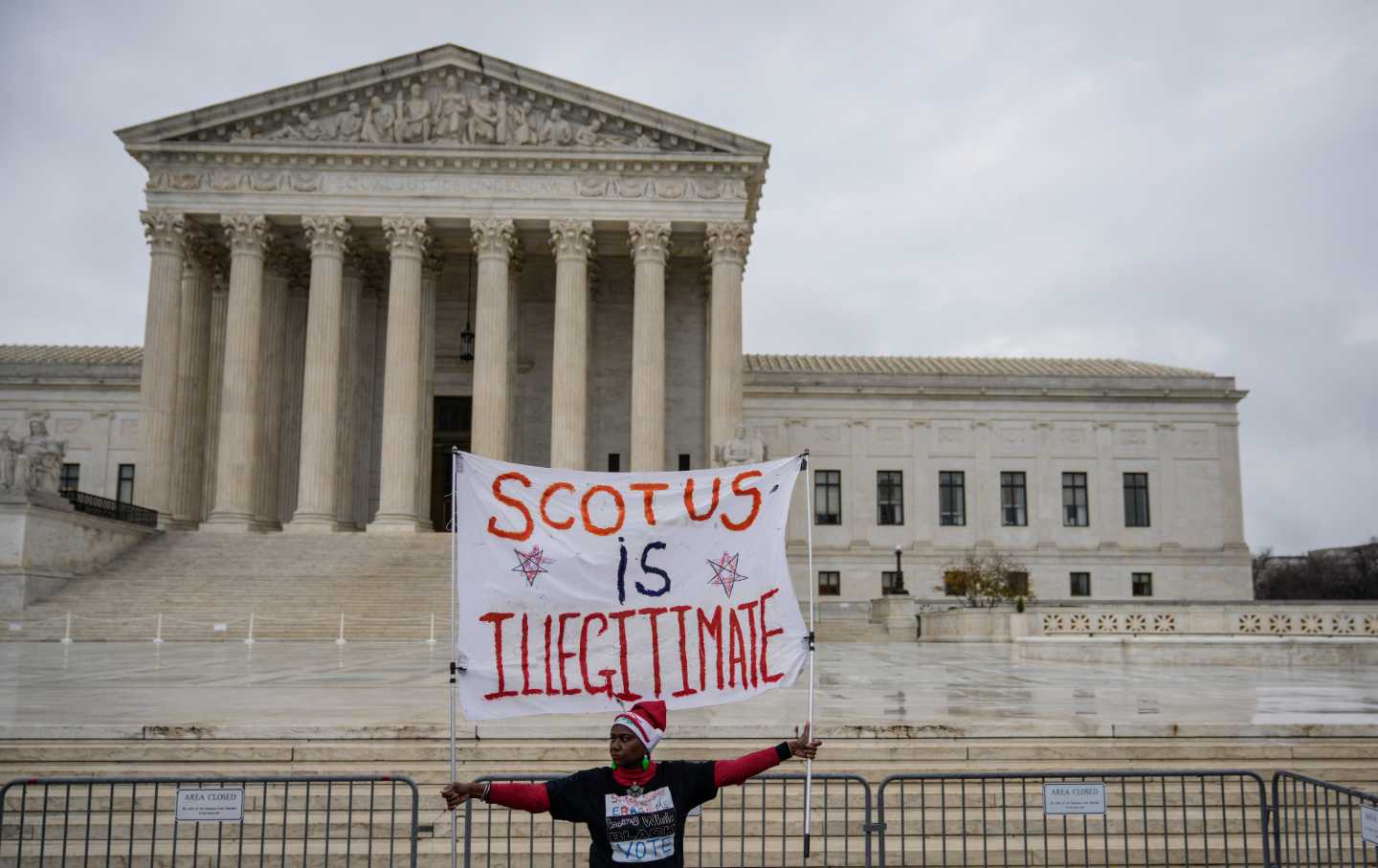
HM: I think we need to look at what particularly drove blacks to the polls on, on Tuesday. So just as the Stephen Miller can claim a lot of credit for driving Latinos into the Democratic column by his war on immigrants and anyone who looks suspicious. So the Supreme Court, by gutting the Voting Rights Act by sanctioning what is essentially a white power gerrymandering in the southern states and by what many feared, is the evisceration of black political power in the South. As a result of that gerrymandering and the gutting of the Voting Rights Act. All of that boosted black turnout. And it not only certainly helped Scott column in Mississippi, but it was a factor across the South. And I suspect it was one of the reasons why the Democrats picked up a Senate seat in South Carolina, of all places.
JW: Let’s just note that in Mississippi, the Democrats had an extraordinarily good candidate. Whereas in South Carolina, the Republicans had an unbelievably bad candidate.
HM: I can’t look, the candidate quality is a is a real factor in all of the races we’re talking about. You had a Ken Paxton, you had a Darlene Graham. You had a Vivek Ramaswamy. I mean, come on.
JW: The three of them have one origin story in common. Every one of them was a candidate only because Donald Trump wanted them.
HM: Right? Although Trump is, you know, blaming everything, including the cycles of the moon rather than himself. It was usually his hand-picked choices, which, you know, were the anchor dragging down the whole ship.
JW: I also want to point to another area, one of my favorites that doesn’t get the attention that it should. And that’s states not only the governors. Not only that, so many Democratic governors were elected, but the trifectas where Democrats won both houses of the legislature and the governorship. And when Democrats have a trifecta in a state, they can do important and wonderful things. And in. On Tuesday night, seven new Democratic Trifectas were created. Arizona. Michigan. Pennsylvania, Wisconsin. Nevada, Alaska. And last but not least, Minnesota. All now have unified Democratic control. And in the last two years of Trump’s term, where he’s going to veto everything, the Democratic majorities in Congress put forward the. The blue trifecta. States can set an example of what democratic power can do for ordinary people.
HM: Absolutely. And since Trump is going to veto whatever the congressional Democrats come up with, you know, we will be looking to states. And honestly, this also can boost the prospects of those governors who’ll be running for president in 2028, of whom there will be no doubt a number. We did some coverage of the Nevada situation in Nevada. The Democrats have controlled the legislature for a good long time, but the Democratic candidate for governor, who is the state’s attorney general, Aaron Ford, he pronounces it Aaron, not Aaron, although it’s spelled Aaron. Ousted Republican Joe Lombardo and one of one of one of his priorities is getting rid of Nevada’s right to work law. So you know, I mean, we can expect to see all kinds of things, I think, in these trifecta states.
JW: Last but not least, California, the count is continuing. We don’t have anything like final results in a lot of the most important races, including the L.A. mayoral race. But there are some where we can see what’s going to happen, starting with the billionaire tax, the billionaire tax. Just to remind our listeners, would have been a one time 5% tax on worldwide net worth billionaires who lived in California in 2026. There’s about 200 of them. It was intended to make up for Trump’s tax cuts for the rich and fund health care in California. We started out back in August with 70% of Democrats supporting the billionaire tax, 48% of all likely voters. Only 41% of likely voters oppose the billionaire tax when it first got on the ballot as of Wednesday afternoon, with 60% of the vote in the no vote on the billionaire tax is around 56%. Yes, 44%. What happened?
HM: A lot of what happened can be laid at the feet of its sponsor, Dave Regan of SEIU local in health care. He has a rather checkered reputation for soloing, and he has put a lot of measures on the ballot that deal with sort of not really major concerns to Californians, but things that it would benefit his members in terms particularly, there’s been a whole over the last 20 years, spate of ballot measures about employment practices in Chiropracty, which bewilders everyone but, you know, benefits his own members. He bit off more more than he could chew in this case, because he crafted this measure basically to benefit his own members again, because they would be working in the facilities that would get the proceeds from the billionaires tax and managed to alienate, really the two largest unions in California, the rest of SEIU and the California Teachers Association by looking to undercut, in the case of CT, a another measure that they had put on the ballot in the case of CA, people who just couldn’t stand him and what should have been a unified democratic front.
And if you look at every other state, the Democrats were campaigning against billionaires. And James Talarico made very clear in his remarks last night that his real opponent, you know, hadn’t wasn’t really Ken Paxton. It was Elon Musk. Yeah. But Reagan proceeded as though this were a chiropractic measure that didn’t need support from anyone else. And he proceeded as if this wasn’t going to unleash half $1 billion in spending from the billionaires who felt threatened by this measure. Yes. It was the anomaly of American politics last night.
JW: In conclusion here: I feel like this was our biggest electoral victory since the Obama victory of 2008. Other people say it’s the biggest since the post-Watergate election. You have a good historical picture. Where do you see this?
HM: You know, you can’t really compare a congressional midterm to a presidential election. The Obama election mattered as much, if not more, because of the presidential line than the other lines on the ballot. If you compare it to Democratic successes at the congressional level in Non-presidential years. Yeah, because I think the Democrats are going to get close to somewhere between 250 and 260 in the house. And I think even more important is where the Democrats won. If this was all just the two coasts but had the same numbers, it really wouldn’t be as important as it is. But the transformation of the three, three of the four states in the South, which is the Republican base up and down the ticket, and these are states that are going to be growing, and we’ll have more House members after the next decennial redistricting. The limit on victories in Ohio and Michigan and Kansas It is that these are states that may well lose House seats. But Texas, Georgia and North Carolina are growing. And the Democrats ability to, you know, establish somewhere between parity and maybe even a form of domination in those states is huge. So it’s not just the numbers. It’s where those numbers really landed last night.
JW: And I feel this is personified by Elon Musk, who left California because it was too blue and moved to Texas. Where can Elon Musk go now?
HM: Well, I’m debating between the eighth and ninth circles of hell, but I’ll let you know when I figure that one out.
JW: Harold Meyerson – read him at prospect.org. Harold, great to talk to you after this historic week.
HM: We should have many such discussions after many such elections.