The Amazing Movement Against Data Centers. Plus, How to Be a Dissident.
David Wallace-Wells examines the growing resistance to data centers, while Ami Fields-Meyer explores how dissident movements build courage and power in an age of fear.

The Nation Podcasts
Here's where to find podcasts from The Nation. Political talk without the boring parts, featuring the writers, activists and artists who shape the news, from a progressive perspective.
The Amazing Movement Against Data Centers, plus How to be a Dissident / Start Making Sense
Is the resistance to data centers a new kind of mass politics? David Wallace-Wells explains why the answer is “yes.” He’s a writer for The New York Times Opinion pages and author of the unforgettable book “The Uninhabitable Earth.”
Also: How to be a dissident in an age of fear – Ami Fields-Meyer has thought a lot about that. For starters: don’t start from scratch; don’t try to do it alone. Ami is co-author of the new book “On Courage.”
Advertising Inquiries: https://redcircle.com/brands
Privacy & Opt-Out: https://redcircle.com/privacy
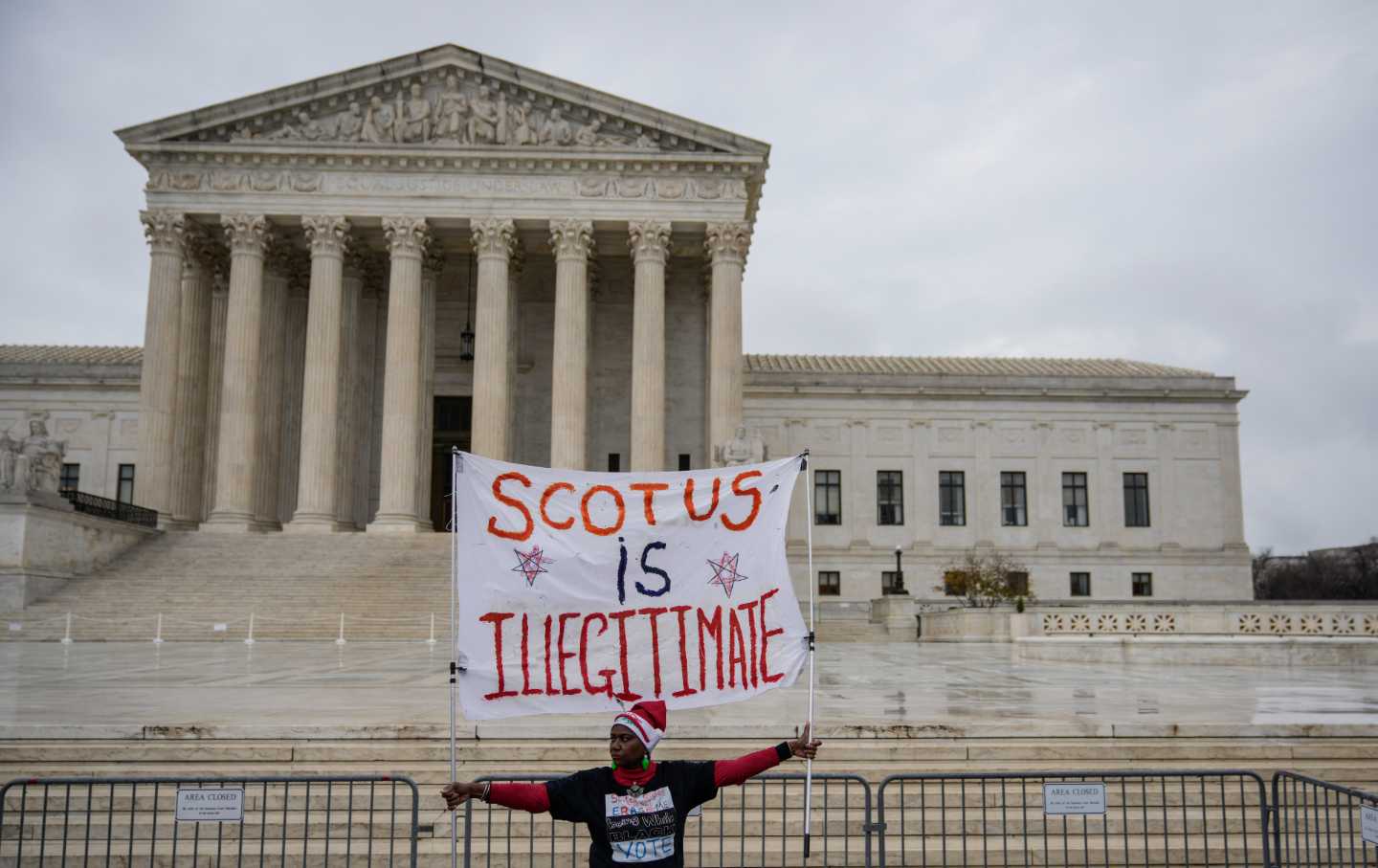
Demonstrators during a nationwide protest against AI data center expansion in Imperial, California, on July 18, 2026.
(Sandy Huffaker / AFP via Getty Images)On this episode of Start Making Sense, David Wallace-Wells analyzes the new form of protest in America, and Ami Fields-Meyer explains how dissident leaders and movements arise.
Is the resistance to data centers a new kind of mass politics? David Wallace-Wells explains why the answer is yes. He’s a writer for the New York Times’ Opinion pages and author of the unforgettable book The Uninhabitable Earth.
Also: How to be a dissident in an age of fear—Ami Fields-Meyer has thought a lot about that. For starters: Don’t start from scratch; don’t try to do it alone. Ami is a coauthor of the new book On Courage.
Subscribe to The Nation to support all of our podcasts: TheNation.com/subscribe
The Nation Podcasts
Here's where to find podcasts from The Nation. Political talk without the boring parts, featuring the writers, activists and artists who shape the news, from a progressive perspective.
Massive GOP Spending Hasn’t Slowed the Coming Blue Wave; plus The Cornell Rape Case / Start Making Sense
Republicans are spending hundreds of millions on the midterms, but their money hasn’t been able to counter the crisis of affordability, the disgust with Trump’s corruption, and the quality of many of the Democratic candidates. Harold Meyerson comments – he’s editor at large of The American Prospect.
Also: Katha Pollit argues that the gang rape at a Cornell fraternity party could have been stopped–if someone had bothered to intervene. But no one did. “Where were the good guys?” She asks.
Advertising Inquiries: https://redcircle.com/brands
Privacy & Opt-Out: https://redcircle.com/privacy
Search Results placeholder
Jon Wiener: From The Nation magazine, this is Start Making Sense. I’m Jon Wiener. Later in the hour: How to be a dissident in an age of fear – Ami Fields-Meyer has thought a lot about that. He’s co-author of the new book “On Courage.” But first: a new kind of mass politics in America—David Wallace-Wells will explain–in a minute.
[BREAK]
Jon Wiener: Is the resistance to data centers a new kind of mass politics in America? David Wallace-Wells has been thinking about that. He’s a writer for The New York Times Opinion Pages, a columnist for The New York Times Magazine, and author of the unforgettable book The Uninhabitable Earth. David Wallace-Wells, welcome to the program.
David Wallace-Wells: Great to be here. Thanks for having me.
JW: I have to confess that I ignored the protests against data centers when they emerged a few months ago. I thought of them just as the latest outburst of Nimby politics — Not in my backyard — seeking to preserve an America that doesn’t exist for a lot of people. And I thought the challenges would be easily resolved by building data centers in places that welcomed economic growth. Maybe I thought a few candidates looking for an issue would demand concessions from the companies, and maybe they’d get some minor ones. But Microsoft and Amazon Web Services are just too powerful for a handful of towns to resist. So, I was feeling pretty uninterested in those protests. You’ve written that you felt sort of the same way, you once called the movement against data centers “a pretty quixotic way of fighting the progress of AI.” How are you feeling about that way of fighting right now?
DWW: Well, I feel shamed by what has transpired, against my own expectations. Precisely because I was so fatalistic, as I take it you were, about how limited the ability of citizens to take control of this story really was. Six or 9 months ago, I was already seeing polling suggesting that the American public was really uncomfortable, wary, frustrated, even angry about the mass infrastructure build-out to serve AI. You saw some quite dramatic jumps over the course of the fall into the winter in public opinion polls. And you saw a lot of small scale, but quite impressive protest activity at the level of town halls and that sort of thing. But I, myself, I looked at that problem and ran the math the same way that you did and thought, ‘we do not live in a healthy political economy in which citizens can exert control over the powers that shape our lives very reliably.’ Most people know that that is one source of political frustration, that they have already learned that lesson over many hard years. And so even if AI now looms as a new challenge, which they see as larger or more urgent than previous things that motivated them to get out and protest, the end result was likely to be pretty similar, which is to say, an expression of outrage and disgust, followed by victory on behalf of the corporations who have the most skin in the game. And I have to say, I don’t know for sure that that story won’t play out in precisely those terms going forward.
I think you know that it is, and by any measure, the data center build-out is not just continuing but accelerating. In many cases, when there has been pushback and projects have been canceled, as you suggest, they move to friendlier locations. And I think over the longer term, even if this really grows into a genuine national movement in which it becomes almost impossible to build anywhere, I do think that much of that work can be done abroad, which means if you understand the objection primarily as anxiety about artificial intelligence and its march of progress through all of our lives, then I don’t know how much this movement is really going to change that trajectory ultimately.
But just at the level of political organization, coalition building and consensus building, I think what we have seen is the most astonishing development in American politics since the rise of MAGA. Maybe you could draw it further back to Occupy and the Tea Party before that. And in a certain way, casting your eyes back further into history. Because the truth is, we’re now at a point when 75% of the country objects to the construction of data centers, and that is in their own backyards. And that is a level of consensus that we just haven’t seen on almost any issue for a very long time.
JW: I just want to pause on that figure. Tell us that again.
DWW: 75% of Americans say that they do not want data centers built in their own communities. And, on one on the one hand, you can look at that and think of it as NIMBYism, and NIMBYism is a part of it. People don’t want these things built in their backyards. They don’t want the local pollution effects. They don’t want the eyesore of construction. They don’t want their small towns being shadowed by a giant data center whose inner workings they don’t understand, run for the profit and benefit of corporations which don’t understand them. All of those things are factors in this, in this resistance.
But it’s also the case that 55% of Americans believe in a national data center moratorium. They believe that no data center should be built anywhere in the country, 55%, which means at least that share of the coalition is not objecting on a NIMBY basis, because they’re not saying, ‘I don’t want this in my backyard.’ They’re saying, ‘I don’t want this anywhere in this country, even if it’s hundreds of miles from the closest town. We don’t want to do this at all.’
More than half of the country now believes that, and it’s especially striking, that 75% figure, when you compare it to other things that people have raised NIMBY objections to. I’m a climate person. I’ve written a lot and thought a lot about the struggles to build renewable energy. And over the last few months, you’ve heard a lot of people raising comparisons between the anti-data center movement and the anti-renewable movement. And there is some overlap there. They share some people. They share some rhetoric. But more than two-thirds of Americans want solar farms built in their backyards. And more than two-thirds of Americans don’t want data centers built in their backyards.
So, we’re seeing something that is really divergent, different in category and scale from any comparable movement of the last decade or two. And that, I think is really notable, significant, and should make people like you and me really reflect on what we’re seeing here, what it tells us about where we are, and especially what it tells us about where we’re heading.
JW: What do we know about who is in this 75%? Who are these people?
DWW: Everybody. That’s the short answer. I mean, you can divide this country by – certainly by partisanship Republicans are a little bit friendlier to data centers than Democrats, but there are something like 40 or 50 points underwater with Republicans. So, they may be 80 points underwater with Democrats, but we’re still talking about a huge, huge opposition all across the political aisle, centrist to independents.
You can divide the country by education level, by income, whether you live in an urban area or a rural area, whether you got a college degree or you’re just a high school graduate or didn’t finish high school. Every single subcategory that you can divide the country by will show a significant opposition to data center construction, at least in one’s own local community. And that is I mean, just put aside the issue itself, put aside what it tells us about policy. It is just an astonishing fact. In 2026, given how divided we are about absolutely everything, that this is something that the entire country has rallied around despite the fact that our politicians are, well, they’re now belatedly kind of climbing on board to the movement. But up until a few months ago, you almost couldn’t find a national leader who was speaking really forthrightly, really directly, really dramatically against data centers. So, on some level, this is a truly grassroots movement as well. And I think just as astonishing or even more astonishing on that basis.
JW: Tell us a little bit about not just the extent of support in opinion polls, but the concrete goals that have already been achieved by this movement in just the last couple of months. You have these figures about the number of jurisdictions that have passed bans, the situation in state politics. What do we know about all that?
DWW: Yeah, I mean, in general, what we’re seeing is something that is much more developed at the local level. And you’ve seen hundreds of data center moratoriums passed by local jurisdictions over the last few months.
JW: You say 500.
DWW: Yeah. And in certain states where I remember reading and reporting about Maryland something like 80% of Maryland is now covered by data center moratorium. So even when you hear local level restrictions, they can really add up and become a quite significant barrier to construction. We now have in New York the first state level moratorium, which was signed by Kathy Hochul maybe two months ago. And in the relatively recent past, you’ve had something – they’re not – they’re technically not moratoriums in the same way, but something like that being implemented by executive order, by both the governors of Pennsylvania, Josh Shapiro, and the governor of Texas, Greg Abbott. And both of those seem really quite significant to me, culturally, because we think of Kathy Hochul as an ally of Zohran, who’s navigating the centrist left wing divide in the Democratic Party relatively nimbly. She’s got her finger in the wind. She’s following some trends.
Josh Shapiro is someone who has made his name as a national politician, as a kind of “I’m going to get stuff done.” That’s his catchphrase. He’s proud of plowing through environmental review and suspending all of these restrictions on construction projects. That’s how he got the I-95 bridge fixed so quickly. And he presents himself as a kind of abundance, technocratic centrist, “get it done” liberal. And as recently as six months ago, was personally celebrating large-scale data center projects in the state of Pennsylvania. On that basis, according to that logic. And now he’s come out and said, “I’m not going to be bullied and intimidated by these big corporations who don’t have the interest of Pennsylvanians at heart. We need to pause this. We need to slow this down. We need to make sure, absolutely sure that these projects are serving the communities in which they’re built. And in the meantime, we’re going to not do any more of them politically.”
JW: I thought of this as more a Democratic issue than a Republican one, and it’s not that surprising that Josh Shapiro would join in. But you say Greg Abbott is also part of this. What do we know about Republican opposition to data centers?
DWW: I mean, to trust the survey data, it is overwhelming. To trust the on-the-ground reporting at protests, which is to say, not just people who tell a pollster that they don’t want a data center in their backyard, but people who are willing to go out and scream at their local town council about it. Some significant share of the objections are familiar from our understanding of the MAGA and MAHA right. In fact, there’s a relatively serious stream of influence from the MAGA right into the data center resistance. Steve Bannon has been an especially pronounced prominent critic of AI and data center build-out. And he has a number of prominent followers who are regular guests on his show, who are now relatively central parts of the coalition. And if you’re interested in that, you can read, there’s a great piece by Molly Taft in Wired, a few weeks ago, documenting that right-wing part of the coalition.
I wouldn’t say that it’s dominant. It still seems to me most of the people who are objecting to the extent that they identify politically are left of center, and they do front load their environmental concerns. They often talk about worries about climate and emissions. And so, for all those reasons, I do think there’s probably a heavier liberal anchor to the coalition.
JW: But Texas — Texas is a place that has portrayed itself as the ultimate utopia of unchecked corporate power. And yet you say Greg Abbott has issued what amounts to a moratorium.
DWW: Yeah. I mean, I would go even further than in your setup than to say it’s unchecked corporate power. I mean, I hear a lot from people in the climate world that Texas is an enviable place to build clean energy because they’re so hands off. And that’s the reason why Texas is now building so much more renewable capacity than California. It’s not because Texans care more about climate change. It’s not even because they care more about their electricity bills. It’s just because the regulatory environment is so much more permissive. You can build whatever you want in Texas. And so, when they’re renewable developers who see all the capacity, all the possibility for solar and wind, they can just stand up that new infrastructure quite quickly. Whereas in many other states, particularly blue states, it’s a little bit harder.
So, it’s not just about handing over the keys to the corporations, it’s about letting anybody do whatever they want. Now, in this case, a lot of corporations want to build data centers for the exact same reasons that they want to build solar farms and wind power, which is to say it can get done more quickly. There’s less oversight. And there’s also a lot of booming demand in Texas for – that’s where some of the companies are based. And in fact, some of the biggest projects in America have been based in Texas as a result. But there has been a really significant backlash on the ground there. So much so that, yes, this incredibly outspoken right-wing governor is not just putting a pause on data center development. He’s talking about that pause in terms that would be familiar at any town hall in the country. He’s saying we need to prioritize Texans first. There’s a big rallying cry among the anti-AI movement “humans first.” And Greg Abbott is saying “we need to put Texans first,” he said, “we need to ensure that all of these projects meet our own environmental standards, so we’re not polluting the local environment.” This is a state where it’s like any – you can build a petrochemical plant in Cancer Alley. Nobody cares. But he’s willing to make a stand against environmental toxins in the context of data centers, too. And I think that is because the data that he’s looking at, the survey information that he’s seeing, shows him that this is not a vocal fringe who are really raising their voices loudly. It is a set of worries, interlinked, sometimes contradictory, but a patchwork set of worries that are shared to some degree by the large majority of even his loyal constituents. And when a politician, a professional politician, sees that dynamic, they simply can’t ignore it, even if they’re kind of godfather, Trump in DC, is more interested in serving the needs of Silicon Valley oligarchs who are committed to him. Those who are closer to the ground, more responsive to local constituents, have to recognize that there is an enormous backlash brewing of a scale and a kind that we, as I said, really haven’t seen in America for quite a long time.
JW: We also have to talk about Ohio here. Ground zero for the politics of data centers right now is the Ohio Senate race where Sherrod Brown is running against Jon Husted. A couple of weeks ago, the National Republican Senatorial Committee warned that Democrats have made data centers the centerpiece of their Senate campaign in Ohio and that it is working. The latest Fox News poll has Sherrod Brown eight points ahead, and his ads call his opponent “the face of data centers,” which is true in Ohio. Do you think the Republicans will be able to recover from this in Ohio?
DWW: Well, I think each of these races, as all political races, are multi-determined. It’s not narrowly a – none of these races are going to be determined exclusively by data center resistance, but I do think that it’s a benefit to be at least in support of a moratorium, if not an outright ban, and those who are more committed to building out the infrastructure in a more aggressive way and are on record doing so are going to be political losers as a result.
And that is a problem not just for Republicans in Ohio. It’s a problem for basically every incumbent politician anywhere in the country, because up until quite recently, this seemed like the sort of deal that most politicians would intuitively take, which is to say, you may have to waive some tax breaks in front of a developer to get them to locate their project in your neck of the woods. But it was also a meaningful economic boom which they assumed that voters would appreciate, particularly if, as you said at the top, some of the sort of particular concerns were addressed.
Now, that no longer seems to be the logic, but it was so intuitively the logic to leaders that – Kamala Harris was running promising tax breaks for data centers in 2020 for not producing a significant backlash in the public because it was one of those kind of bipartisan consensus issues that this is a way to reindustrialize the country.
DWW: It’s a way to revive union labor work that we lament losing in other areas, as well as sort of securing more of a national foothold in the technological future. Again, this is the kind of like if we’re checking boxes, this is something that checks the box for every centrist politician out there. And as a result, they were all, broadly speaking, supportive. Even if they had some, they were picking up on some AI anxiety from their constituents. Now we’re in the absolute opposite position. The consensus bipartisan perspective is not to support this build out. It’s to oppose it. And that is especially striking, given that – to the extent that we can measure whether those that political that economic political calculation I just mentioned cashed out. That is to say, to the extent that we can measure whether the data center projects that have been built to this point were economic booms to their local communities. There are many really positive, powerful cases where there were huge benefits. I mean, in Loudoun County, which is an incredibly rich place, it’s the richest county in the United States.
JW: Loudoun County, Virginia, just south of Washington, D.C.
DWW: People often say “if the rich people really like data centers, they should build them in their own backyards.” Actually, they are building them — in the richest county in the country, more than anywhere else in the country. And in Loudoun County, they’re expecting more than half of their tax revenues to come directly from data centers as recently as the next few years.
JW: And this could be a big thing in poor counties, too.
DWW: Oh, absolutely. And there are examples of that. I mean, in the piece I mentioned in Richland Parish, Louisiana, they gave $50,000 bonuses to elementary school teachers, none of whom make $50,000 in salary, because of the construction of the metadata center. And there are, I wouldn’t say countless many projects are not negotiated, were not negotiated in this way. And so don’t have such concrete benefits to offer. But if you were like in a position at a town hall trying to make the case to your local constituents, there are a number of examples to point to or say, ‘we can get a deal from these developers where like, we’re going to get a new high school, we’re going to get a new emergency response system. We’re going to have a huge boost in our property tax revenues, so much so that we can count on cutting your taxes over the next decade or so. We can promise all of those promises. We can extract those promises in writing.’ And even with that pitch, nobody in the country is interested. And that, to me, is among the most astonishing and impressive things about this movement.
On some level, I’m even ambivalent about it, because I do think that the benefits to local communities and poor areas can be quite significant, but as a pure expression of political refusal.
As I keep saying, we just have not seen anything like this in America ever before. That kind of a deal that they’re offering should be the sweet spot in American politics. It’s what we were told was the sweet spot in American politics. ‘We’re going to improve your public services, and you get to pay less in taxes.’ But the people who are hearing that pitch don’t trust the people making it. They, and to the extent that they trust that there will be some benefits, they simply don’t believe that they should outweigh all of the costs that they’re tabulating in their minds, from water stress to electricity prices to the strain on the community, the degradation of the natural environment all the way down to “we’re worried about what AI is going to do to our children’s brains, and, the way that it will supercharge the surveillance state.” And they tally up all those things and they tally up the concrete benefits in terms of tax revenue and improved social services. And they say, “I’m not going to take that deal.” I’m kind of in awe of that.
JW: Let’s just spend a minute on Trump’s remark that the people who oppose data centers want to be “backwards and poor.”
DWW: When I hear Donald Trump saying those things, I feel a little tickle of glee that he is completely — he’s been boxed in and outflanked, and misunderstands the country for whom he has presented himself as a kind of a tribune now for a decade. When I look at the data, I see some of the same math that Trump does, and I see local communities refusing payouts that would change the landscape of their lives, but they’re also refusing to have a future dominated by artificial intelligence imposed on them from above, without their input. They are essentially saying, “there’s nothing you can pay me to buy my future from me.”
JW: David Wallace-Wells – you can read his piece at The New York Times website. It’s called “I Expected Tech Fatalism. Americans are putting up a remarkable fight instead.” David, thanks for all your work – and thanks for talking with us today.
DWW: Thanks so much for having me. Great to talk.
[BREAK]
Jon Wiener: Is the resistance to data centers a new kind of mass politics in America? David Wallace-Wells has been thinking about that. He’s a writer for The New York Times Opinion Pages, a columnist for The New York Times Magazine, and author of the unforgettable book The Uninhabitable Earth. David Wallace-Wells, welcome to the program.
David Wallace-Wells: Great to be here. Thanks for having me.
JW: I have to confess that I ignored the protests against data centers when they emerged a few months ago. I thought of them just as the latest outburst of Nimby politics — Not in my backyard — seeking to preserve an America that doesn’t exist for a lot of people. And I thought the challenges would be easily resolved by building data centers in places that welcomed economic growth. Maybe I thought a few candidates looking for an issue would demand concessions from the companies, and maybe they’d get some minor ones. But Microsoft and Amazon Web Services are just too powerful for a handful of towns to resist. So, I was feeling pretty uninterested in those protests. You’ve written that you felt sort of the same way, you once called the movement against data centers “a pretty quixotic way of fighting the progress of AI.” How are you feeling about that way of fighting right now?
DWW: Well, I feel shamed by what has transpired, against my own expectations. Precisely because I was so fatalistic, as I take it you were, about how limited the ability of citizens to take control of this story really was. Six or 9 months ago, I was already seeing polling suggesting that the American public was really uncomfortable, wary, frustrated, even angry about the mass infrastructure build-out to serve AI. You saw some quite dramatic jumps over the course of the fall into the winter in public opinion polls. And you saw a lot of small scale, but quite impressive protest activity at the level of town halls and that sort of thing. But I, myself, I looked at that problem and ran the math the same way that you did and thought, ‘we do not live in a healthy political economy in which citizens can exert control over the powers that shape our lives very reliably.’ Most people know that that is one source of political frustration, that they have already learned that lesson over many hard years. And so even if AI now looms as a new challenge, which they see as larger or more urgent than previous things that motivated them to get out and protest, the end result was likely to be pretty similar, which is to say, an expression of outrage and disgust, followed by victory on behalf of the corporations who have the most skin in the game. And I have to say, I don’t know for sure that that story won’t play out in precisely those terms going forward.
I think you know that it is, and by any measure, the data center build-out is not just continuing but accelerating. In many cases, when there has been pushback and projects have been canceled, as you suggest, they move to friendlier locations. And I think over the longer term, even if this really grows into a genuine national movement in which it becomes almost impossible to build anywhere, I do think that much of that work can be done abroad, which means if you understand the objection primarily as anxiety about artificial intelligence and its march of progress through all of our lives, then I don’t know how much this movement is really going to change that trajectory ultimately.
But just at the level of political organization, coalition building and consensus building, I think what we have seen is the most astonishing development in American politics since the rise of MAGA. Maybe you could draw it further back to Occupy and the Tea Party before that. And in a certain way, casting your eyes back further into history. Because the truth is, we’re now at a point when 75% of the country objects to the construction of data centers, and that is in their own backyards. And that is a level of consensus that we just haven’t seen on almost any issue for a very long time.
JW: I just want to pause on that figure. Tell us that again.
DWW: 75% of Americans say that they do not want data centers built in their own communities. And, on one on the one hand, you can look at that and think of it as NIMBYism, and NIMBYism is a part of it. People don’t want these things built in their backyards. They don’t want the local pollution effects. They don’t want the eyesore of construction. They don’t want their small towns being shadowed by a giant data center whose inner workings they don’t understand, run for the profit and benefit of corporations which don’t understand them. All of those things are factors in this, in this resistance.
But it’s also the case that 55% of Americans believe in a national data center moratorium. They believe that no data center should be built anywhere in the country, 55%, which means at least that share of the coalition is not objecting on a NIMBY basis, because they’re not saying, ‘I don’t want this in my backyard.’ They’re saying, ‘I don’t want this anywhere in this country, even if it’s hundreds of miles from the closest town. We don’t want to do this at all.’
More than half of the country now believes that, and it’s especially striking, that 75% figure, when you compare it to other things that people have raised NIMBY objections to. I’m a climate person. I’ve written a lot and thought a lot about the struggles to build renewable energy. And over the last few months, you’ve heard a lot of people raising comparisons between the anti-data center movement and the anti-renewable movement. And there is some overlap there. They share some people. They share some rhetoric. But more than two-thirds of Americans want solar farms built in their backyards. And more than two-thirds of Americans don’t want data centers built in their backyards.
So, we’re seeing something that is really divergent, different in category and scale from any comparable movement of the last decade or two. And that, I think is really notable, significant, and should make people like you and me really reflect on what we’re seeing here, what it tells us about where we are, and especially what it tells us about where we’re heading.
JW: What do we know about who is in this 75%? Who are these people?
DWW: Everybody. That’s the short answer. I mean, you can divide this country by – certainly by partisanship Republicans are a little bit friendlier to data centers than Democrats, but there are something like 40 or 50 points underwater with Republicans. So, they may be 80 points underwater with Democrats, but we’re still talking about a huge, huge opposition all across the political aisle, centrist to independents.
You can divide the country by education level, by income, whether you live in an urban area or a rural area, whether you got a college degree or you’re just a high school graduate or didn’t finish high school. Every single subcategory that you can divide the country by will show a significant opposition to data center construction, at least in one’s own local community. And that is I mean, just put aside the issue itself, put aside what it tells us about policy. It is just an astonishing fact. In 2026, given how divided we are about absolutely everything, that this is something that the entire country has rallied around despite the fact that our politicians are, well, they’re now belatedly kind of climbing on board to the movement. But up until a few months ago, you almost couldn’t find a national leader who was speaking really forthrightly, really directly, really dramatically against data centers. So, on some level, this is a truly grassroots movement as well. And I think just as astonishing or even more astonishing on that basis.
JW: Tell us a little bit about not just the extent of support in opinion polls, but the concrete goals that have already been achieved by this movement in just the last couple of months. You have these figures about the number of jurisdictions that have passed bans, the situation in state politics. What do we know about all that?
DWW: Yeah, I mean, in general, what we’re seeing is something that is much more developed at the local level. And you’ve seen hundreds of data center moratoriums passed by local jurisdictions over the last few months.
JW: You say 500.
DWW: Yeah. And in certain states where I remember reading and reporting about Maryland something like 80% of Maryland is now covered by data center moratorium. So even when you hear local level restrictions, they can really add up and become a quite significant barrier to construction. We now have in New York the first state level moratorium, which was signed by Kathy Hochul maybe two months ago. And in the relatively recent past, you’ve had something – they’re not – they’re technically not moratoriums in the same way, but something like that being implemented by executive order, by both the governors of Pennsylvania, Josh Shapiro, and the governor of Texas, Greg Abbott. And both of those seem really quite significant to me, culturally, because we think of Kathy Hochul as an ally of Zohran, who’s navigating the centrist left wing divide in the Democratic Party relatively nimbly. She’s got her finger in the wind. She’s following some trends.
Josh Shapiro is someone who has made his name as a national politician, as a kind of “I’m going to get stuff done.” That’s his catchphrase. He’s proud of plowing through environmental review and suspending all of these restrictions on construction projects. That’s how he got the I-95 bridge fixed so quickly. And he presents himself as a kind of abundance, technocratic centrist, “get it done” liberal. And as recently as six months ago, was personally celebrating large-scale data center projects in the state of Pennsylvania. On that basis, according to that logic. And now he’s come out and said, “I’m not going to be bullied and intimidated by these big corporations who don’t have the interest of Pennsylvanians at heart. We need to pause this. We need to slow this down. We need to make sure, absolutely sure that these projects are serving the communities in which they’re built. And in the meantime, we’re going to not do any more of them politically.”
JW: I thought of this as more a Democratic issue than a Republican one, and it’s not that surprising that Josh Shapiro would join in. But you say Greg Abbott is also part of this. What do we know about Republican opposition to data centers?
DWW: I mean, to trust the survey data, it is overwhelming. To trust the on-the-ground reporting at protests, which is to say, not just people who tell a pollster that they don’t want a data center in their backyard, but people who are willing to go out and scream at their local town council about it. Some significant share of the objections are familiar from our understanding of the MAGA and MAHA right. In fact, there’s a relatively serious stream of influence from the MAGA right into the data center resistance. Steve Bannon has been an especially pronounced prominent critic of AI and data center build-out. And he has a number of prominent followers who are regular guests on his show, who are now relatively central parts of the coalition. And if you’re interested in that, you can read, there’s a great piece by Molly Taft in Wired, a few weeks ago, documenting that right-wing part of the coalition.
I wouldn’t say that it’s dominant. It still seems to me most of the people who are objecting to the extent that they identify politically are left of center, and they do front load their environmental concerns. They often talk about worries about climate and emissions. And so, for all those reasons, I do think there’s probably a heavier liberal anchor to the coalition.
JW: But Texas — Texas is a place that has portrayed itself as the ultimate utopia of unchecked corporate power. And yet you say Greg Abbott has issued what amounts to a moratorium.
DWW: Yeah. I mean, I would go even further than in your setup than to say it’s unchecked corporate power. I mean, I hear a lot from people in the climate world that Texas is an enviable place to build clean energy because they’re so hands off. And that’s the reason why Texas is now building so much more renewable capacity than California. It’s not because Texans care more about climate change. It’s not even because they care more about their electricity bills. It’s just because the regulatory environment is so much more permissive. You can build whatever you want in Texas. And so, when they’re renewable developers who see all the capacity, all the possibility for solar and wind, they can just stand up that new infrastructure quite quickly. Whereas in many other states, particularly blue states, it’s a little bit harder.
So, it’s not just about handing over the keys to the corporations, it’s about letting anybody do whatever they want. Now, in this case, a lot of corporations want to build data centers for the exact same reasons that they want to build solar farms and wind power, which is to say it can get done more quickly. There’s less oversight. And there’s also a lot of booming demand in Texas for – that’s where some of the companies are based. And in fact, some of the biggest projects in America have been based in Texas as a result. But there has been a really significant backlash on the ground there. So much so that, yes, this incredibly outspoken right-wing governor is not just putting a pause on data center development. He’s talking about that pause in terms that would be familiar at any town hall in the country. He’s saying we need to prioritize Texans first. There’s a big rallying cry among the anti-AI movement “humans first.” And Greg Abbott is saying “we need to put Texans first,” he said, “we need to ensure that all of these projects meet our own environmental standards, so we’re not polluting the local environment.” This is a state where it’s like any – you can build a petrochemical plant in Cancer Alley. Nobody cares. But he’s willing to make a stand against environmental toxins in the context of data centers, too. And I think that is because the data that he’s looking at, the survey information that he’s seeing, shows him that this is not a vocal fringe who are really raising their voices loudly. It is a set of worries, interlinked, sometimes contradictory, but a patchwork set of worries that are shared to some degree by the large majority of even his loyal constituents. And when a politician, a professional politician, sees that dynamic, they simply can’t ignore it, even if they’re kind of godfather, Trump in DC, is more interested in serving the needs of Silicon Valley oligarchs who are committed to him. Those who are closer to the ground, more responsive to local constituents, have to recognize that there is an enormous backlash brewing of a scale and a kind that we, as I said, really haven’t seen in America for quite a long time.
JW: We also have to talk about Ohio here. Ground zero for the politics of data centers right now is the Ohio Senate race where Sherrod Brown is running against Jon Husted. A couple of weeks ago, the National Republican Senatorial Committee warned that Democrats have made data centers the centerpiece of their Senate campaign in Ohio and that it is working. The latest Fox News poll has Sherrod Brown eight points ahead, and his ads call his opponent “the face of data centers,” which is true in Ohio. Do you think the Republicans will be able to recover from this in Ohio?
DWW: Well, I think each of these races, as all political races, are multi-determined. It’s not narrowly a – none of these races are going to be determined exclusively by data center resistance, but I do think that it’s a benefit to be at least in support of a moratorium, if not an outright ban, and those who are more committed to building out the infrastructure in a more aggressive way and are on record doing so are going to be political losers as a result.
And that is a problem not just for Republicans in Ohio. It’s a problem for basically every incumbent politician anywhere in the country, because up until quite recently, this seemed like the sort of deal that most politicians would intuitively take, which is to say, you may have to waive some tax breaks in front of a developer to get them to locate their project in your neck of the woods. But it was also a meaningful economic boom which they assumed that voters would appreciate, particularly if, as you said at the top, some of the sort of particular concerns were addressed.
Now, that no longer seems to be the logic, but it was so intuitively the logic to leaders that – Kamala Harris was running promising tax breaks for data centers in 2020 for not producing a significant backlash in the public because it was one of those kind of bipartisan consensus issues that this is a way to reindustrialize the country.
DWW: It’s a way to revive union labor work that we lament losing in other areas, as well as sort of securing more of a national foothold in the technological future. Again, this is the kind of like if we’re checking boxes, this is something that checks the box for every centrist politician out there. And as a result, they were all, broadly speaking, supportive. Even if they had some, they were picking up on some AI anxiety from their constituents. Now we’re in the absolute opposite position. The consensus bipartisan perspective is not to support this build out. It’s to oppose it. And that is especially striking, given that – to the extent that we can measure whether those that political that economic political calculation I just mentioned cashed out. That is to say, to the extent that we can measure whether the data center projects that have been built to this point were economic booms to their local communities. There are many really positive, powerful cases where there were huge benefits. I mean, in Loudoun County, which is an incredibly rich place, it’s the richest county in the United States.
JW: Loudoun County, Virginia, just south of Washington, D.C.
DWW: People often say “if the rich people really like data centers, they should build them in their own backyards.” Actually, they are building them — in the richest county in the country, more than anywhere else in the country. And in Loudoun County, they’re expecting more than half of their tax revenues to come directly from data centers as recently as the next few years.
JW: And this could be a big thing in poor counties, too.
DWW: Oh, absolutely. And there are examples of that. I mean, in the piece I mentioned in Richland Parish, Louisiana, they gave $50,000 bonuses to elementary school teachers, none of whom make $50,000 in salary, because of the construction of the metadata center. And there are, I wouldn’t say countless many projects are not negotiated, were not negotiated in this way. And so don’t have such concrete benefits to offer. But if you were like in a position at a town hall trying to make the case to your local constituents, there are a number of examples to point to or say, ‘we can get a deal from these developers where like, we’re going to get a new high school, we’re going to get a new emergency response system. We’re going to have a huge boost in our property tax revenues, so much so that we can count on cutting your taxes over the next decade or so. We can promise all of those promises. We can extract those promises in writing.’ And even with that pitch, nobody in the country is interested. And that, to me, is among the most astonishing and impressive things about this movement.
On some level, I’m even ambivalent about it, because I do think that the benefits to local communities and poor areas can be quite significant, but as a pure expression of political refusal.
As I keep saying, we just have not seen anything like this in America ever before. That kind of a deal that they’re offering should be the sweet spot in American politics. It’s what we were told was the sweet spot in American politics. ‘We’re going to improve your public services, and you get to pay less in taxes.’ But the people who are hearing that pitch don’t trust the people making it. They, and to the extent that they trust that there will be some benefits, they simply don’t believe that they should outweigh all of the costs that they’re tabulating in their minds, from water stress to electricity prices to the strain on the community, the degradation of the natural environment all the way down to “we’re worried about what AI is going to do to our children’s brains, and, the way that it will supercharge the surveillance state.” And they tally up all those things and they tally up the concrete benefits in terms of tax revenue and improved social services. And they say, “I’m not going to take that deal.” I’m kind of in awe of that.
JW: Let’s just spend a minute on Trump’s remark that the people who oppose data centers want to be “backwards and poor.”
DWW: When I hear Donald Trump saying those things, I feel a little tickle of glee that he is completely — he’s been boxed in and outflanked, and misunderstands the country for whom he has presented himself as a kind of a tribune now for a decade. When I look at the data, I see some of the same math that Trump does, and I see local communities refusing payouts that would change the landscape of their lives, but they’re also refusing to have a future dominated by artificial intelligence imposed on them from above, without their input. They are essentially saying, “there’s nothing you can pay me to buy my future from me.”
JW: David Wallace-Wells – you can read his piece at The New York Times website. It’s called “I Expected Tech Fatalism. Americans are putting up a remarkable fight instead.” David, thanks for all your work – and thanks for talking with us today.
DWW: Thanks so much for having me. Great to talk.
[BREAK]
JW: How to be a dissident in an age of fear: Ami Fields-Meyer has thought a lot about that. He’s been a strategist for national civil rights organizations and political candidates, including Kamala Harris in 2024. He’s written about defying authoritarianism for The New York Times, and about other things for The Atlantic, The American Prospect, and Haaretz. Right now, he’s a senior fellow at Harvard’s Kennedy School, and he’s coauthor of the new book, On Courage How to Be a Dissident in an Age of Fear. Amy Fields-Meyer, welcome to the program.
AFM: Thank you, Jon, thanks so much for having me.
JW: When you started this project, How to Be a Dissident in an Age of Fear, Trump had just returned to office and had started doing things he hadn’t been able to do his first time – a lot more, and a lot worse. Now, as the midterms approach, we are much stronger, and Trump is much weaker. But that does not mean that we do not live in what you call “an age of fear.”
As my next-door neighbor said, “No one knows what the wild animal will do when it’s cornered.” A more threatened and a more desperate Trump could become more aggressive and more destructive. And he’s got two more years to do it. So, there’s still a lot to be fearful about.
I want to start here at the beginning. I want to start with you, Winter 2025: Trump takes the oath of office on January 20th. What were you doing? Were you a seasoned organizer of resistance movements ready to go back to work?
AFM: Well, I had left the White House, where I had worked on civil rights policy issues. I’d worked on consumer protection. I had worked on technology policy. Much of that moment showed me that a lot of the world that I came from – with smart people, thoughtful people – that a lot of folks in that world were not ready for what was coming. And so, I teamed up with Julia Angwin, my coauthor for this book and a great journalist. And we began calling up dissidents all over the world. We began this work with a shorter essay for The New Yorker that was called “So You Want to Be a Dissident.” It outlined some of the basic tools of civil resistance that we thought Americans could begin to get used to those who had not yet engaged in that kind of work. Of course, unions, racial justice organizers, tenant organizers, many others in this country have engaged in that kind of work for a long time. But there were many who were going to have to learn. And so, we brought the voices of, I don’t know, 10, 12, 13 folks in that initial article for The New Yorker. And it resonated. And so we spent the rest of the year interviewing people who had resisted political repression in some form or another on five continents, from Russia to Hungary to Venezuela to Hong Kong to Nicaragua and beyond, and also people all over the United States who had done that and ultimately wrote this book with the lessons from them everywhere, from “how do you deal with this in your inner life?” to “how do you build a movement?”
JW: My favorite parts of your book are about the amazingly brave, heroic people you write about, who nobody has heard about. I just want to start with Kathy O’Leary, 58-year-old mom from northern New Jersey, who volunteers outside the ICE holding center in Newark, the notorious Delaney Hall. Tell us about Kathy O’Leary.
AFM: You know, I think that if we had written a book about the most famous dissidents, that would have been maybe an interesting book, but it wouldn’t have been — if we had written about, say, the Navalnys and the Malala’s and the Mandelas of the world — it may not have been as helpful for normal people. I’m a normal guy. It wouldn’t have been as helpful for somebody like me, because we look at those people as preternaturally courageous, and we wanted to profile people who were legible to people like us. Kathy O’Leary is a mom who has volunteered outside various permutations of ICE detention facilities since before the Trump administration. She was involved in trying to make sure that some of these facilities weren’t built in the first place. But many years ago, she realized that the way that immigrants were being treated in these facilities under all administrations was devastating.
And what she’s done during this administration is that she realizes that she cannot, on her own, get people removed. But what she does is she and other volunteers just go and show up outside the detention facility, where there are family members waiting for hours and hours in the hot sun or in the freezing cold to visit with their family members.
There is precious little information given about the condition, about the whereabouts, about what’s going on with these folks who are very rarely given due process, as we know, and they just help. They just help. They make sure that the people on the outside have water and food as they’re waiting. They help them to engage. Often, if there’s a language barrier with the prison staff, the prison guards, they’ve also just done a lot of intelligence collection, figuring out how frequently a delivery truck will go in, or how often a chaplain will go in. And they’ve learned, they’ve hacked the system in such a way that they are supporting the families on the outside so that they can support people on the inside. The other thing that’s really important that we didn’t write about in the book, but that has become relevant about this group, is that you may remember and your listeners may remember, that a few months ago, there was a hunger strike at the Delaney Hall facility. And part of the reason that we even knew that there was a hunger strike in the Delaney Hall facility and what the grievances were, the really horrific human rights violations that were happening on the inside, was because of this community of advocates that has formed, a community of presence and a community of trust.
And they were able to change some of those conditions and to get the word out to the point where you had members of Congress who were beginning to show up and demand changes. So, the reason that we include that story about Kathy O’Leary, and we actually do it very early is two reasons. One, because it’s not preternaturally courageous. It’s, there’s some risk associated with that work, but anyone can show up. And the other reason is because we assume that dissent and that dissidence will always hope to see immediate returns in dramatic ways. The man standing in front of the tank in Tiananmen Square. And that’s sometimes true, but sometimes it’s just about keeping track of what happened, remembering the ills and the injustices that befell people, and making sure that when it is time for justice, later that we’re keeping track of what’s gone on. We see this all over the world in truth and reconciliation commissions. And we hope that because of the work of these people and journalists and others, we’ll be able to do the same here in the United States.
JW: Yeah. When I first got hold of your book, it fell open to a page in the middle with a section that had the subhead, “Get in Small Fights.” And I thought, I’m going to like this book. And this is a – Kathy O’Leary is a great example of getting in small fights. She has. Her goal is not to stop Trump’s deportations or to get these people out of Delaney Hall. Let’s talk about why you make “get in small fights” one of your rules.
AFM: This is a theme that we heard over the course of talking to over 120 dissidents all over the world, which was that you would think that the way to grow your movement is to do something for people. But actually, the way to grow your movement, the way to get people involved in a campaign and effort is to ask them to do something for you, is to ask them to become a little bit more invested, to get in a small fight and to sweat it out a little bit, to get some sweat equity in there. I’ll give you a couple of examples of this. There is right now a massive social movement happening. I would call it an anti-corruption social movement happening in Serbia. It’s the biggest movement that we’ve seen in that country since the fall of Slobodan Milosevic around the year 2000. And part of the reason it’s grown so big is because it’s led by students who are getting other students involved. The way that those students told us that they are growing their movement is not by saying, ‘show up with us on the barricades right now.’ That’s the way to get into this. What they’re doing instead is that they say to their friends who are interested in political activism and interested in the movement, but aren’t, that aren’t quite there yet. “Can you just bring the blankets? Can you just bring blankets with you to the to the students who are cold and sitting on the front lines. That’s all we really need for you.” Those students would bring the blankets. They would see. They would witness the camaraderie of what was going on among the people sitting at the barricades, on the front lines outside the universities to try to get the attention in this, these acts of civil disobedience. And they would then come back because they were interested and they would bring food, and then they would bring money. And pretty soon they themselves were also sitting on the barricades.
We heard this also from people in Hong Kong, the Nathan Law, who is a dissident leader who has functionally been banned from Hong Kong for leading the Umbrella Revolution, being one of the leaders of the Umbrella Revolution. Many of those students are now in prison in mainland China. But he is not. And he told us that at the beginning. Ultimately, he was nominated for a Nobel Peace Prize by US senators for his, what they described as “preternatural courage.”
He ultimately was arrested. He ultimately put his body on the line. But the very first time that he had the opportunity to be involved in this movement, there were three options for what students could do. One was that they could sit at the very front and risk arrest. The second was that they could be a little bit further back and help make the mass of people so that the cameras could see them. And the last was the lowest level of risk: just pass out water bottles. And Nathan Law is a risk averse person, as he describes himself. And he began his work by passing out water bottles. And it was the same thing. He witnessed so much violence against people he knew and cared about, that he felt that the only possible expression of his commitment to those people was to take those small fights, those small investments that he had begun with and to expand them dramatically into something more. And this is why we ask this is actually more of a directive for organizers, which is to say, get other people in small fights. And they’ll feel more invested in your movement,
JW: I was also very interested in your argument that it’s a bad idea to try to do this alone and start your own organization. You say “repurpose your networks,” even if you’re not part of a dissident organization. And most people aren’t. You are part of some things, and some things can become something different. And you have a great example here that especially for those of us who are academics, I include myself among this. David Salas de la Cruz professor of chemistry at Rutgers Camden campus. Never heard of this guy. He was appointed to the Faculty Senate. The academic Senate. Now, I know from my own experience this is a job no one really wants. It’s a lot of boring stuff where the administration just wants you to kind of rubber stamp things they’re going to do anyway.
In February 2025 was when Trump launched his campaign to get universities to submit to his demands for control over their campuses or else lose their research funding. And Rutgers was one of the campuses that he targeted. Another was Columbia, which submitted immediately. David de la Cruz didn’t want Rutgers to do what Columbia did. He did not organize a new group, Rutgers professors against Trump. Tell us what he did.
AFM: Right. He repurposed a network he was already part of. He repurposed the University Senate. He also, at this time, is hearing Trump talking all about how he wants to, you know, flirting with the idea of withdrawing from NATO or destroying NATO. And he thinks, wait, I don’t really know that much about NATO. So, he Googles NATO and he realizes it’s this all for one and one for all pact. And he goes to ChatGPT. This is one of those AI for good uses. He goes to ChatGPT and he types in something along the lines of, ‘can I create a NATO-like pact for universities that are being attacked and that are the object of this campaign of coercion by the administration?’ And what he does is he does this and eventually gets faculty members from over 175 different campuses across the United States to sign on. It’s called Stand Together for Higher Ed. And the goal is that they will speak in a moment when universities refuse to stand up for one another, when one is attempted to be picked off by the Trump administration, because its research funding is stripped, it’s accused of something anti-Semitism, under the guise of anti-Semitism, when they’re really going after a conservative agenda.
Your listeners will know this agenda well. Yes. When that happens, even when the universities don’t have the institutional courage and most don’t to stand up for one another faculty from who are who comprise these university senates on over 175 campuses will speak in one voice. And that creates both a dynamic in which, you know, universities, institutions are only going to be as courageous as their leaders are and as their constituents, their students, their faculty, their donors, etc., demand that they be. So part of that dynamic is, is creating that pressure. But the other thing is creating the public narrative that none of these universities can, can any longer be picked off one at a time without some noise somewhere else. You cannot just get away with it. So I love that story. But part of the reason that we lead with that story is because it’s reflective of this broader dynamic that we see in dissident movements all over the world, which is nobody starts from scratch.
JW: Here’s the hard part. We need more people. Yes, we have millions of people, Indivisible, mobilized 8 million people last March in 3,300 places. Nothing like it had ever happened before. Really awesome. But we need more. We need people who aren’t already against Trump. We need them to change their minds and then maybe even become dissidents themselves. Lots of Trump voters we know are having second thoughts right now. How do we encourage them? How does that happen?
AFM: Natan Sharansky, the Soviet refusenik, dissident leader who unfortunately has become a major right winger, a political right winger, has some really useful advice on this. He says that every totalitarian society, I would say every illiberal society, has three kinds of people. There are the true believers there, the dissidents, and there are the double thinkers, and the double thinkers are the people who have doubts but haven’t yet been boosted, haven’t yet been given the context or good enough reasons or rationale to move, to emerge, to come out to express how they actually feel and to join the movement. And there are a number of different tools that we can use for those. I think that shame is a limited political tool, and I think that we can use it in the context of public leaders, but for the most part, shaming people into submission, normal people, day to day people who are just trying to live their lives doesn’t work. What are the other ways to do this? One of the ways is to help people arrive at what we call in the book, a moral collision. To help people get to their own breaking point, where they feel what you have once, what you once felt, which was, I can no longer stay silent on this or anything else.
One of my favorite stories from history on this comes from Mississippi Freedom Summer. And what we know from that moment was that there was a big fight, a big argument between Fannie Lou Hamer, the Black woman activist on the ground in Mississippi, and the national leadership of SNCC Student Nonviolent Coordinating Committee. And what we know from this story is that there was a big argument in around 1964 about while they were trying to push for the Voting Rights Act, whether to bring in, whether to include white northern students, some of whom were sort of on the fence and some of whom were interested but didn’t yet have really a clear entry point into the movement. And the SNCC people on up in Washington, D.C., said, “that’s going to dilute our movement.” And the folks on the ground said, “are you kidding? Every time we bring down white students, we get more press, more media. DOJ has a bigger presence here. It’s a little bit sAFMer for us. And more people will get to understand what’s going on.” So, she won. They won out. And as a result, you saw busloads of white students show up in Mississippi that summer as part of the ultimately successful push for the Voting Rights Act.
And what they witnessed – they witnessed so much brutality against their Black peers for simply trying to exercise their constitutional rights, that many of them were radicalized and became members of this movement in ways that were helpful. Unfortunately, it was necessary at that point to win people over.
But the other most interesting part of this, and I think even more relevant to your question, is that the other knock-on effect that we hear less about was that many of their parents were also moved. These were people who were much more obstinate, much more stubborn, much less likely to join or become sympathetic to the civil rights movement. We need to get people involved. We need to bring people to the brink of their own moral collisions. And we need to make sure that the arms of a movement are waiting to catch them when they’re ready, whenever it is that they’re ready. As difficult a proposition as this is for my friends and peers, it’s really, really, really important work. And we see that from all over the world.
JW: One last thing: let’s talk about fun and humor and joy in dissident movements.
AFM: You know, I think that joy is a beachhead for organizing. Being part of a movement gives you a lot of agency. It’s not always so serious. It’s not always so dire. Everything is ultimately about fighting for justice. But what we see in many, many places is that making it fun for people and making it enjoyable for people gives people a way.
And I’ll tell one other story on this, which is also actually from Syria, but it is during the Milosevic era, sorry, from Serbia, but it is during the Milosevic era, which is that they were, as protesters at that time were protesting and pushing back against Milosevic’s corruption. They brought a barrel with Milosevic’s face into a town square to a city square. And they said you could pay two dinars, to hit his face on the barrel. And if you didn’t have enough money, you could hit him twice. And so, the point was all about how Milosevic was stealing all your money. And eventually the police showed up and confiscated the barrel, because you’re not supposed to make fun of the authoritarian. And the movement in response, put out a press release that said this: “See, this is how repressive Milosevic is. He even arrested a barrel.”
There is tremendous power in giving people joy. We need many, many ways in. Some of those will be moral collisions. Some of those will be giving people a role in your movement. But sometimes that’s just going to be inviting people to something where they’re going to have fun and feel connected and feel a little bit more agency in the work.
JW: Ami Fields-Meyer. His new book is On Courage: How to Be a Dissident in an Age of Fear. Rachel Maddow called it “a classic for our time” and decided she wanted to read the audio book. Ami, thanks for all your work – and thanks for talking with us today.
AFM: Thank you, Jon, it’s such a pleasure.