All Revolution Is Based on Land, with Leah Penniman
On A People’s Climate: What the soil can teach us in the fight for climate justice.

The Nation Podcasts
Here's where to find podcasts from The Nation. Political talk without the boring parts, featuring the writers, activists and artists who shape the news, from a progressive perspective.
All Revolution Is Based On Land with Leah Penniman | A People’s Climate
Solving the climate crisis isn’t about reinventing the wheel or the latest tech scheme — it can be as simple as growing food and building community.
Host Shilpi Chhotray chats with Leah Penniman, farmer, educator, and co-founder of Soul Fire Farm, about the intersection of land, food justice, and racial equity. Leah shares how Afro-Indigenous farming practices offer solutions to the climate crisis— but also serve as a tool for personal and community healing.
From the legacy of Black farmers in the U.S. to the ongoing exploitation of agricultural workers, this conversation reveals how land is not only the foundation of sustenance but the basis of revolution, independence, and justice.
Key Topics Covered:
- Farming as a spiritual and ecological practice that reconnects humans to the earth.
- Pitfalls of Industrial agriculture, from soil degradation, pesticide contamination, and contributions to the climate crisis
- Afro-Indigenous farming practices that sequester carbon, restore soil, and increase resilience to extreme weather.
- Land justice and reparations: Historical land theft, racialized wealth disparities, and efforts to build Black land commons.
- The Trump Administration's impact on Black Farmers and the agri-food industry.
- How modern food systems continue to exploit the most vulnerable, including undocumented farmworkers and incarcerated individuals, whose labor produces the food we eat
Resources
- Soul Fire Farm
- Farming While Black by Lean Penniman
- Black Earth Wisdom by Leah Penniman
- AP investigation “Prisoners in the US are part of a hidden workforce linked to hundreds of popular food brands”
Advertising Inquiries: https://redcircle.com/brands
Privacy & Opt-Out: https://redcircle.com/privacy
Solving the climate crisis isn’t about reinventing the wheel or the latest tech scheme — it can be as simple as growing food and building community.
Host Shilpi Chhotray chats with Leah Penniman, farmer, educator, and co-founder of Soul Fire Farm, about the intersection of land, food justice, and racial equity. Leah shares how Afro-Indigenous farming practices offer solutions to the climate crisis— but also serve as a tool for personal and community healing.
From the legacy of Black farmers in the U.S. to the ongoing exploitation of agricultural workers, this conversation reveals how land is not only the foundation of sustenance but the basis of revolution, independence, and justice.
Key Topics Covered:
- Farming as a spiritual and ecological practice that reconnects humans to the earth.
- Pitfalls of Industrial agriculture, from soil degradation, pesticide contamination, and contributions to the climate crisis
- Afro-Indigenous farming practices that sequester carbon, restore soil, and increase resilience to extreme weather.
- Land justice and reparations: Historical land theft, racialized wealth disparities, and efforts to build Black land commons.
- The Trump Administration’s impact on Black Farmers and the agri-food industry.
- How modern food systems continue to exploit the most vulnerable, including undocumented farmworkers and incarcerated individuals, whose labor produces the food we eat
Resources
- Soul Fire Farm
- Farming While Black by Lean Penniman
- Black Earth Wisdom by Leah Penniman
AP investigation “Prisoners in the US are part of a hidden workforce linked to hundreds of popular food brands”
Subscribe to The Nation to support all of our podcasts: thenation.com/subscribe.
The Nation Podcasts
Here's where to find podcasts from The Nation. Political talk without the boring parts, featuring the writers, activists and artists who shape the news, from a progressive perspective.
Fighting for Our Lives in Fossil Fuel Country w/ John Beard Jr. / A People’s Climate
“This is about life. And this extractive industry is not a giver of life, it is a taker of life.”
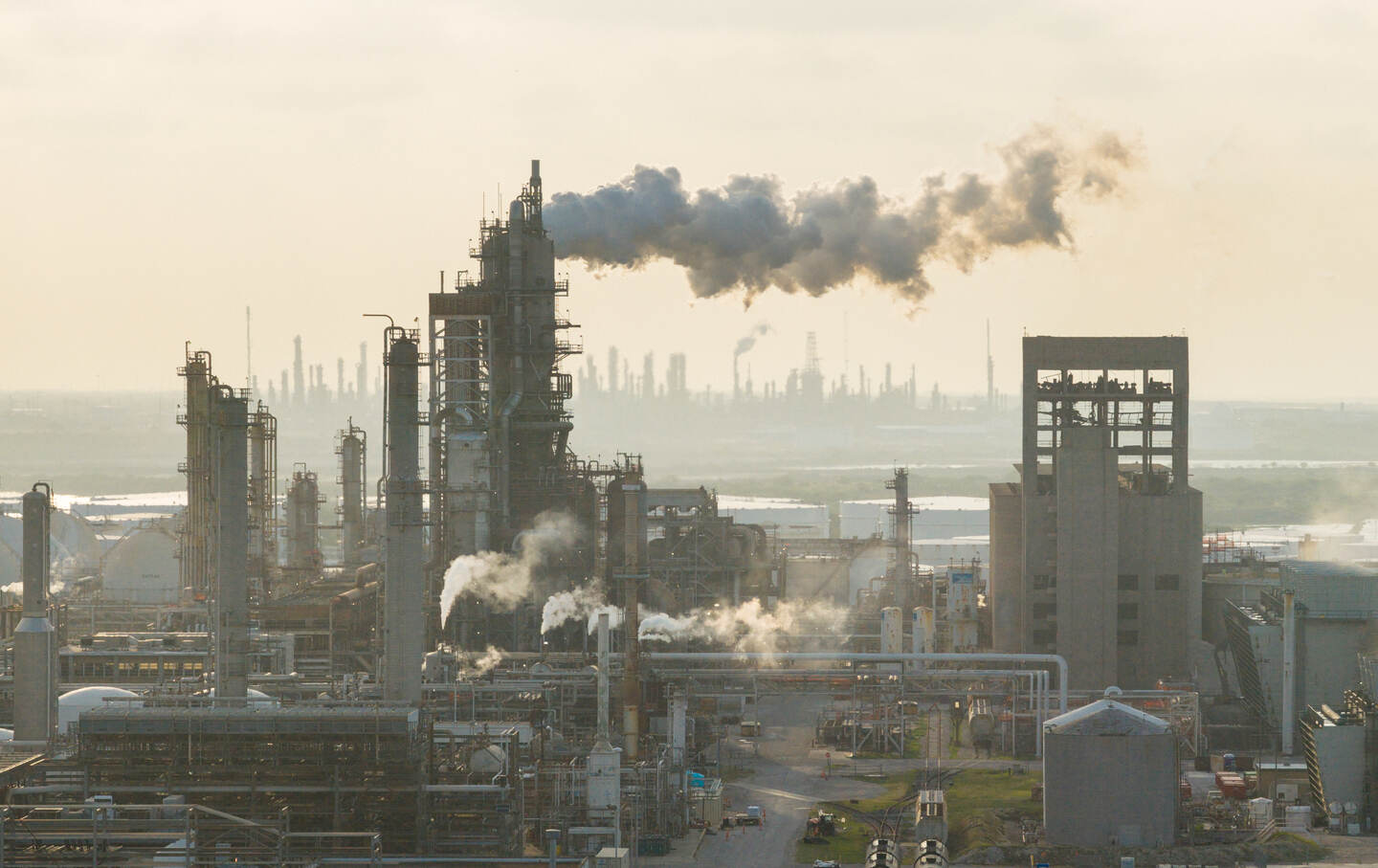
On March 23, 2026, a massive explosion tore through the Valero refinery in Port Arthur, Texas, shaking homes and sending a plume of smoke over a community that has lived with oil and petrochemical pollution for generations. In this episode of A People’s Climate, host Shilpi Chhotray talks with John Beard Jr., a former refinery worker who spent 38 years inside the industry, about what happens when global oil decisions become local realities.
From U.S. policy toward Venezuelan oil to the expansion of petrochemical production and the world's demand for plastics, Beard connects the decisions made far from Port Arthur to the people who pay the price close to home. They explore who benefits from the fossil fuel economy, who bears its risks, and what it would take to build a transition that doesn't leave communities to pay for it with their health and their lives.
Key Topics
- Global oil, local consequences: How decisions about oil, foreign policy, and energy affect communities right here in the United States.
- The price of fossil fuels: Why communities like Port Arthur bear the pollution, health risks, and industrial disasters that make fossil fuel profits possible.
- The Valero explosion: What the March 2026 refinery explosion revealed about the risks fence-line communities live with every day.
- Oil & petrochemicals: How Gulf Coast communities became sacrifice zones for refining, plastics, and global fossil fuel demand.
- Who benefits?: The disconnect between the industry's promise of jobs and prosperity and the economic realities facing Port Arthur residents.
- A just transition: What it means to move away from fossil fuels while repairing the damage already done and protecting workers and communities.
- Building power: Why communities need political power to challenge an industry whose reach extends from local government to global geopolitics.
Resources
- Port Arthur Community Action Network
- A People’s Climate Episode: An Unreasonable Woman with Diane Wilson – Another Texan’s historic win against the petrochemical industry
- U.S. Gulf South Climate and Environmental Justice organizations:
- Better Brazoria: Clean Air & Water
- Cheek Texas Community Association
- Climate Conversation Brazoria County
- Concerned Citizens of St. John Parish
- For a Better Bayou
- Freeport Haven Project for Environmental Justice
- Houston Climate Movement
- Mossville Environmental Action Now (MEAN)
- Permian Gulf Coast Coalition
- RISE St. James
- S.A.F.E. Communities
- San Antonio Bay Estuarine Waterkeeper
- South End Charlton-Pollard Greater Historic Community Association
- Southern Sector Rising
- t.e.j.a.s. (Texas Environmental Justice Advocacy Services)
- The Vessel Project of Louisiana
Credits
Presented by Counterstream Media and The Nation
Powered by Wildseeds Fund
Host: Shilpi Chhotray
Executive Producer: Mindy Ramaker
Engineer: Ameeta Ganatra
Project Manager: Asia Simms
John Beard, Jr.
John Beard, Jr. is the Founder and CEO of the Port Arthur Community Action Network. After working in the oil industry for 38 years, Beard became a community advocate in his hometown of Port Arthur, Texas, dedicated to holding the industry accountable. He founded the Port Arthur Community Action Network to fight for health and safety protections in an area dense with refineries, export terminals, and petrochemical plants. Over the past year, Beard has emerged as a national and global environmental justice leader, serving as a civil society delegate to the U.N. Plastic Treaty negotiations, the Fossil Fuel Non-Proliferation Treaty, and the Conference of Parties negotiations on climate change.
Advertising Inquiries: https://redcircle.com/brands
Privacy & Opt-Out: https://redcircle.com/privacy
Search Results placeholder