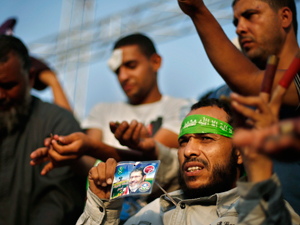
This Wednesday, Egyptians will hold the first competitive presidential poll after emerging from three decades of autocratic rule last year.
Egyptians go to the polls on May 23 and 24. But heightened tension and deepening unease over every aspect of the political process make it hard to predict what will happen next.
When is a little more than enough in a painting?
As the Syrian government clings to repressive tactics it knows best, the conflict becomes ever more intractable.
As the country’s fiscal climate worsens, signs point to the continuation of the same Mubarak-era policies that sparked the revolution.
On its fiftieth anniversary, the founding declaration of SDS echoes today in democracy movements around the world.
The prosperous, urban middle-class—those who benefit from the government’s policies—have revolted against it. If even they don’t support the existing order, what future does it have?
The Supreme Council of the Armed Forces has replaced Hosni Mubarak as the force that rules Egypt with an iron fist. As January 25 approaches, the revolution is not over.
4 comments
With their emphasis on participatory direct democracy, the anarchists behind Occupy Wall Street have changed the very idea of what politics could be.
In the midst of a complicated election, Egyptians are once again in the streets, protesting military rule and debating what democracy means.