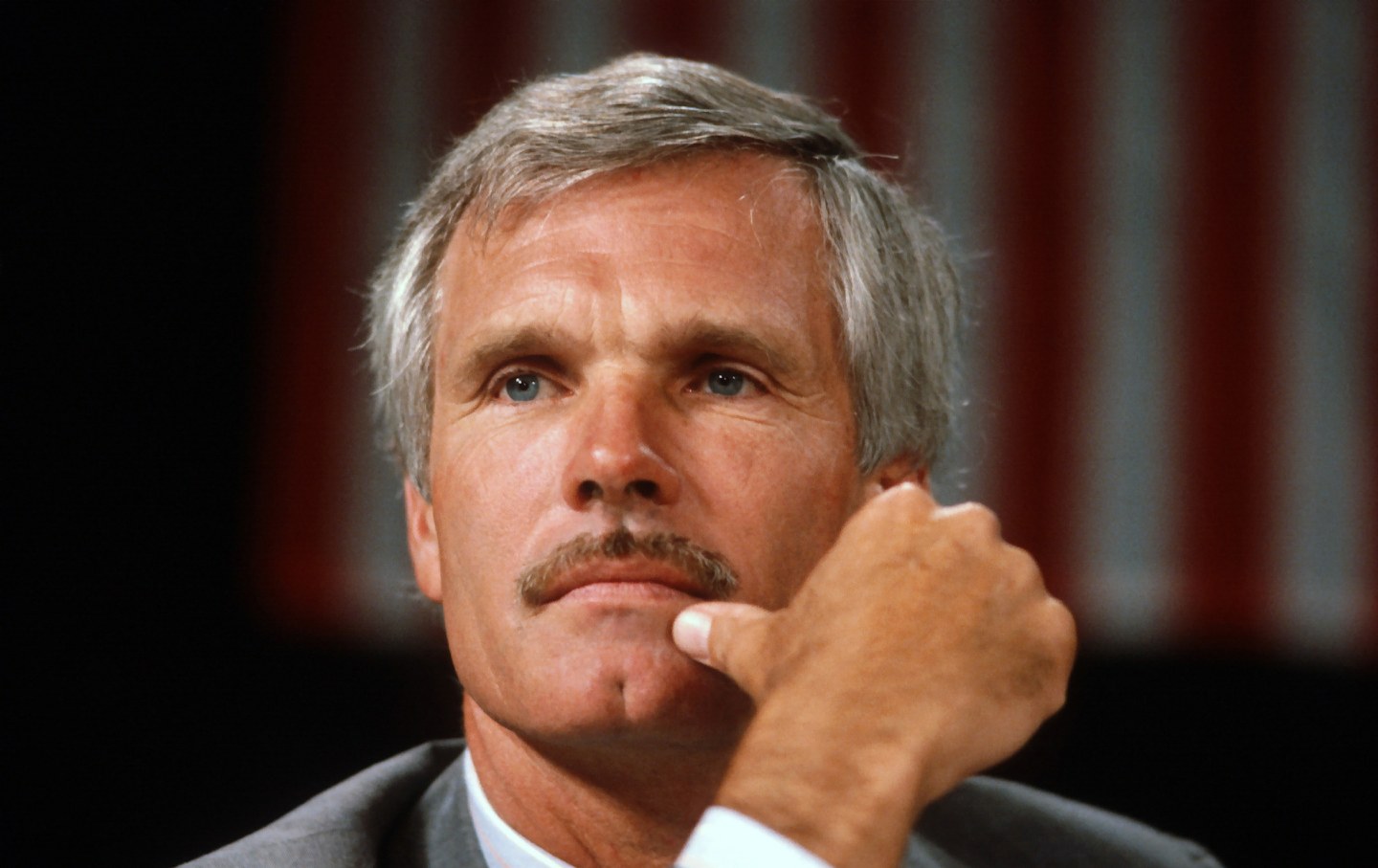
Ted Turner at a press conference in 1985.
(Yvonne Hemsey / Getty Images)Ted Turner, thrice married and a notorious womanizer, had many exes, the most famous of whom was his last wife, Jane Fonda. This was also Turner’s most surprising relationship since, on paper at least, the two couldn’t have been more different. He was a buccaneer capitalist, best known for launching CNN, the world’s first 24/7 cable news channel, in 1980. Politically, he seemed an avatar of the boorish New South, prone to making ethnic jokes and deriding his media rivals in 1980 as “a bunch of pinkos.”
Fonda, by contrast, was more than pink; she was bright red, a Hollywood superstar known for her radical commitments, including her support for the Vietnamese national liberation movement, which took her to Hanoi in 1972 when the American imperialist adventure was careening toward its disastrous conclusion.
Their marriage lasted from 1991 to 2001—a decade when Turner was on top of the world, and not just because he was betrothed to one of the most talented actors in the world. CNN became the defining media outlet of its era thanks to the Gulf War of 1990–91. Prior to that conflict, skeptics had often asked if the world really needed around-the-clock news. But the Gulf War confirmed that CNN had not just a global audience but an unprecedented ability to present the news with real-time urgency. (A decade later, in the wake of the 9/11 terrorist attack, CNN was itself supplanted by Fox News, a network whose partisanship and jingoism matched the mood of the George W. Bush administration better than the more sober internationalism and hard-news focus of Turner’s network. CNN has arguably been searching for a coherent identity ever since.)
No one was closer to Turner when he was at the absolute peak of his influence than Fonda. The two remained close even after their divorce, and Fonda bestowed on Turner the title of “my favorite ex-husband.” Fittingly, she’s also provided the most tender tribute to him, placing a surprising emphasis on his sensitivity:
He swept into my life, a gloriously handsome, deeply romantic, swashbuckling pirate and I’ve never been the same. He needed me. No one had ever let me know they needed me, and this wasn’t your average human being that needed me, this was the creator of CNN, and Turner Classic Movies, who had won the America’s Cup as the world’s greatest sailor. He had a big life, a brilliant mind and a soaring sense of humor.
He could also take care of me. That was new as well. To be needed and cared for simultaneously is transformative. Ted Turner helped me believe in myself. He gave me confidence. I think I did the same for him, but that’s what women are raised to do. Men like Ted aren’t supposed to express need and vulnerability. That was Ted’s greatest strength, I believe.
I was taken aback by Fonda’s claim that Turner could express “need and vulnerability.” In public, he seemed the exact opposite: the typical figure of a good-old-boy braggart, a larger-than-life man who exulted in his grand accomplishments. After all, he wasn’t just someone who had turned a regional family billboard company into a global media empire; he was also the owner of winning sports teams and an accomplished sailor. Nor, to say the least, was he modest about how he saw himself. In 1998, he told a reporter, “I’m trying to set the all-time record for achievement by one person in one lifetime. And that puts you in pretty big company: Alexander the Great, Napoleon, Gandhi, Christ, Mohammed, Buddha, Washington, Roosevelt, Churchill.” As so often, behind this self-exultation was neediness: an insatiable urge to prove himself.
Yet Fonda is right about Turner’s vulnerability. It’s proverbially true that behind every great fortune lies a crime, and behind every great man is a great woman. A third adage can be coined along the same lines: Every overachiever is spurred on by the need to please a disappointed parent.
Ted Turner was born in 1938 as Robert Edward Turner III, the namesake and heir of Richard Edward Turner Jr. His father, who ran a billboard advertising company, was an abusive alcoholic who took sadistic pride in making sure his son always felt inferior. In 1963, the elder Turner, gnawed by debts and his own demons, killed himself. Decades later, Turner and Fonda would bond over the fact that they were both the children of parents who had died by suicide (Fonda’s mother had also killed herself).
Inheriting his father’s failing company, Turner ignored advice to downsize and pay off debts. Instead, he started his long career of successfully leveraging debt into building bigger companies, expanding from billboards to TV stations and sports teams (buying the Atlanta Braves in 1976 and the Atlanta Hawks in 1978). By the 1970s, he had pioneered a successful formula of vertical integration in media, which combined new technology (satellites that gave his local networks national, and eventually global, reach) with old media (the sports franchises, cheap reruns, and talking heads providing grist to feed the unquenchable thirst of cable for content). One genius move, much derided at the time, was buying the vast libraries of old Hollywood studios such as MGM, Warner Brothers, and Hanna-Barbera and repurposing them for Turner Classic Movies and the Cartoon Network.
As a businessman, Turner was a gambler, racking up big debts that usually ended in profitability. His winning streak ended with the 1996 merger of Turner Broadcasting System with Time Warner (and eventually in 2000 with AOL). After the dot-com bubble burst a few years later, his fortune, which had peaked at $11 billion, shrank to roughly $2 billion.
Turner would claim to be humbled by these events, and he turned into a critic of media consolidation. In a 2004 article for the liberal magazine Washington Monthly, Turner called for the federal government to return to a stricter enforcement of antitrust laws. He argued that the hands-off approach to regulation was creating near-monopolies that were inimical to regional and ideological diversity. The problem, of course, has only gotten worse since he voiced his complaint, with plutocrats like Rupert Murdoch and David Ellison controlling an ever larger share of the media pie.
In the third and final phase of his life, Turner, under Fonda’s influence, turned his energy, and his wealth, to philanthropy. As Inside Philanthropy notes, “During his career as a big donor, Turner channeled an estimated $1.3 billion of his fortune into philanthropy, was an early adopter of the Giving Pledge, and along the way, helped redefine what wealthy donors could be expected to do.” He was particularly active in supporting the United Nations (to which he gave $1 billion, even as the US government was starving the international organization), arms control advocacy groups, and environmental causes. His approach to philanthropy had a direct influence on other big givers such as Warren Buffett and Bill Gates.
Turner was an emblematic figure of our times, the age of billionaires. As such, he was an ambiguous figure. The existence of billionaires is a byproduct of bad social policy that privileges private wealth creation over the public good. Ideally, there would be no billionaires and the wealth they enjoy now wouldn’t have to be shared via philanthropy but would be under the control of democratic governments.
But since billionaires do exist, it is better if they are more like Turner than many of his peers. The phrase “Epstein class” has caught on because many of the superrich do seem like predatory criminals. One symptom of the age of billionaires is the subgenre of science fiction where the economic elite are portrayed as space aliens who are harming humanity—John Carpenter’s They Live (1988) and Yorgos Lanthimos’s Bugonia (2025) both toy with this theme.
Popular
“swipe left below to view more authors”Swipe →The theme of the rich as aliens resonates because too many billionaires seem to have given up on humanity. Think of figures such as Peter Thiel and Elon Musk, with their fantasies of immortality (perhaps aided by blood transfusions from the young) or libertarian space colonies.
The real charm of Turner was that no one would ever think of him as an extraterrestrial. He was human, all too human. His humanity shone through in his faults (his grandiosity, his alcoholism, his untamed lust, his verbal abuse of his employees) and his virtues (chiefly his generosity). Turner proved that even billionaires could be human. That legacy might be enough.
Support The Nation’s June Fundraising Campaign
With the midterm elections now firmly upon us, the question is whether Democratic candidates will do more than merely occupy ballot lines as mild alternatives to the red-hot crisis that is Donald Trump.
As Trump spends over $1 billion a day on a globally destabilizing war on Iran and admits that he doesn’t “think about Americans’ financial situation,” millions across the country are struggling with the surging costs of essentials. Democrats must seize this moment and advance bold, small-“d” populist ideas—not settle for cynical caution that once again snatches defeat from the jaws of victory.
The Nation elevates progressive ideas, movements, and elected officials achieving real change across the country into the national conversation. At the same time, our journalists are exposing how crypto and AI-funded super PACs are spending hundreds of millions of dollars to knock out candidates they oppose, reporting on the devastating impact of the Supreme Court’s evisceration of the Voting Rights Act, and sounding the alarm on attempts by red states to quickly redraw electoral maps, disenfranchising Southern Black voters.
We can play this critical role because of support from readers like you. This June, we’re raising $20,000 to power The Nation’s independent journalism in the run-up to November’s immensely consequential elections.
It’s in our power to build a more just society, and your support at this critical moment brings us closer to that bold vision. I hope you’ll donate today.
Onward,
Katrina vanden Huevel
Editor and Publisher, The Nation
More from The Nation
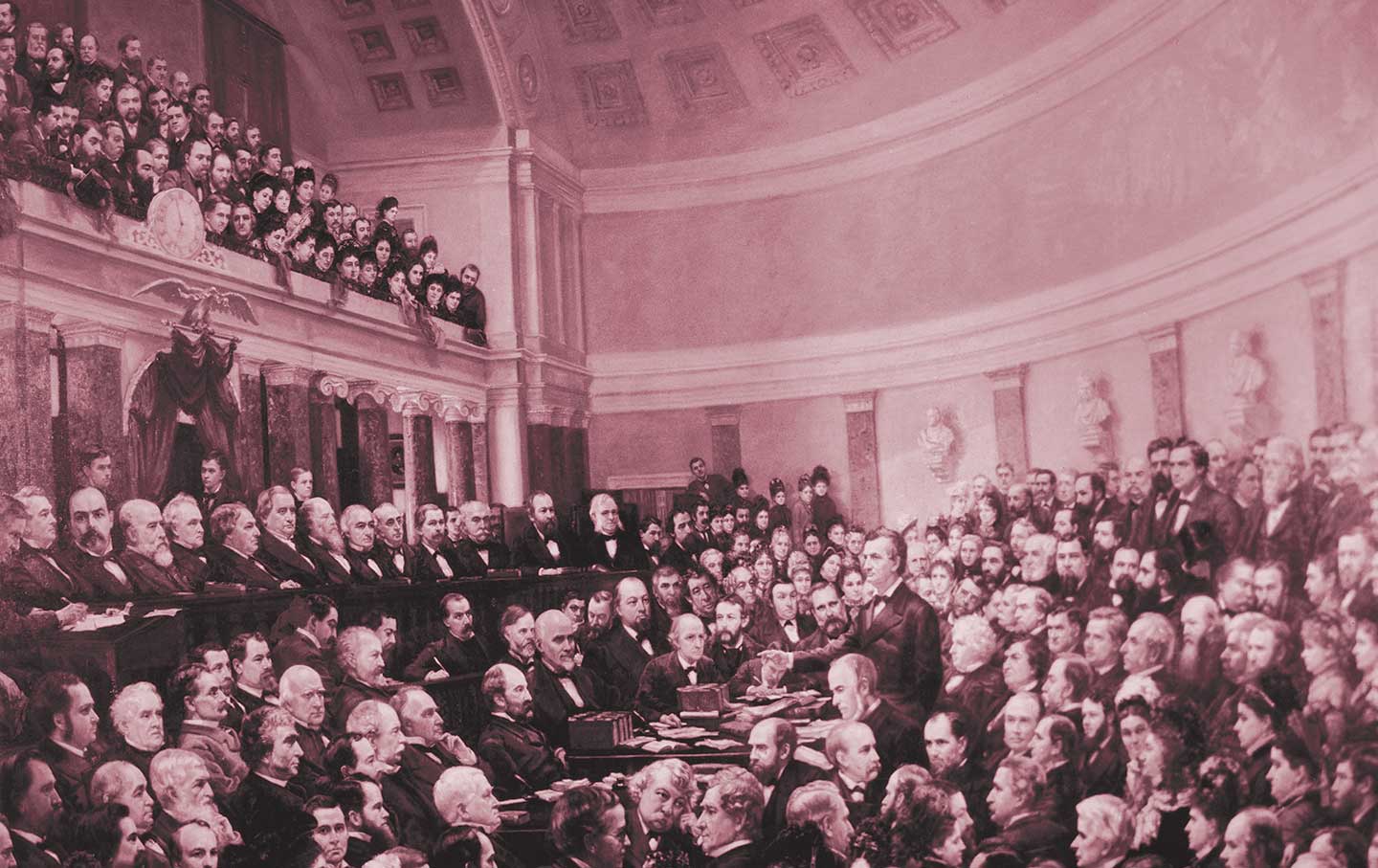
We Must Restore Congress as the Predominant Branch of Government We Must Restore Congress as the Predominant Branch of Government
The promise of democratic governance was stolen from the people. We must win it back.
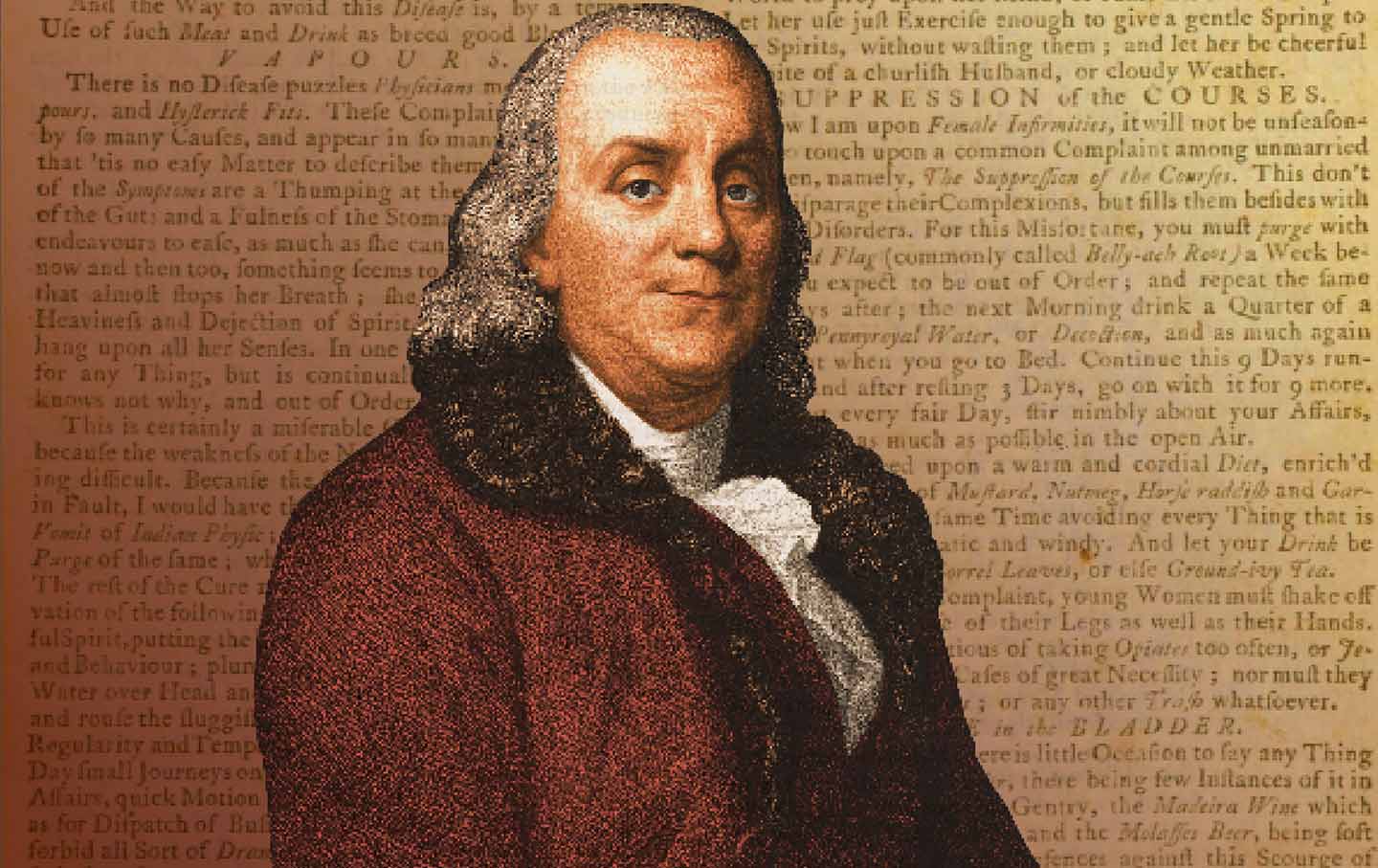
Benjamin Franklin’s Abortion Foresight Benjamin Franklin’s Abortion Foresight
More than one founding father knew that to be truly free, women needed control over their reproduction.
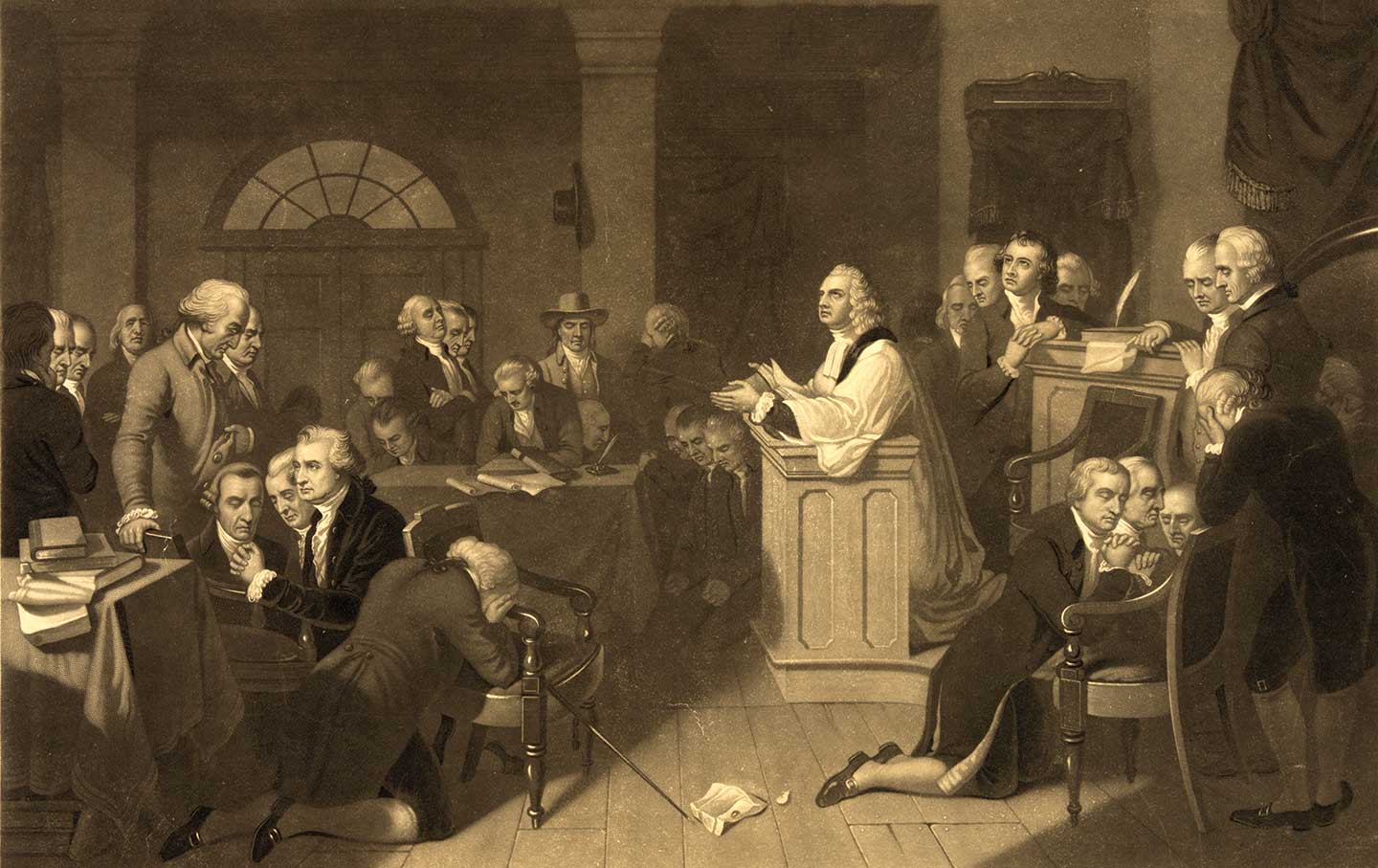
Separation of Church and State: America’s Best Idea Separation of Church and State: America’s Best Idea
Christian nationalists keep forgetting what the country’s founders kept writing down.

American Dream, American Nightmare American Dream, American Nightmare
This nation’s DNA is a double helix of beauty and brutality.
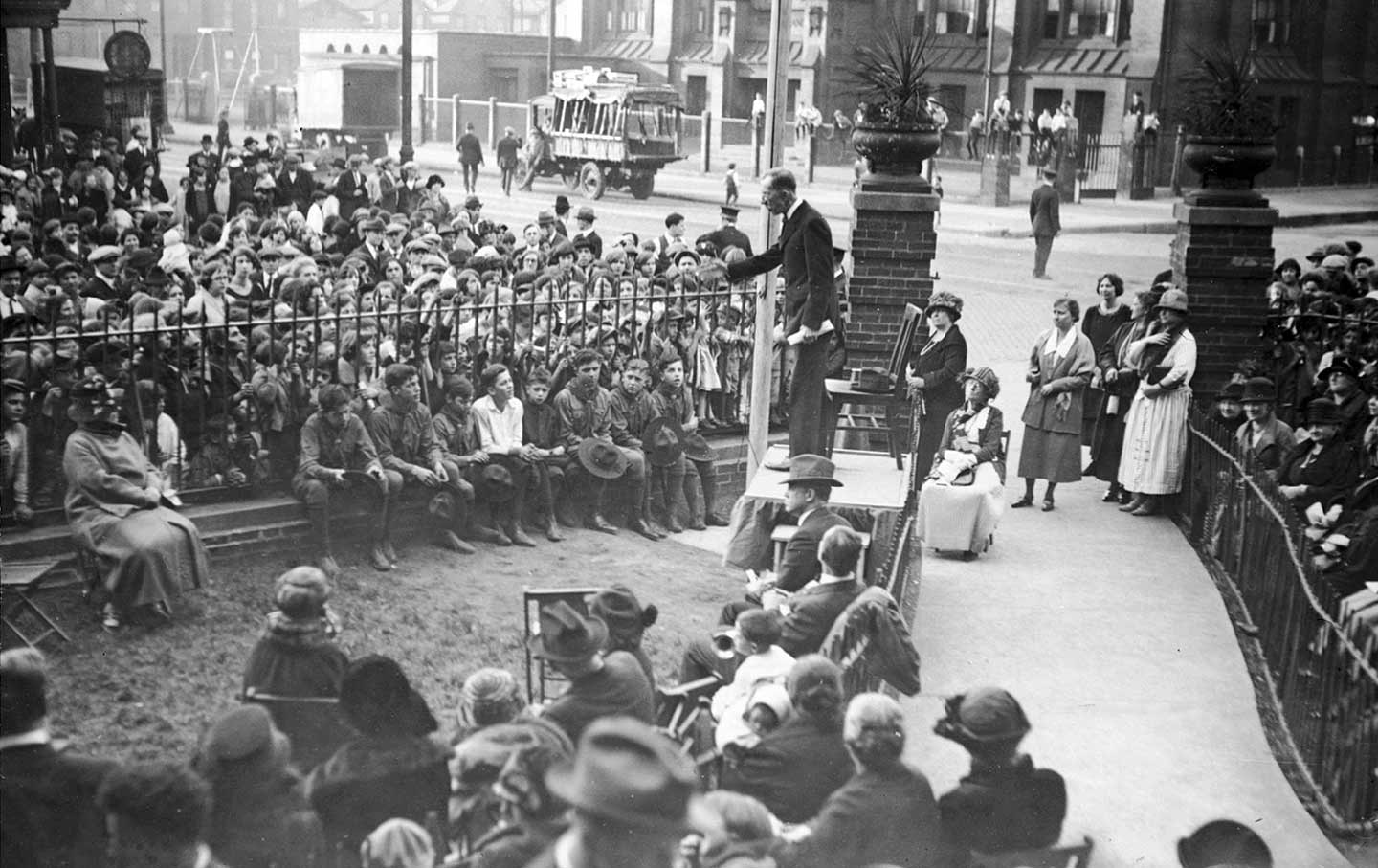
America Is Due for a Deep Clean America Is Due for a Deep Clean
This country cannot deliver on its promises until we collectively act to to ensure equal protection for all.
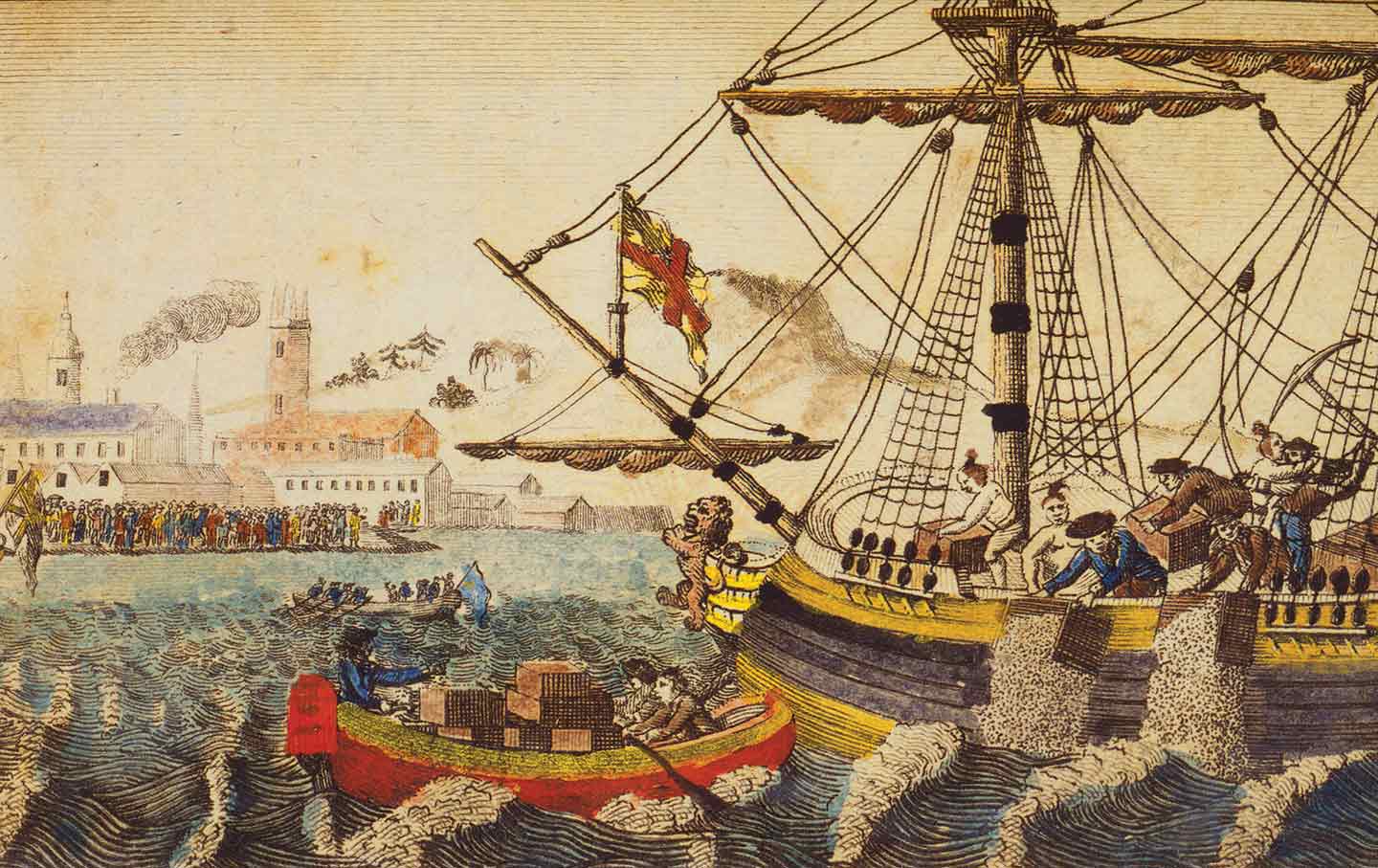
We Were Founded on Anti-Monopoly Principles We Were Founded on Anti-Monopoly Principles
The premises of the American democratic vision must be applied to the economy if we are to be free in all alreas of life.

